


Wu Bin
Wu Bin served as a painter at the Ming dynasty court, yet he spent his early years as a Buddhist monk. This background explains the recurring religious themes in his output, such as The Sixteen Luohans and The Five Hundred Arhats. He lived through the Wanli period, a time when artists often sought unconventional paths to express their devotion.
Biography
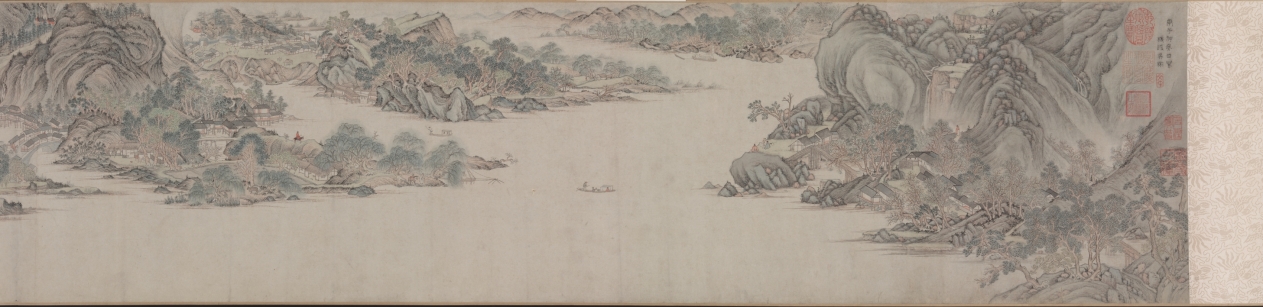
His artistic method involved the use of distorted, towering rock formations and unusual spatial arrangements. In works like Greeting the Spring and Azure Cliff with Red Maples, he applied ink with a precision that defines his personal style. He rejected the standard brushwork of his contemporaries, opting instead for a peculiar, jagged aesthetic that creates a sense of tension within the frame.
Modern collectors appreciate Wu Bin for his ability to transform natural subjects into surreal, imaginative compositions. His prints provide a distinct visual experience, as they move away from traditional realism. The sharp lines and specific colour choices found in Azure Cliff with Red Maples offer a clear example of his departure from convention.
Notable Works
Tap to view larger.
Next stop
Browse the movements →
Every movement in the collection, from the Renaissance to Pop art.
Related Artists


Frequently Asked Questions
When was Wu Bin born?
Wu Bin was born in 1573 and died in 1620.What is Wu Bin known for?
Wu Bin is known for wu Bin was a Ming dynasty artist known for his unconventional, jagged depictions of nature and his detailed religious subjects.