

About Ai Weiwei
Chinese · 1957–present
- Contemporary
- Conceptual
Ai Weiwei is a Chinese conceptual artist and activist known for his art that critiques social and political issues.
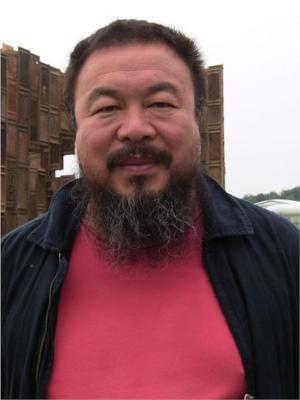
Museums4
Countries4
Largest reported holdingDe Pont, Tilburg · 2 recorded works
Loading map…
Where to see Ai Weiwei
Collection holdings are reported here; current display varies. Check with each museum before visiting.
-
2 recorded works
De Pont
Tilburg, Netherlands
-
1 recorded work
Middelheim Museum
Antwerp, Belgium


-
1 recorded work
National Gallery of Victoria
Melbourne, Australia
-
1 recorded work
Tate
London, United Kingdom


Frequently Asked Questions
Where can I see Ai Weiwei's work?
Ai Weiwei’s work is represented in museum collections internationally. MoMA in New York lists his Study of Perspective photographs and his Black, White and Grey Cover Books in its online catalogue. These records let you explore named works rather than a general collection of Chinese art. Queensland Art Gallery | Gallery of Modern Art in Brisbane holds Dropping a Han dynasty urn (1995), acquired in 2006. Its catalogue describes the work as three gelatin silver photographs. A collection record does not guarantee that a work is on display. Check the museum’s current gallery information before travelling, or use its online catalogue to study the work from home.Why are Ai Weiwei's works important today?
Ai Weiwei, born in Beijing in 1957, creates art that often comments on modern life and stands up for those facing oppression. His work frequently mixes Chinese cultural heritage with influences he encountered in America. Ai's artistic practice often addresses political issues. In 2003, he created the Ai Qing Memorial in Jinhua Ai Qing Cultural Park, honouring his father. From 2005 to 2009, he wrote a blog where he expressed his views on various topics, including criticisms of the Chinese government. Following the 2008 Sichuan earthquake, Ai led a team to investigate the deaths of thousands of children, believing that corruption and poor construction led to the collapse of school buildings. He created an installation featuring the names of the deceased children and a sculpture made from 90 tons of rebar salvaged from the ruins. Ai was detained for 81 days in 2011. Ai's work, such as *Straight*, uses salvaged materials to memorialise the earthquake victims and critique political approaches to culture. He also explores the shifting cultural and financial values in a globalised world, often modifying found objects. His actions, such as dropping a Han Dynasty urn, raise questions about the value and authenticity of art.What should I know about Ai Weiwei's prints?
Ai Weiwei is a multidisciplinary artist; prints are one part of his larger practice. Printmaking allows for editions, or multiple originals. Each print in an edition is made individually from a matrix, such as a woodblock or screen. The artist determines the edition size. Each print is numbered (for example, 12/25, meaning print number 12 from an edition of 25). The artist usually signs each print, often in pencil. These conventions help to authenticate the work and add value. However, the artist's intent is also important. An original print is conceived as a print, not a copy of something in another medium. Ai Weiwei's prints can be seen within the context of his wider artistic concerns, which often include questions of originality, authenticity, and value in the art market. The artist's wider body of work includes installation art, and some of these have "exhibition copies" made for simultaneous display in multiple locations. The status and display history of these exhibition copies can affect the perception of a work's originality.What techniques or materials did Ai Weiwei use?
Ai Weiwei works with ceramics, found objects, sculpture, installation, photography and film. He often places traditional materials in a new context to question cultural value. His Coloured Vases works use ancient vessels covered with modern paint. TBA21’s 2006 version is catalogued as Neolithic vases with industrial paint. This is distinct from Dropping a Han Dynasty Urn (1995), a sequence of three photographs showing Ai releasing an urn and its destruction. The painted vases and the photographed action are separate works. His practice combines changes to existing objects with the creation of new ones. The choice of material, the object’s history and the action performed on it all contribute to the meaning of the work.What was Ai Weiwei known for?
Ai Weiwei, born in Beijing in 1957, is a contemporary artist known for his diverse output. His practice includes large installations, architectural projects, small constructions, photography, and video. He is also known as a human rights activist. Ai's work often combines Chinese cultural elements with his experiences of art and culture in America. He uses this synthesis to comment on modern life, often advocating for those facing oppression. Marcel Duchamp and Joseph Beuys are important influences, as they also challenged conventions. In 2003, he created the Ai Qing Memorial in Jinhua Ai Qing Cultural Park, honouring his father, the poet Ai Qing. From 2005, he wrote a blog for four years, sharing thoughts and criticisms of the Chinese government. Following the 2008 Sichuan earthquake, Ai investigated the deaths of children, believing that corruption led to poorly constructed schools. He created an installation featuring the names of the deceased and a sculpture made from salvaged rebar. Ai was detained for 81 days in 2011. His monumental sculpture, Template, constructed from salvaged doors and windows from destroyed Ming and Qing dynasty houses, was unveiled at documenta 12 in Kassel, Germany, in 2007.Who influenced Ai Weiwei?
Born in Beijing in 1957, Ai Weiwei is a contemporary artist who works across many media, from architectural projects to photography. His art often combines Chinese cultural motifs with influences he encountered in America. Ai has named Marcel Duchamp and Joseph Beuys as his biggest influences, noting that, like him, these artists challenged conventions. He also draws inspiration from Robert Rauschenberg and Jasper Johns. Ai's father, Ai Qing, was a modern poet. In 2003, Ai Weiwei created the Ai Qing Memorial in Jinhua Ai Qing Cultural Park, Jinhua, Zhejiang, in his father's honour. From 2005, he wrote a blog for four years, where he expressed his thoughts, including criticisms of the Chinese government. In 2008, a large earthquake struck the Sichuan province. Ai led a team to film the aftermath. He found that many children had died because of the use of poor construction methods in schools. He created an installation from his findings, including the names of the children and a sculpture made of rebar. Ai was detained for 81 days in 2011.Who did Ai Weiwei influence?
Ai Weiwei cites Marcel Duchamp, the French artist, and Joseph Beuys, the German artist, as his biggest influences. Like Ai, these artists challenged conventions in both life and art. Ai's work often mixes Chinese culture and heritage with art and culture he experienced in America. He uses this combination to comment on modern life, especially regarding the oppressed. He created the Ai Qing Memorial in Jinhua Ai Qing Cultural Park, Zhejiang, in 2003, honouring his father. In 2008, a major earthquake struck Sichuan province. Ai led a team to film the aftermath. He found that many children died because of substandard construction. He created an installation, including the names of the dead children and a sculpture made of 90 tons of rebar, as a monument to the victims.What is Ai Weiwei's most famous work?
It is difficult to name one single work as Ai Weiwei's 'most famous', but several of his pieces have gained considerable attention. He is known for large-scale installations and sculptures that often address social and political issues. One particularly well-known work is likely *Sunflower Seeds*, first displayed at Tate Modern in 2010. This consisted of millions of porcelain sunflower seeds, each individually handcrafted, covering the floor of the Turbine Hall. The work invited viewers to consider themes of mass production, individuality, and China's place in the global economy. Other significant works include his series of Zodiac Heads and his architectural projects, such as the Bird's Nest stadium for the 2008 Beijing Olympics (though he later distanced himself from the project). Ai Weiwei's art frequently combines conceptual ideas with skilled craftsmanship, making it both visually striking and thought-provoking.
Sources
Where to See guide aggregates verified holdings of Ai Weiwei's works across the following collections.
- [1] book Susie Hodge, Artists and Their Pets Used for: biography.
- [2] book Beard, Lee, 1973- author, Butler, Adam, author; Van Cleave, Claire, author; Fortenberry, Diane, author; Stirling, Susan, author, Beard, Lee, 1973- author, Butler, Adam, author; Van Cleave, Claire, author; Fortenberry, Diane, author; Stirling, Susan, author - The Art Book_ New Edition, Mini Format Used for: biography.
Editorial overseen by Solis Prints. Sources verified 2026-10-20. Click a source for details, or hover over [N] in the page above to preview.
Editorial standardsMethodologyCorrectionsAI disclosureAbout the editorial team