



About Bartolomeo Passerotti
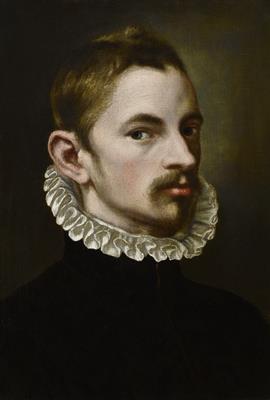
Where to see Bartolomeo Passerotti
Collection holdings are reported here; current display varies. Check with each museum before visiting.
-
3 recorded works
Pinacoteca Nazionale di Bologna
Bologna, Italy
-
3 recorded works
Galleria Nazionale d'Arte Antica
Rome, Italy


-
3 recorded works
Kunsthistorisches Museum
Vienna, Austria
-
2 recorded works
Capitoline Museums
Rome, Italy
-
2 recorded works
Museum of Fine Arts Boston
Boston, United States
-
2 recorded works
Gemäldegalerie Berlin
Berlin, Germany
-
1 recorded work
Hispanic Society of America
New York City, United States
-
1 recorded work
Gemäldegalerie Alte Meister
Dresden, Germany
-
1 recorded work
Louvre
Paris, France


View all 26 museums
-
1 recorded work
Fondazione Roberto Longhi
Florence, Italy
Also here (2)
-
1 recorded work
Museum of Fine Arts Ghent (MSK)
Ghent, Belgium
-
1 recorded work
Manchester Art Gallery
Manchester, United Kingdom
-
1 recorded work
Musée des beaux-arts de Marseille
Marseille, France
-
1 recorded work
Art Gallery of South Australia
Adelaide, Australia
-
1 recorded work
Harvard Art Museums
Cambridge, United States
-
1 recorded work
RISD Museum
Providence, United States
-
1 recorded work
Galleria Spada
Rome, Italy
-
1 recorded work
Walters Art Museum
Baltimore, United States
-
1 recorded work
National Trust
Swindon, United Kingdom
-
1 recorded work
Galleria Sabauda
Turin, Italy
-
1 recorded work
National Gallery of Ireland
Dublin, Ireland
Also here (6)
-
0 recorded works
National Gallery of Art
Washington D.C., United States
-
0 recorded works
Nationalmuseum
Stockholm, Sweden
-
0 recorded works
National Museum of Art, Architecture and Design
Oslo, Norway


Frequently Asked Questions
Where can I see Bartolomeo Passerotti's work?
Bartolomeo Passerotti (1529[1]-1592[1]) was an Italian[1] painter of the late Renaissance period, active mainly in Bologna. Several museums hold paintings attributed to him. The Galleria Borghese in Rome includes Passerotti's painting *The Butcher's Shop* (circa 1580[1]). This large oil on canvas depicts a butcher's stall, with various cuts of meat and fowl on display. It is an example of his interest in genre painting. The Uffizi Gallery in Florence holds his *Allegory of the Arts* (1575), an oil on canvas depicting a group of figures representing painting, sculpture, architecture, and other artistic disciplines. Also in Florence, the Pitti Palace has Passerotti's *Portrait of Ulisse Aldrovandi* (circa 1550-1555[1]), showing the noted naturalist. Other paintings by Passerotti can be found in the collections of the National Gallery of Ancient Art in Rome, the Musée du Louvre in Paris, and the National Museum of Fine Arts in Stockholm. These include portraits and religious scenes, demonstrating the range of his artistic output.What should I know about Bartolomeo Passerotti's prints?
Bartolomeo Passerotti (1529[1]-1592[1]) was a painter active in the late Renaissance. Though he is not primarily known as a printmaker, prints were an important means of disseminating artistic ideas during his era. Exposure to art and architecture was often achieved through engravings. These included frontispieces in books, decorative borders in Books of Hours, and illustrated editions of classical texts. Prints by artists such as Mantegna, and celebrated plates by Bramante, were highly valued for their authority. Marcantonio Raimondi, a prolific engraver, played a significant role in spreading the works of Raphael and his circle throughout Europe. His prints covered a range of subjects, including antique sculptures, allegories, portraits, and genre scenes. Similarly, artists like Dürer, Cranach, and Lucas van Leyden contributed to the circulation of artistic ideas through their prints. The pricing of original prints is influenced by factors such as the limited edition size, the artist's reputation, the image's popularity, and the quality of materials used.Why are Bartolomeo Passerotti's works important today?
Bartolomeo Passerotti, born in Bologna in 1529[1], occupies a notable place in art history for his contributions to late Renaissance painting, particularly his naturalistic style. He moved away from strict idealism, instead observing the world around him. He died in 1592[1]. Passerotti's importance lies partly in his genre scenes. These paintings depicted everyday life, a departure from the religious and mythological subjects that dominated the period. His butcher shop scenes, for example, offer a glimpse into the daily lives of ordinary people in 16th-century Italy. These works provide valuable insights into social history. His detailed portraits are also significant. Passerotti captured the likenesses of individuals from different social classes, revealing their personalities and characteristics. His skill in portraiture made him a sought-after artist among the Bolognese elite. Passerotti's influence extended to other artists. Annibale Carracci, a key figure in the development of Baroque art, was among those who studied with him. Passerotti's emphasis on naturalism and observation helped pave the way for the Baroque style. He is regarded as an important figure in the transition from Renaissance to Baroque painting.What techniques or materials did Bartolomeo Passerotti use?
Bartolomeo Passerotti (1529[1]-1592[1]) was a painter active in Bologna and Rome. He is mainly known for portraiture and genre scenes. Passerotti's paintings are mostly oil on canvas. However, he also produced some works in fresco. His style is characterised by close observation and naturalism, particularly in his portraits. He paid careful attention to the details of his sitters' faces and clothing. Passerotti's anatomical studies also informed his art. He was interested in representing the human form accurately. This is evident in his genre scenes, which often feature figures engaged in everyday activities. These paintings display his skill in capturing movement and expression. Passerotti's work shows the influence of earlier artists, such as Correggio and Parmigianino. He adapted their techniques to create his own style. He also trained a number of pupils, including his sons, Tiburzio and Ventura Passerotti, who continued to work in his style after his death.Who did Bartolomeo Passerotti influence?
Bartolomeo Passerotti's artistic influence can be seen in a number of artists from different countries. These include Dutch artists Hendrick ter Brugghen, Gerrit van Honthorst, Dirck van Baburen, and Rembrandt van Rijn; French artists Simon Vouet, Valentin de Boulogne, and Georges de la Tour; and Spanish artists Francisco Ribalta, Jusepe de Ribera, and Diego Velázquez. Their work is inconceivable without his example. These artists demonstrate the broad reach of Passerotti's impact across Europe. The achievements of Venetian Renaissance painters provided an important base for the artists of Baroque Rome. Throughout the seventeenth century, the Venetians inspired not only Caravaggio, the Carracci family, and their contemporaries in Rome, but also constituted major sources of inspiration and motif for artists working outside the Italian[1] peninsula. Rubens, Van Dyck, Rembrandt, and Velázquez derived much of their pictorial style and interpretation of subject from extensive study of the Venetian paintings, which were considered throughout the seventeenth century high points in the history of art.What is Bartolomeo Passerotti's most famous work?
Bartolomeo Passerotti (1529[1]-1592[1]) was a painter active in Bologna and Rome. He is best known for his genre paintings and portraits, a departure from the religious themes common at the time. Passerotti's most famous work is arguably "The Butcher's Shop" (c. 1570s). This painting offers a glimpse into everyday life. It depicts a butcher's shop with various cuts of meat, animals, and figures. The scene is realistic, showing the tools and activities associated with the trade. He made several versions of this composition; one is held by the Galleria Nazionale d'Arte Antica, Rome, and another is in a private collection. His interest in naturalism and everyday subjects influenced later artists. Passerotti also produced portraits of individuals from different social classes, further demonstrating his interest in representing the world around him. Although he created religious paintings and mythological scenes, his genre scenes, such as "The Butcher's Shop", remain his most recognisable and studied works.What style or movement did Bartolomeo Passerotti belong to?
Bartolomeo Passerotti (1529[1]-1592[1]) was an Italian[1] painter of the late Renaissance period, active mainly in Bologna. He is often associated with the Mannerist style, though his work also shows elements of naturalism. Mannerism[1], which emerged in the early 16th century, moved away from the classical ideals of balance and proportion that characterised the High Renaissance. Mannerist artists like Passerotti often employed exaggerated forms, artificial colours, and complex compositions to create a sense of elegance and sophistication. Passerotti's paintings include religious subjects, portraits, and genre scenes. He was known for his attention to detail and his ability to capture the likenesses of his sitters. His interest in naturalism is evident in his careful observation of the natural world and his realistic depiction of human figures. Some scholars see his genre scenes of butchers' shops and markets as precursors to the later development of Realism. His style is thus a blend of Mannerist conventions and a developing interest in observed reality.What was Bartolomeo Passerotti known for?
Bartolomeo Passerotti, an Italian[1] painter of the 16th century, is known for his interest in everyday reality, a trend seen in northern Italian painting. His career is documented by a series of inscribed paintings. The earliest of these is a *Madonna and Child*, formerly in a private collection in Venice, which bears the date 1502. The inscription reads, “Bartolamio mezo venizian e mezo cremonexe,” possibly referring to his parentage or where he lived and worked. Some believe he trained in Venice, indicated by the 1502 painting and other religious works from that decade that echo compositions by Giovanni Bellini. A manuscript inventory predating 1815 records an inscription on a signed painting of 1509, in which the artist claims to be a pupil of “Ze... Be...,” presumably Gentile Bellini. From 1505, his signature included the surname “Venetus”, which may suggest he no longer resided in Venice. The majority of signed pictures dated through 1530[1], as well as those attributed to him, are bust- or three-quarter-length portraits of men and allegorising portraits of women.
Sources
Where to See guide aggregates verified holdings of Bartolomeo Passerotti's works across the following collections.
- [1] wikipedia Wikipedia: Bartolomeo Passerotti Used for: biography.
- [2] book Lilian H. Zirpolo, Historical Dictionary of Baroque Art and Architecture Used for: biography, stylistic analysis.
- [3] book Palmer, Allison Lee, Historical Dictionary of Neoclassical Art and Architecture Used for: stylistic analysis.
- [4] book Allison Lee Palmer, Historical Dictionary of Neoclassical Art and Architecture Used for: stylistic analysis.
- [5] book Museum of Fine Arts, Houston, Italian paintings XIV-XVI centuries in the Museum of Fine Arts, Houston Used for: biography.
- [6] book Masterpieces of western art : a history of art in 900 individual studies from the Gothic to the present day Used for: biography.
- [7] book Peter Robb, M: The Man Who Became Caravaggio Used for: biography.
- [8] book E. James Mundy; Elizabeth Ourusoff De Fernandez-Gimenez; Milwaukee Art Museum; National Academy of Design (U.S.) (1828-1997), Renaissance into baroque _ Italian master drawings by the Zuccari _ 1550-1600 Used for: biography.
Editorial overseen by Solis Prints. Sources verified 2026-10-14. Click a source for details, or hover over [N] in the page above to preview.
Editorial standardsMethodologyCorrectionsAI disclosureAbout the editorial team