

Everhardus Koster
Everhardus Koster began his career with a focus on mechanical engineering before turning to the fine arts. A significant event in his life occurred in 1859 when he lost his right eye during an accident. Despite this physical setback, he continued his career as a painter and later became the director of the Paviljoen Welgelegen museum in Haarlem. His technical background likely influenced his precise rendering of rigging and architectural details.

Biography
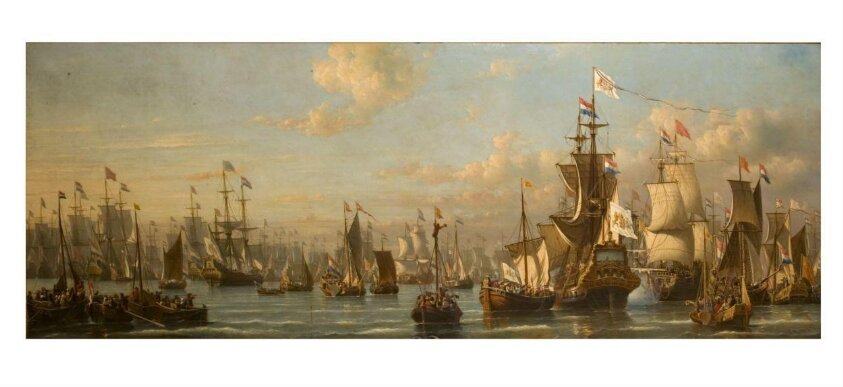
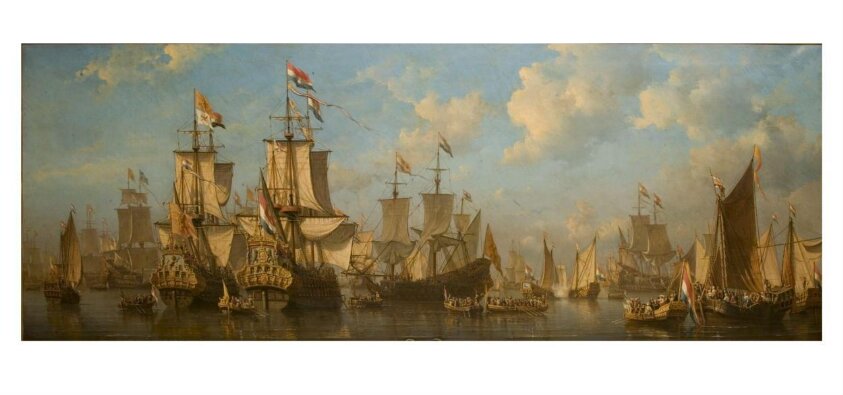
Koster produced marine subjects and urban views of Dutch cities such as Delft and Amsterdam. His paintings often feature shipping on the IJ or quiet canal scenes. He used a clean, observational style that avoided the dramatic weather common in earlier Romantic painting. Instead, he concentrated on the clear light of the Netherlands and the structural accuracy of sailing vessels. His compositions often include small figures engaged in daily tasks, such as loading carriages or tending to boats at the quay.
Modern collectors value Koster for his ability to document the nineteenth-century Dutch environment. His prints offer a sense of order through balanced horizontal lines and soft atmospheric effects. These works provide a window into a pre-industrial era without relying on sentimentality. The clarity of his architectural studies makes them suitable for contemporary interiors that require a sense of historical perspective.
Notable Works
Tap to view larger.
Everhardus Koster prints
Hand-finished archival prints from Everhardus Koster's body of work.

Related Artists


Take Everhardus Koster home.
See all Everhardus Koster prints →Frequently Asked Questions
When was Everhardus Koster born?
Everhardus Koster was born in 1817 and died in 1892.What art movement was Everhardus Koster part of?
Everhardus Koster was associated with Romanticism.What is Everhardus Koster known for?
Everhardus Koster is known for everhardus Koster was a nineteenth-century Dutch painter of precise marine scenes and cityscapes who continued to work even after losing an eye in 1859.