


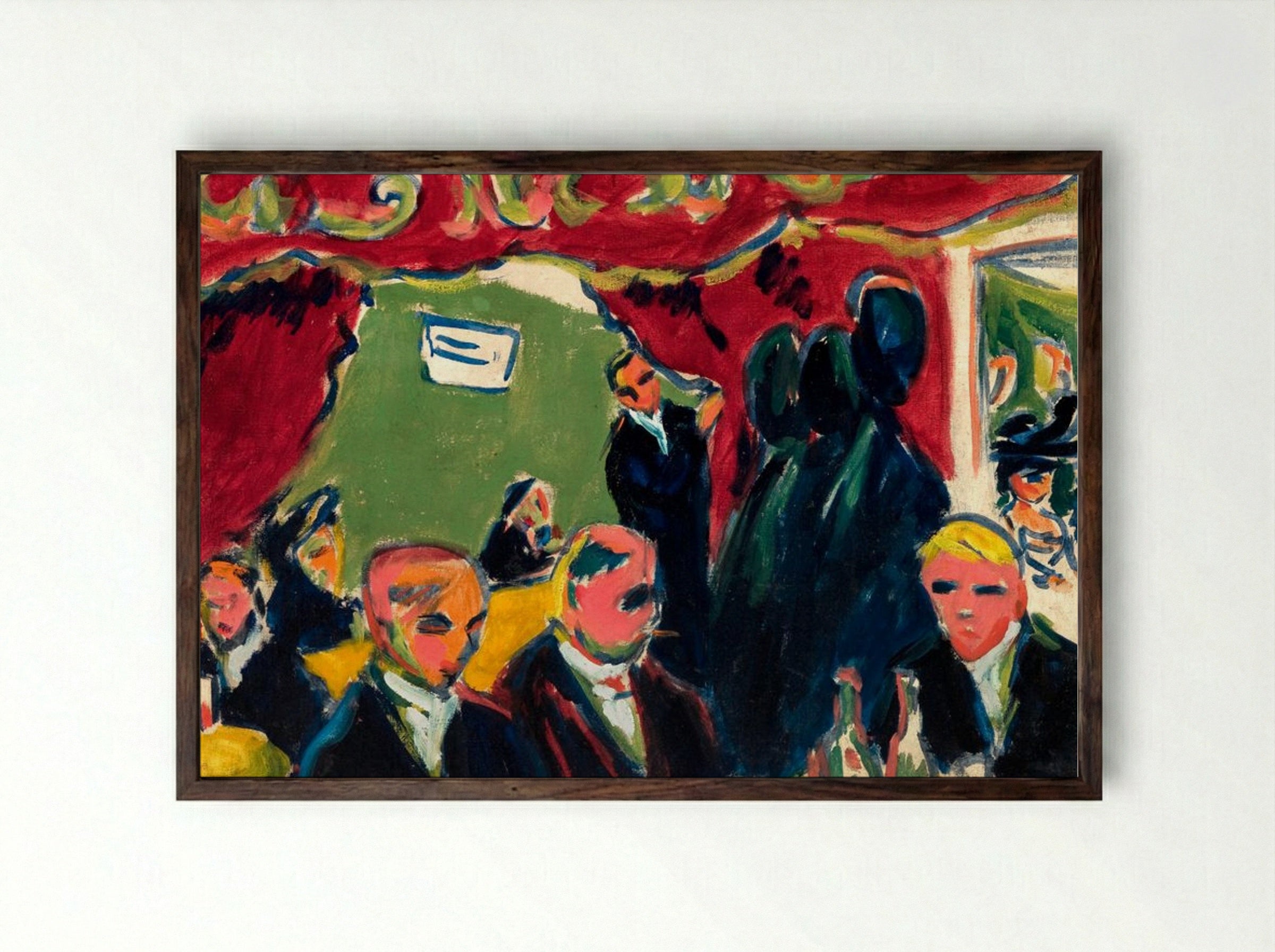
In the Tavern - Ernst Ludwig Kirchner
Archival giclée
Ready to hang
Secure checkout
Made to order
Description
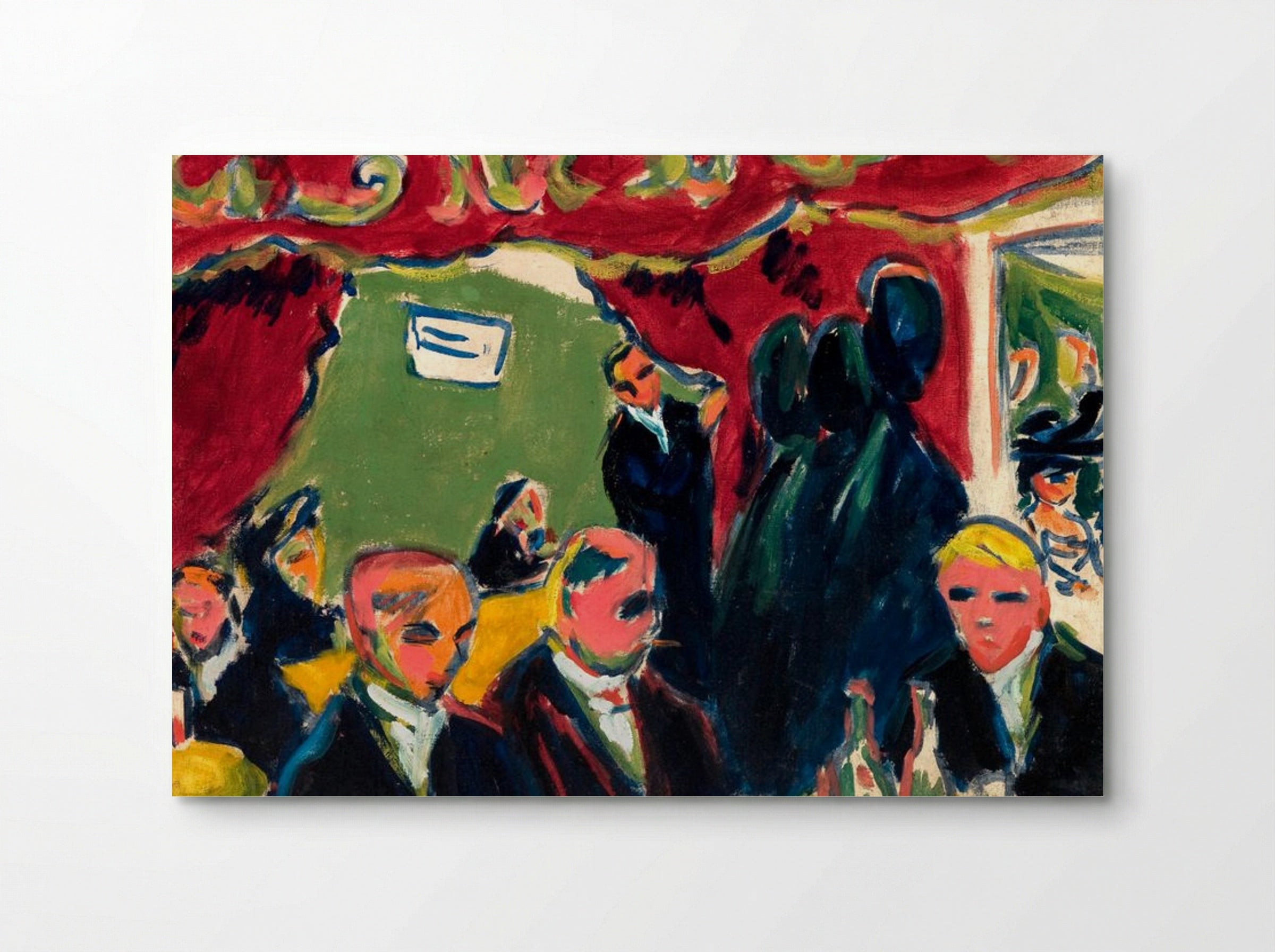
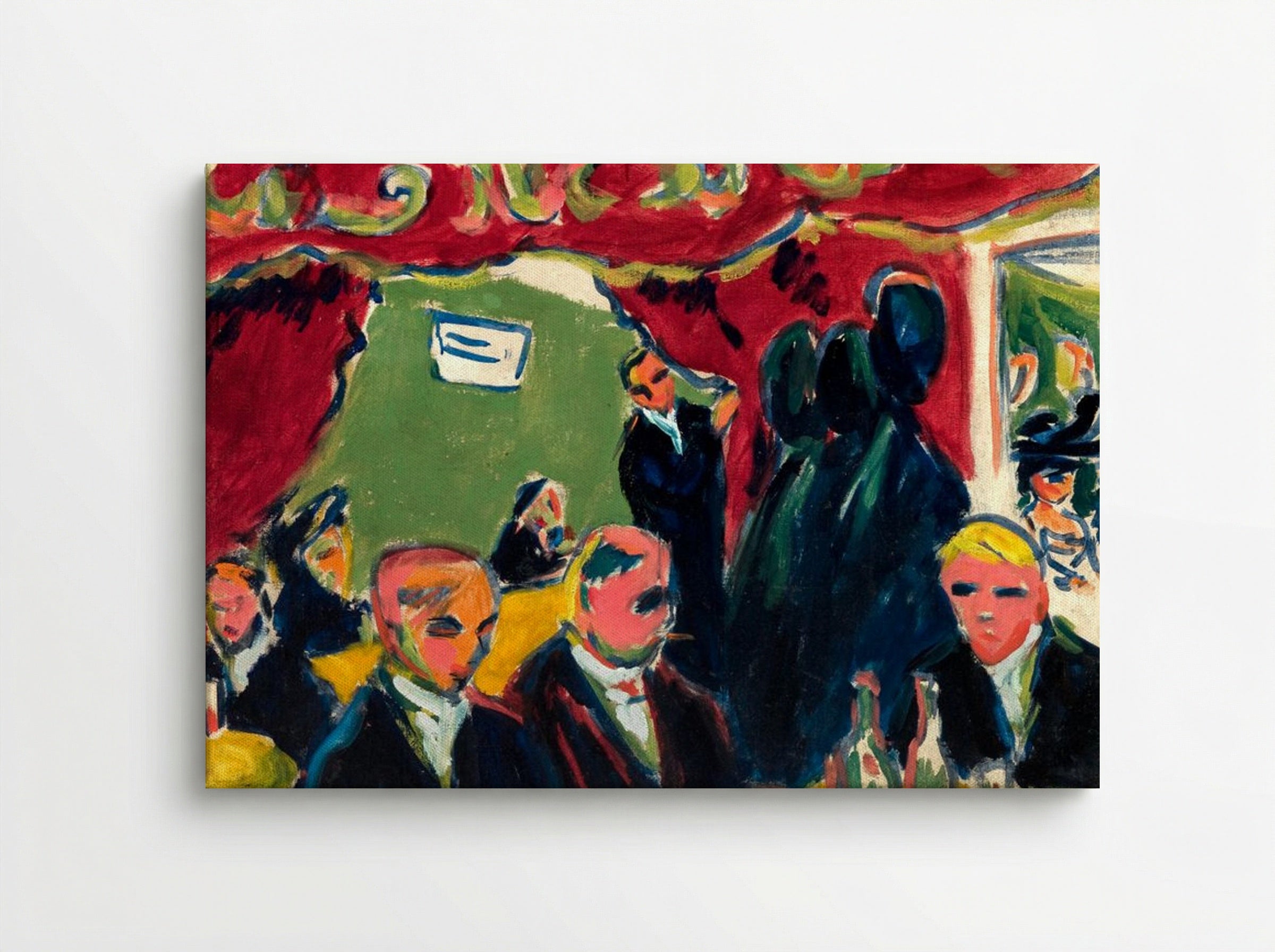
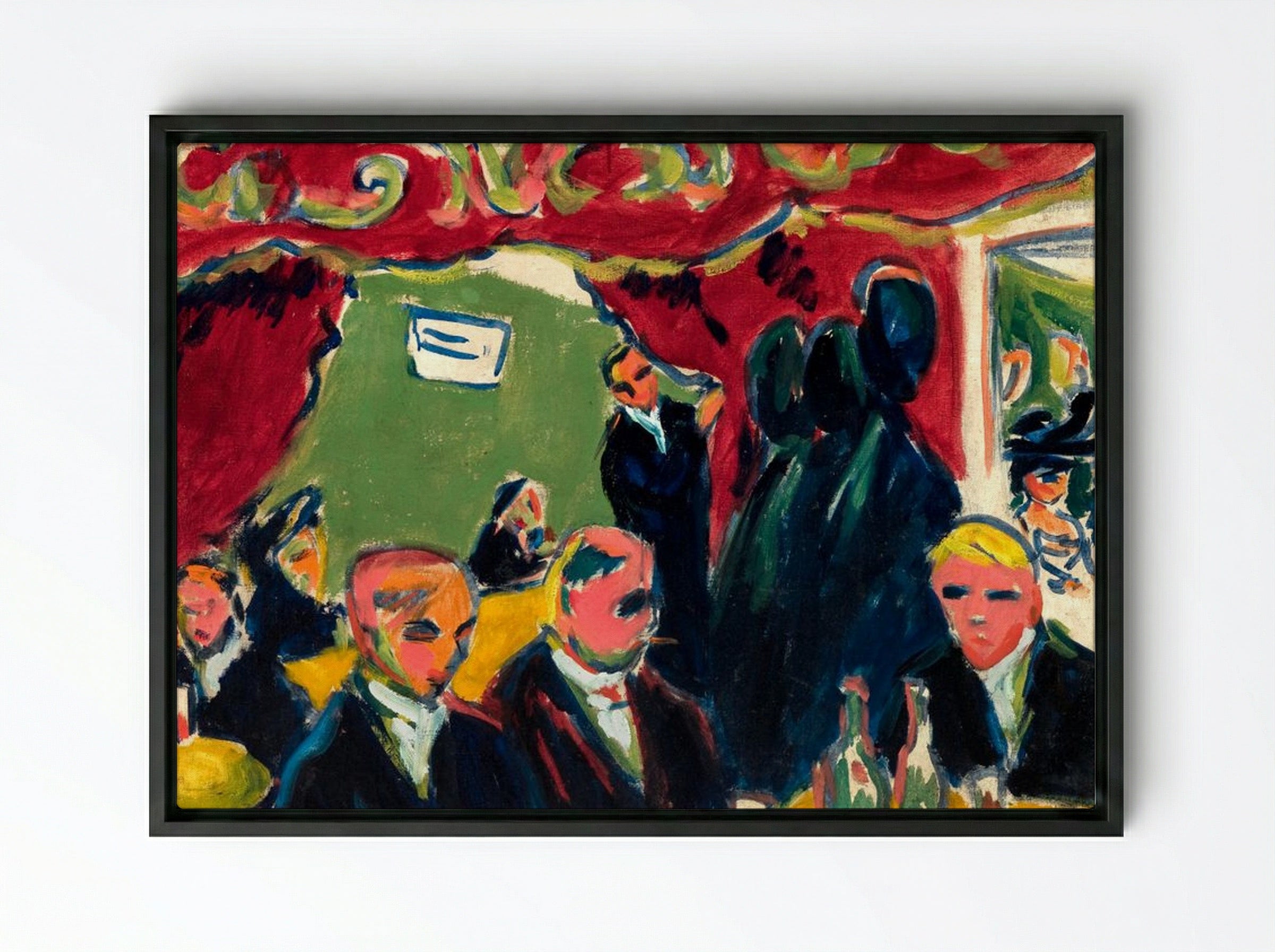
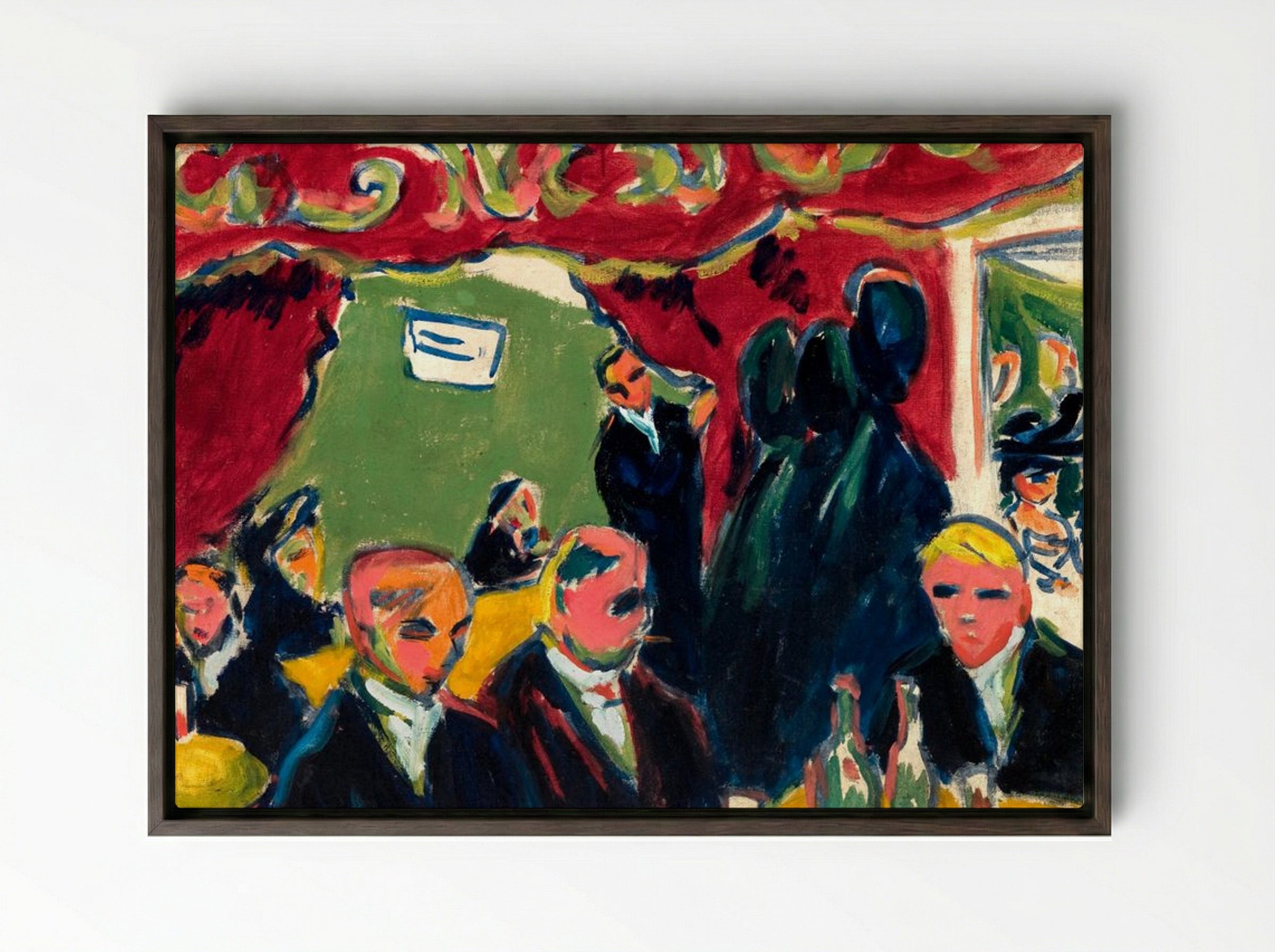
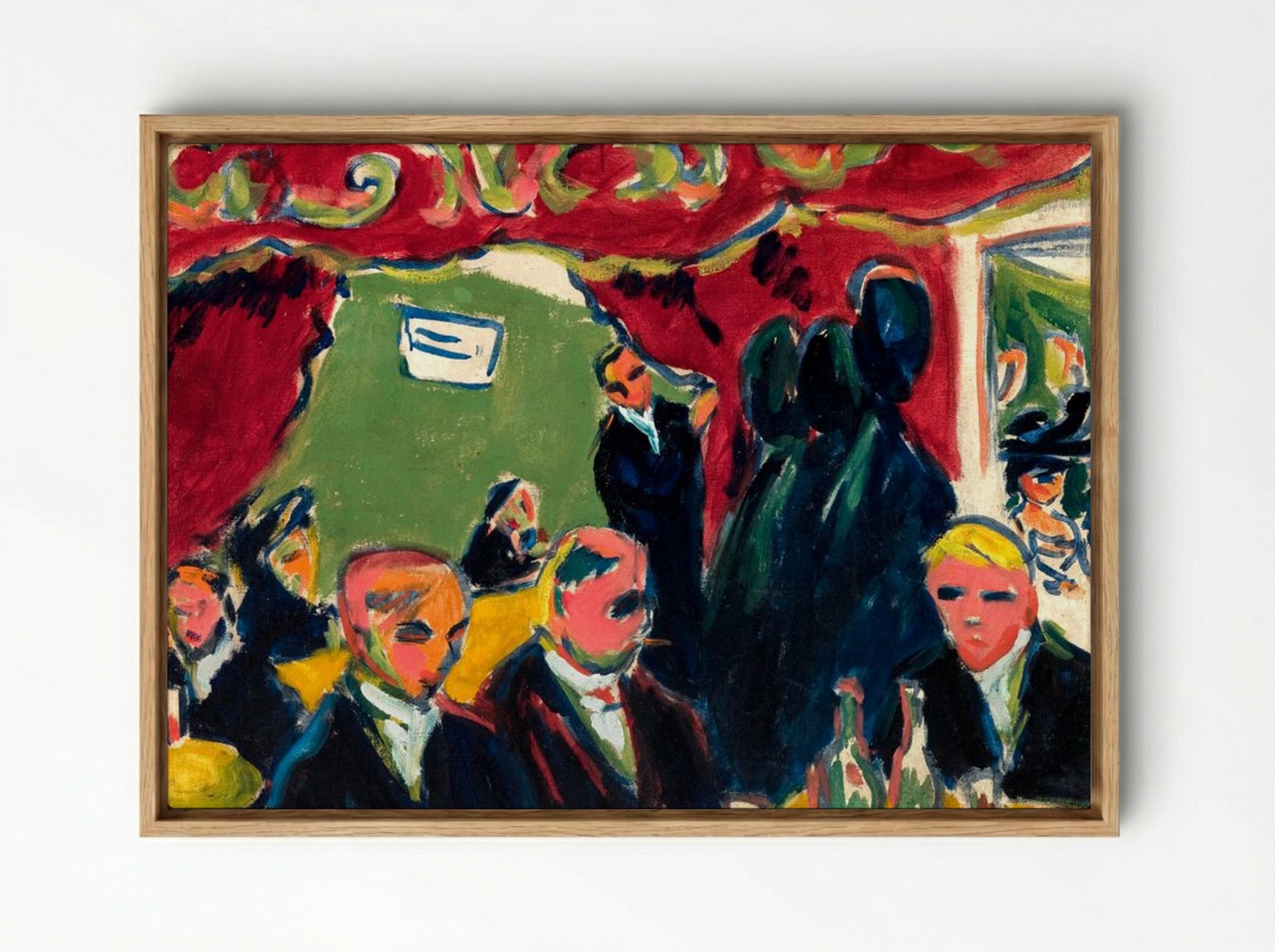
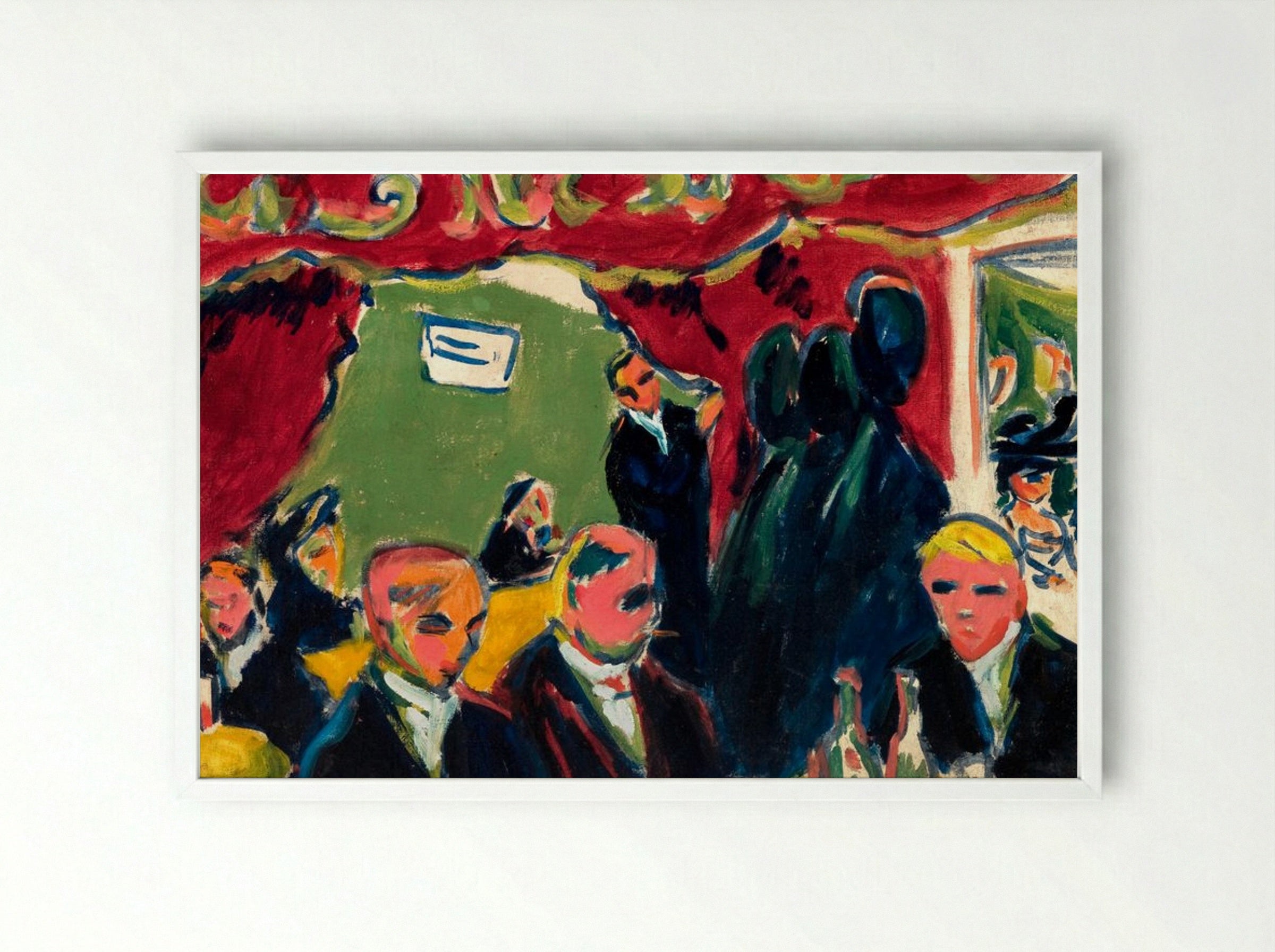
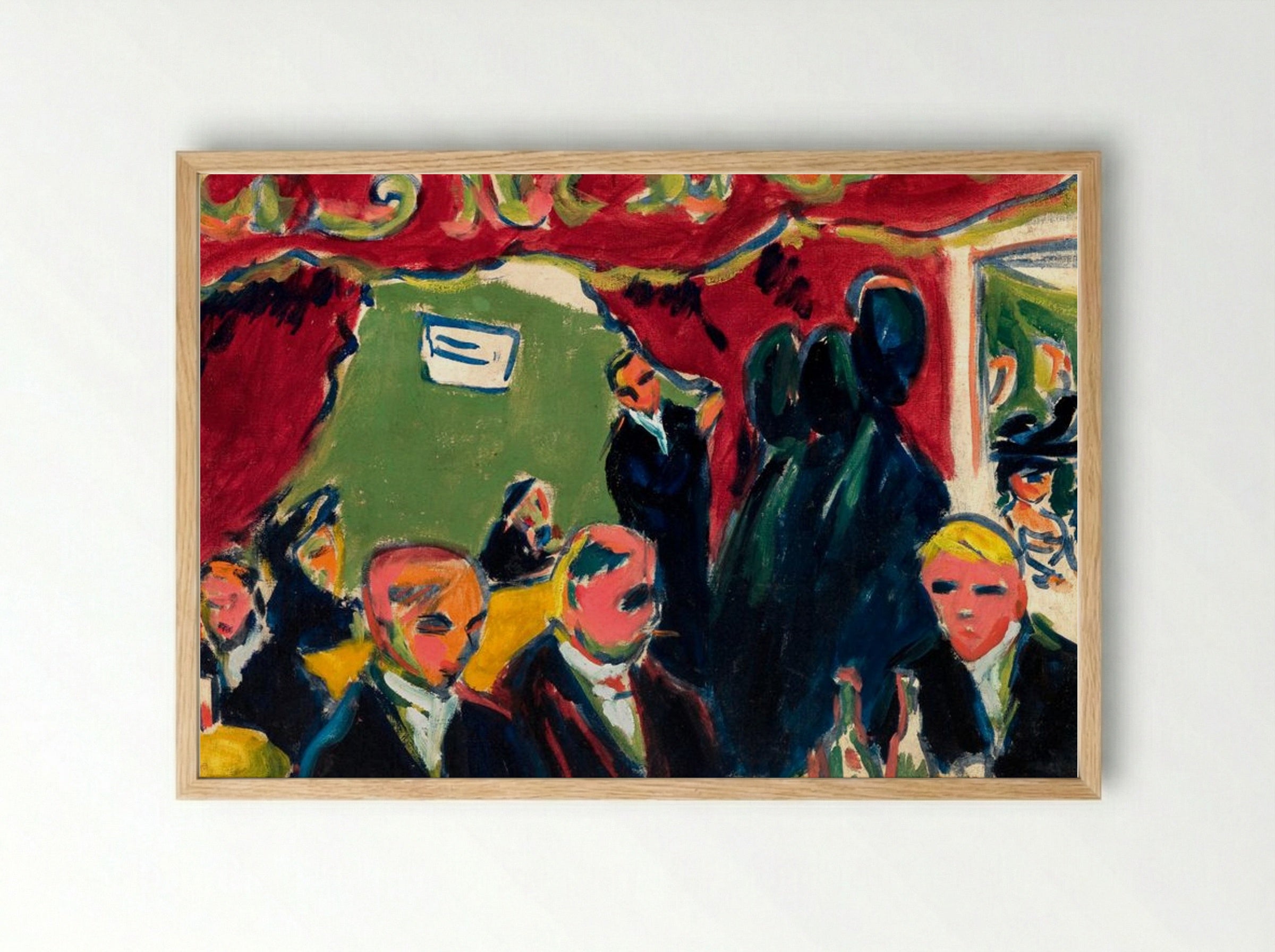
Ernst Ludwig Kirchner's 'In the Tavern' captures the raw emotion of urban life through bold colours and distorted forms, exemplifying early Expressionism. This striking print brings avant-garde energy to any space.
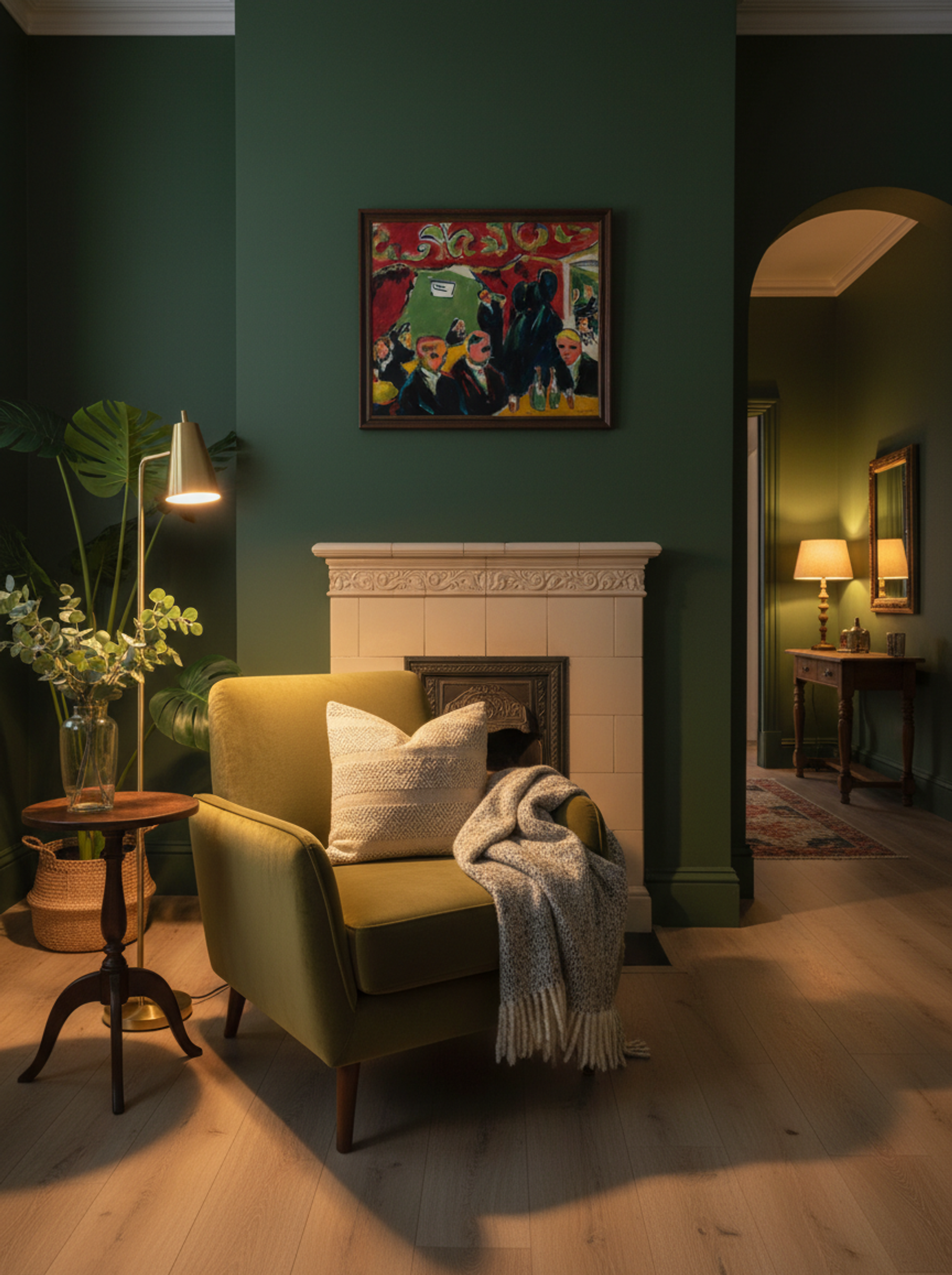
Ernst Ludwig Kirchner's 'In the Tavern', painted in 1909, exemplifies the artist's early Expressionist style and his engagement with the vibrant, often unsettling, atmosphere of urban life in Dresden. As a founding member of the Die Brücke group, Kirchner sought to capture raw emotion and subjective experience through bold colours and distorted forms. This painting depicts a group of figures gathered in a tavern, their faces rendered with a striking palette of pinks, oranges, and blues, conveying a sense of unease and alienation. The composition is dynamic, with sharp angles and contrasting colours creating a visually arresting scene. The red curtain overhead and the green wall behind the figures add to the sense of theatricality and psychological intensity. As a fine art print, 'In the Tavern' brings a touch of early 20th-century avant-garde energy to any space. Its vivid colours and expressive brushwork make it a captivating focal point, ideal for adding character and depth to a living room, study, or hallway. The print serves as a reminder of the power of art to capture the complexities of human emotion and experience.
Return policy
Because every print is made to order, we don't offer change-of-mind returns, refunds or exchanges. If your order arrives faulty, damaged or incorrect, we'll replace it free of charge — just contact us within 48 hours of delivery. EU customers have a 14-day cooling-off right. See our refunds page for full details.
Shipping
We ship worldwide, printing at the production hub nearest to your delivery address. Delivery times and costs vary by destination — you'll see the options available to you at checkout.
Manufacturing
Each print is produced to order using 12-colour giclée printing on FSC-certified archival paper. Designed in Britain and printed at your nearest production hub to reduce waste and speed up delivery.
In the Tavern - Ernst Ludwig Kirchner
Our Features
Designed for Lasting Impact
Specific Features
Every Solis piece is made to order with archival, gallery-quality materials built to last.
- Museum-grade giclée printing for rich, fade-resistant colour
- Archival matte fine-art paper, FSC-certified
- Choose poster, framed print, canvas or framed canvas
- Frames in black, natural wood, dark wood or white
- Framed prints arrive ready to hang
Care & Cleaning
To keep your artwork looking its best:
- Dust gently with a soft, dry cloth
- Avoid prolonged direct sunlight
- Never use liquid cleaners on the print or canvas surface
- Keep in a dry, room-temperature space
- Handle prints with clean, dry hands
Materials & Sizing
Museum-grade giclée on FSC-certified archival matte paper, with framed and canvas options.
- Paper sizes: A4, A3, A2, A1, A0 and B2 (50×70 cm)
- Canvas: XS (20×30 cm) to Large (60×90 cm)
- Frames: black, natural wood, dark wood or white
Why Choose Us ?
100% Satisfaction Guarantee
Fast Shipping
Museum-Quality Materials

Artist Biography
Ernst Ludwig Kirchner
Kirchner's art is characterised by its emotional intensity and deliberately crude style. He wasn't interested in pretty pictures; he wanted to expose the psychological truths beneath the surface. Works like 'Girl with Cat (Franzi)' and 'The Café' capture the alienation and unease of urban life, with their jagged lines and clashing colours reflecting the inner turmoil of his subjects. His nudes, such as 'Reclining Nude (Isabella)', possess a raw sensuality, far removed from classical ideals of beauty.
Today, Kirchner's art resonates with collectors who appreciate its unflinching honesty and powerful emotional impact. His willingness to confront the darker aspects of the human condition paved the way for future generations of artists. Owning a Kirchner print is not just about possessing a beautiful object; it's about engaging with a vital and enduring expression of the modern human experience.
You May Also Like