

The Pre-Raphaelite Brotherhood was founded in September 1848 in a house on Gower Street in central London. The seven founding members were students at the Royal Academy schools, mostly in their late teens or early twenties. The three leading figures (Dante Gabriel Rossetti, John Everett Millais, William Holman Hunt) had been friends for two years. The other four (William Michael Rossetti, James Collinson, Thomas Woolner, Frederic George Stephens) joined the group at the founding meeting.
They agreed to paint in a new style, modelled on early Italian art before Raphael, and to mark their work with the secret signature P.R.B. They told no one outside the group what the initials meant. The first paintings with the signature were exhibited at the Royal Academy in 1849. The signature was decoded by an outsider in 1850, and the public reaction was hostile.
What They Were Reacting Against
The Royal Academy's training in the 1840s was based on the curriculum that had been set up by Joshua Reynolds in the 1760s. The model was Italian High Renaissance painting: balanced composition, idealised figures, generalised lighting, smooth glazing. The standard exhibition picture was a history scene or a portrait, painted in the manner of Raphael or his followers.
Hunt and Millais had read Charles Lock Eastlake's translation of Cennino Cennini's fifteenth-century painting manual. They had seen a recent exhibition of early Italian art at the Royal Academy. They concluded that the conventions of post-Raphael painting (the smoke-darkened tonalities, the formulaic compositions, the generalised expressions) had drained the life out of British art. They wanted to go back further: to the precision and bright colour of pre-Raphaelite painters like Mantegna, Carpaccio, Memling, and the brothers Van Eyck.
The Paintings
The early Pre-Raphaelite paintings are bright, sharp, and unsentimental. Millais's Christ in the House of His Parents (1849-50) shows the holy family in a working carpenter's shop, the wood shavings on the floor, the boy Jesus with bleeding hand. Hunt's The Light of the World (begun 1851) shows Christ as a robed figure knocking at a door overgrown with weeds. Rossetti's The Annunciation (1849-50) shows Mary as a frightened girl pressed against the wall of her bedroom.
The technical methods were unusual. The Brothers painted on white grounds (most Royal Academy painters used coloured grounds) to maximise the brightness of the colours. They painted from life rather than from studio formulae: the carpenter's tools in Millais's painting were borrowed from a real Holborn workshop, the model for the boy Jesus was a real child. Hunt began his backgrounds outdoors, sometimes painting through entire summers in a single field to capture the foliage exactly.
Dickens and the Public
The signature P.R.B. was decoded in spring 1850 by William Michael Rossetti's friend Stephens, who told an outsider, who told a journalist. The Times and the Athenaeum published attacks on the Brotherhood. The most famous attack was Charles Dickens's review of Christ in the House of His Parents in Household Words in June 1850.
Dickens wrote that the painting was "mean, odious, repulsive, and revolting." He compared the figure of Mary to "a Monster, in the vilest cabaret in France, or in the lowest gin-shop in England." He attacked the painting's realism as ugliness for its own sake, the holy family reduced to "the lowest depths of what is mean, odious, repulsive."
The review almost destroyed Millais's career. The Royal Academy's vice-president threatened to expel him. The Brotherhood's prospects went from rising to ruined within a single season. Recovery came from an unlikely source: the critic John Ruskin, then the most influential art writer in Britain, who wrote a defence of the Pre-Raphaelites in The Times in 1851.
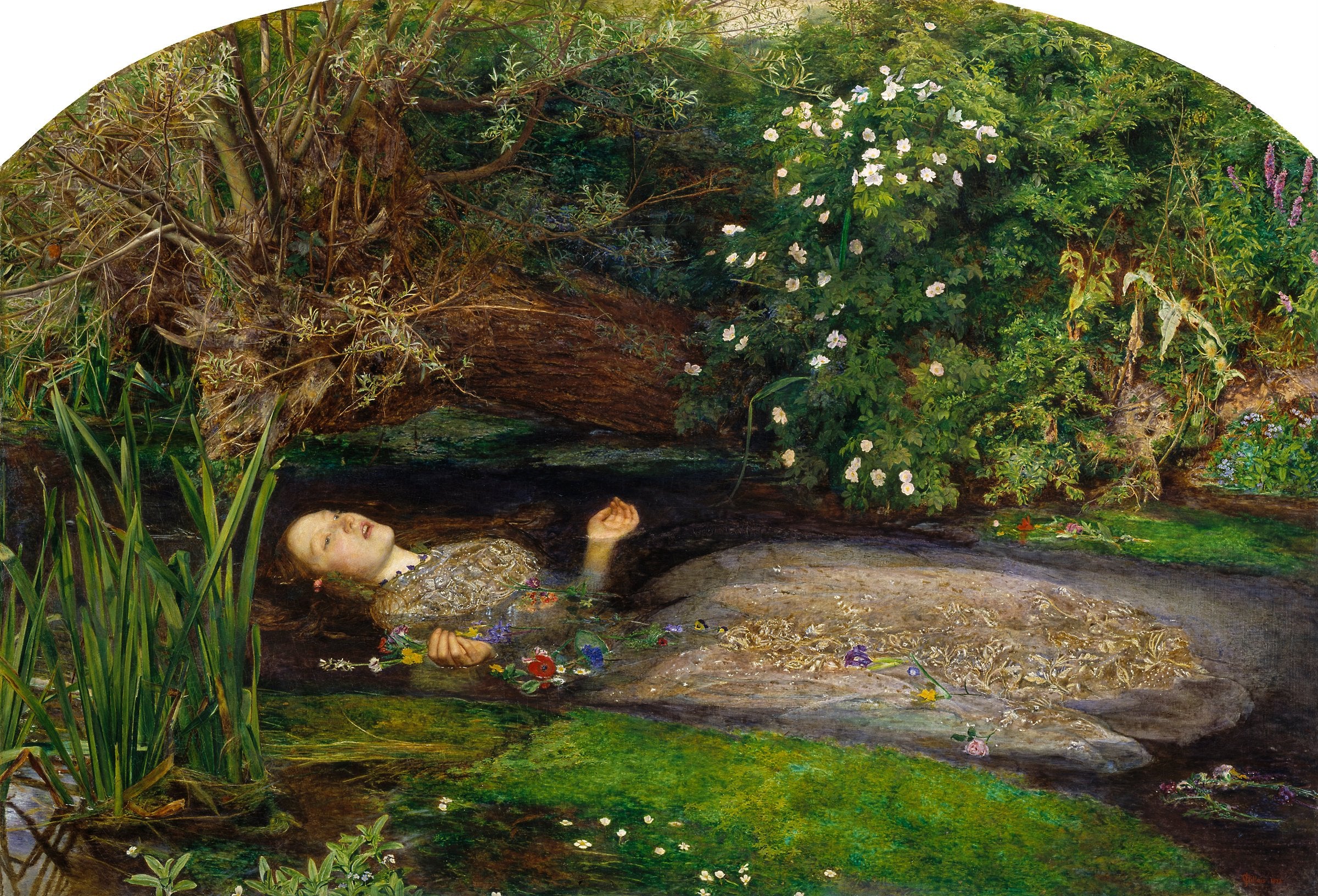
Ophelia and the Five-Month River
Millais painted Ophelia between July 1851 and December 1852. The river setting was the Hogsmill in Surrey, where Millais sat for eleven hours a day in a tent, painting plant by plant for eleven weeks. The model for Ophelia was Elizabeth Siddal, an art-supplies-shop assistant who had been recruited as a Pre-Raphaelite model that year. She lay fully dressed in a bath of water in Millais's London studio for four months while Millais painted her face and dress, the bath kept warm by oil lamps underneath. One day the lamps went out and the water grew cold; Siddal contracted pneumonia. Her father sued Millais for fifty pounds.
The painting was exhibited at the Royal Academy in 1852 and is now the Tate's most-reproduced single canvas. The technical achievement is remarkable: every plant in the foreground is botanically identifiable, the dress fabric reads as actual silk, the water surface is built up in glazes of varying opacity. The picture works as a piece of forensic Victorian observation and also as a meditation on death.
What Happened to the Brotherhood
The original Brotherhood lasted about five years before fragmenting. Millais was elected an Associate of the Royal Academy in 1853, prompting Rossetti's famous remark that "the Round Table is dissolved." Millais went on to become president of the Royal Academy in 1896. Hunt continued to paint religious subjects, increasingly in Palestine, for fifty more years. Rossetti developed a separate Pre-Raphaelite style focused on female portraits and medieval subjects.
The second-generation Pre-Raphaelites (Edward Burne-Jones, William Morris) joined Rossetti's circle in the late 1850s. Morris turned the movement into a craft and design enterprise that produced wallpaper, textiles, stained glass, and books for the rest of the century. The aesthetic shifted from the early Brotherhood's sharp realism toward a softer, more decorative, more medievalising style.
The Reputation
The Pre-Raphaelite movement was attacked again in the early twentieth century, when Modernist critics dismissed it as Victorian sentimentality. Millais's Bubbles (the boy blowing soap bubbles, used by Pears soap as an advert from 1888 onward) became the period's emblem of sentimental kitsch.
The reputation recovered slowly. The 1984 Tate Gallery retrospective rehabilitated the early Brotherhood as serious painters. The 2012 retrospective at the same venue (Pre-Raphaelites: Victorian Avant-Garde) made the case that the movement was a more radical response to its moment than later critics had allowed.
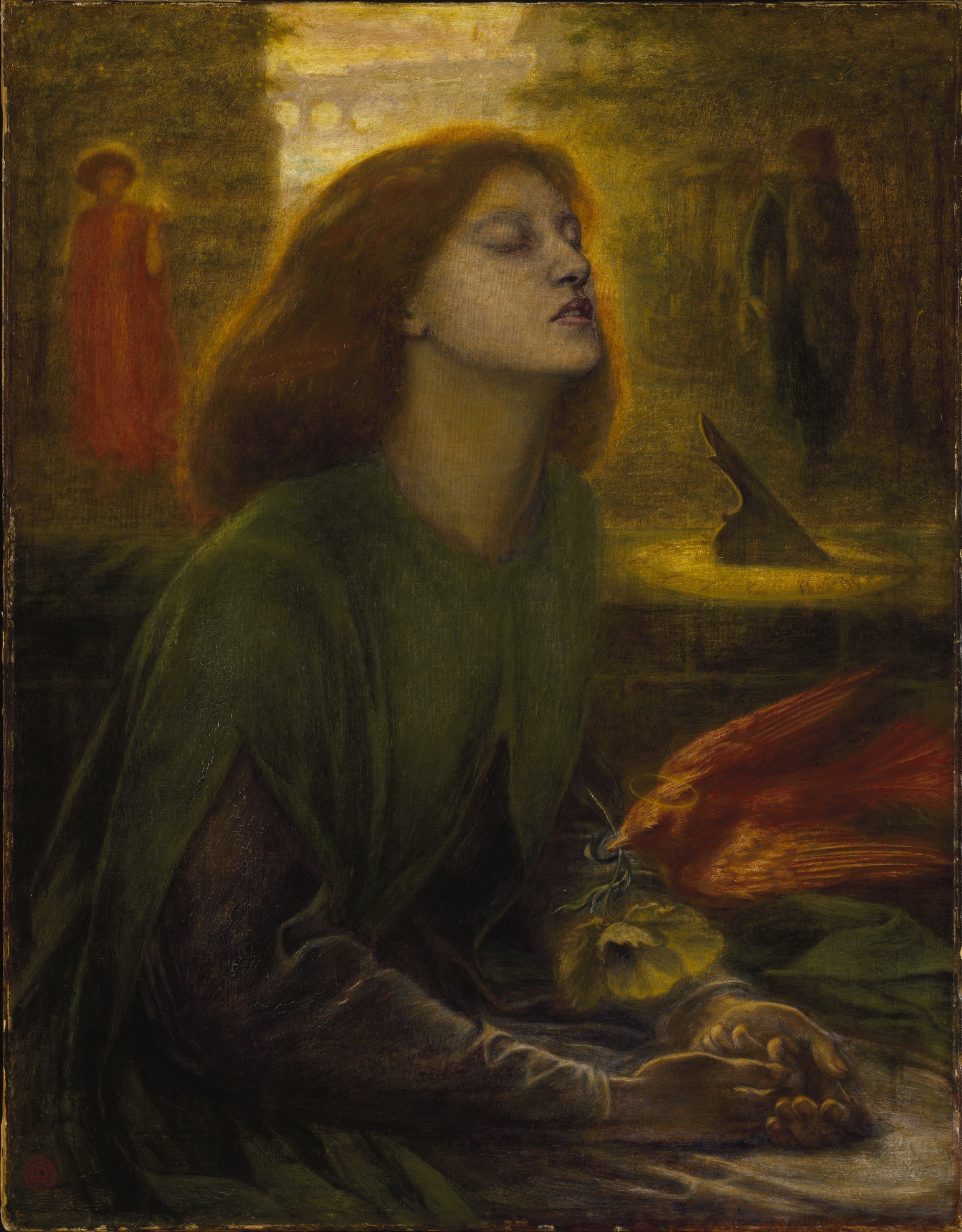
The seven young men who signed their paintings P.R.B. were not, in the end, particularly secret. They were part of a familiar pattern: the small group, the manifesto-by-symbol, the older critic's defence, the eventual absorption into the establishment. What survives is the work. Ophelia, the Light of the World, Beata Beatrix, the carpenter's shop with the wood shavings on the floor: paintings still doing what they were made to do.


