

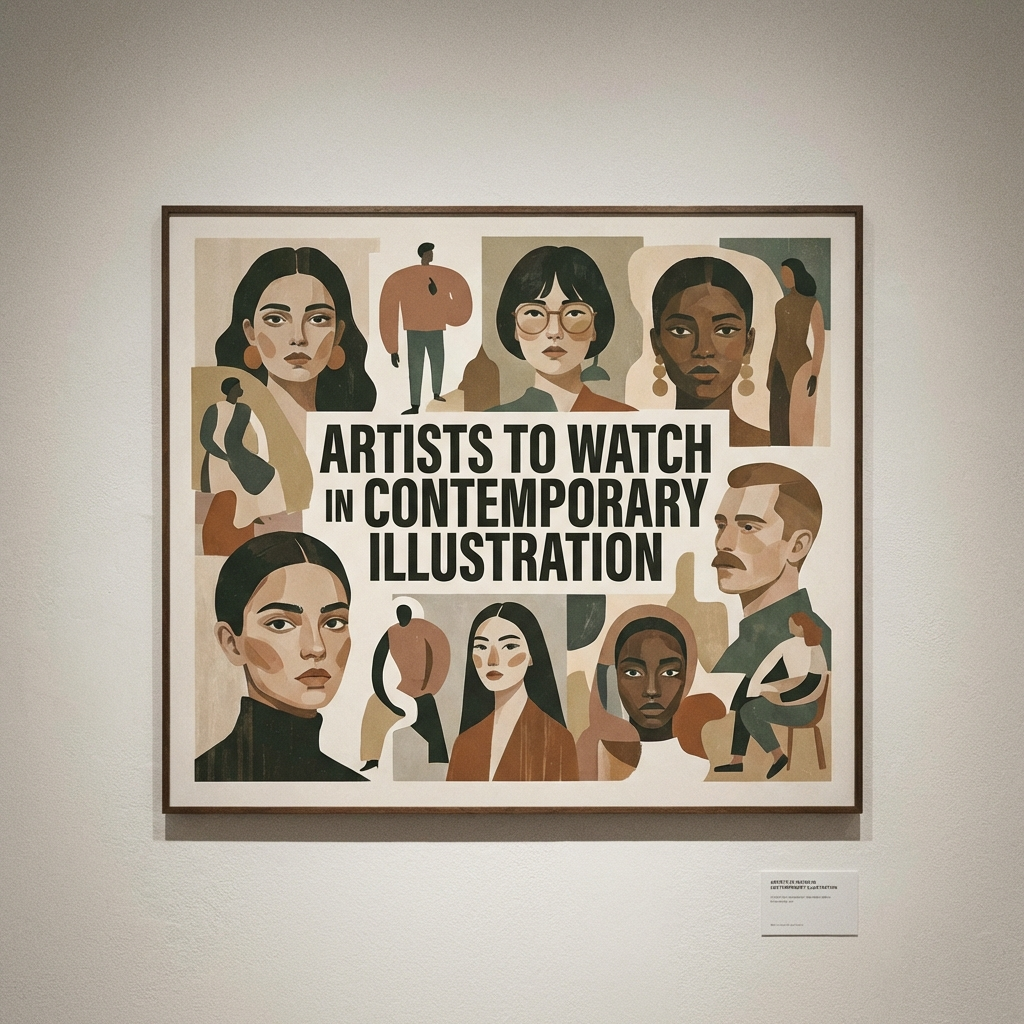
In the fast-moving world of design, the definition of "contemporary" is constantly shifting. Yet, if you look closely at the most exciting trends in visual culture today-from digital editorial art to textile design-you will find a dialogue between the new and the timeless. The artists to watch in contemporary illustration aren't just the emerging talents of 2026; they are the enduring masters whose work feels more relevant now than ever.
At Solis Prints, we champion this intersection of history and modernity. Whether it is the bold simplification of form found in a Matisse cut-out or the obsessive, immersive patterns of Yayoi Kusama, these artists set the visual language that today's illustrators continue to speak. Here are the key figures shaping the landscape of contemporary illustration.
Yayoi Kusama: The Infinite Pattern
Few living artists have captured the public imagination like Yayoi Kusama. Her work transcends traditional canvas, expanding into immersive installations that challenge our sense of space and self. In the realm of illustration and surface design, Kusama’s influence is undeniable. Her signature polka dots and organic, repetitive nets have revived an interest in obsessive, hand-drawn textures that reject the clean perfection of vector graphics.
Kusama represents the pinnacle of the "contemporary" spirit-art that is experiential, bold, and instantly customisable. Her ability to turn a simple motif into a global phenomenon offers a masterclass for modern illustrators: distinctiveness lies in repetition and commitment to a singular vision.
Paul Klee: The Father of Whimsical Line
If you scroll through the portfolios of top editorial illustrators today, you will see the ghost of Paul Klee. A master of the Bauhaus, Klee famously described drawing as "taking a line for a walk." This philosophy is the bedrock of contemporary line art, where narrative and abstraction blend seamlessly.
Works like Twittering Machine (1922) anticipate the modern fascination with blending the mechanical and the organic. Klee’s use of shaky, expressive lines and washed-out colour fields provides a direct blueprint for the "imperfect" digital illustration style currently dominating magazine covers and branding. He reminds us that illustration is not just about representation, but about visual poetry.
Henri Matisse: The Cut-Out Revolution
The recent resurgence of flat design and bold, abstract botanical shapes can be traced back to one source: Henri Matisse. Specifically, his later "cut-outs" have become the gold standard for contemporary composition. By painting with scissors, Matisse achieved a fluidity and economy of form that modern vector artists strive to emulate.
His 1905 masterpiece The Open Window also teaches a vital lesson in colour theory. The unnatural, expressive use of pinks, greens, and blues broke the rules of realism, paving the way for the vibrant, high-contrast palettes seen in app design and modern risograph prints. For the design-conscious shopper, a Matisse print is not just a piece of history; it is a nod to the roots of modern graphic simplicity.
Ohara Koson: The Nature Revival
As contemporary illustration turns towards themes of ecology and mindfulness, the Shin-hanga movement has found a new audience. Ohara Koson, a master of kacho-e (bird-and-flower pictures), perfected a style that blends hyper-realistic observation with decorative flatness.
Prints like Dancing Fox resonate deeply with the modern aesthetic of "quiet luxury" and biophilic design. The soft gradients and precise composition of Koson’s woodblocks offer a calming counterpoint to the noise of digital media, proving that the most "current" artwork is often that which helps us slow down.
Bringing the Masters Home
To truly understand the artists to watch in contemporary illustration, one must look at the foundations. The bold lines of Klee, the fearless colour of Matisse, and the organic patterns of Kusama form the DNA of modern visual culture. By integrating these timeless prints into your home, you aren't just decorating; you are curating a space that celebrates the enduring power of great design.


