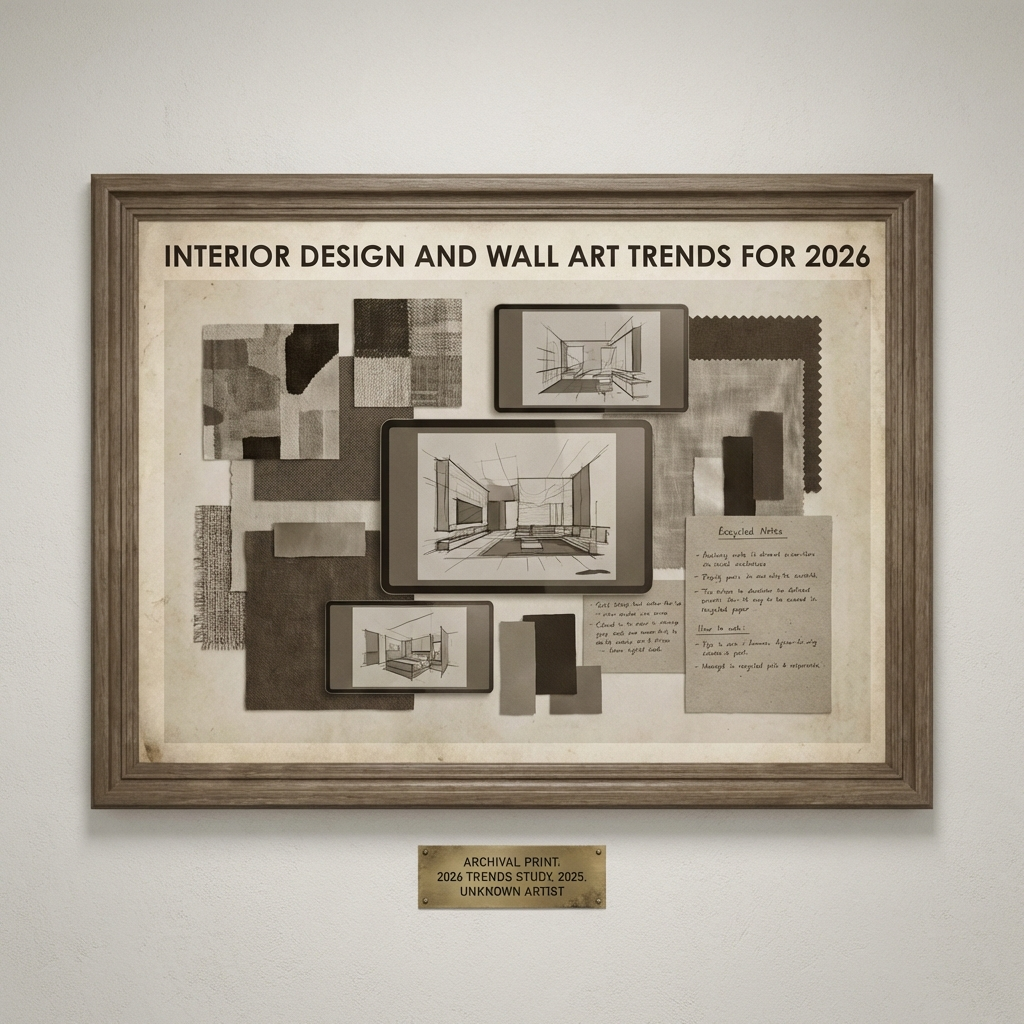
There is a palpable shift occurring in the world of interior design. After a decade dominated by the clean, sometimes sterile precision of digital minimalism, we are witnessing a collective yearning for the warmth of the human hand. The return of hand-drawn illustration in modern interiors is not merely a trend; it is a response to the desire for authenticity, imperfection, and storytelling in the spaces we inhabit.
From the scratchy, emotive lines of early Expressionism to the disciplined study of botanical science, hand-drawn art brings a unique texture to a room that pixels simply cannot replicate. This movement celebrates the smudge of charcoal, the bleed of ink, and the deliberate stroke of the craftsman.
The Expressive Line: Wabi-Sabi on Walls
One of the strongest currents in this revival is the appreciation for the "imperfect" line. In Japanese aesthetics, wabi-sabi teaches us to find beauty in imperfection and transience. In Western art history, few embodied this raw, expressive quality better than the proteges of the Vienna Secession.
Artists like Gustav Klimt and his contemporary Egon Schiele championed a style where the line itself carried emotional weight. Schiele’s landscapes, such as Four Trees, move beyond realistic representation into something far more mood-driven. The trees are not just plants; they are ragged, resilient figures against a setting sun. Introducing prints with this sketch-like quality into a modern living room adds instant depth and a sense of history.
Similarly, the abstract wanderings of Paul Klee offer a playful yet sophisticated take on hand-drawn geometry. His works often resemble doodles elevated to high art, where symbols and lines float in a dreamlike space. These pieces work exceptionally well in mid-century modern spaces, bridging the gap between structure and chaos.
The Scientific Study: Detail and Observation
While some artists embraced the loose sketch, others found beauty in rigorous precision. The 19th century was the golden age of scientific illustration, where artists doubled as botanists and zoologists. Today, these detailed studies are being reclaimed as sophisticated wall art.
The work of A. J. Wendel is a prime example of this discipline. His botanical lithographs are not just pretty pictures of flowers; they are scientific documents recorded with an artist's eye. The revival of these prints speaks to a "Dark Academia" or "Cottagecore" aesthetic, where the home becomes a place of study and curiosity.
To style these, consider moving away from the standard single frame. A grid of four or six botanical studies creates a "museum wall" effect that is both intellectual and decorative. It brings the outdoors in, but with a vintage, curated twist.
The Narrative Pattern: Craftsmanship in Repetition
No discussion of hand-drawn illustration is complete without the master of the Arts and Crafts movement, William Morris. Morris believed passionately that true beauty came from the craftsman's hand, rejecting the soulless mass production of the Industrial Revolution.
His designs, such as the iconic Strawberry Thief, began as intricate hand-drawings before being transferred to block prints. The complexity of the foliage, the cheeky character of the birds, and the rhythm of the pattern all stem from his drafting skills. Using Morris prints as framed art-rather than just wallpaper-allows you to appreciate these details as individual works of illustration. They serve as a reminder that patience and skill are timeless components of style.
Styling Hand-Drawn Art in 2026
Integrating these pieces into a contemporary home is easier than you might think. The key is contrast.
- Mix Eras: Pair a Pop Art poster with a vintage botanical sketch. The clash of digital flatness and hand-drawn texture creates visual vibration.
- Embrace the Ink: Look for prints that highlight the medium-watercolour bleeds, pencil scratches, or the woodgrain texture of a Japanese print like those by Ohara Koson.
- Frame with Texture: Avoid high-gloss plastic frames. Natural wood (oak or walnut) complements the organic nature of hand-drawn art.
Whether it is the emotional rawness of a Schiele landscape or the calculated beauty of a Wendel botanical, the return of hand-drawn illustration invites us to slow down and look closer. It grounds our high-tech homes in the timeless practice of making marks on paper.