

Collection
Albrecht Durer
Explore curated art prints selected for distinctive homes and considered interiors.
-

 Christ among the Doctors - Albrecht Dürer
Print · Framed
Regular price From $29.00 USDSale price From $29.00 USD Regular price -

 St. Jerome in his Study - Albrecht Dürer
Print · Framed
Regular price From $29.00 USDSale price From $29.00 USD Regular price -

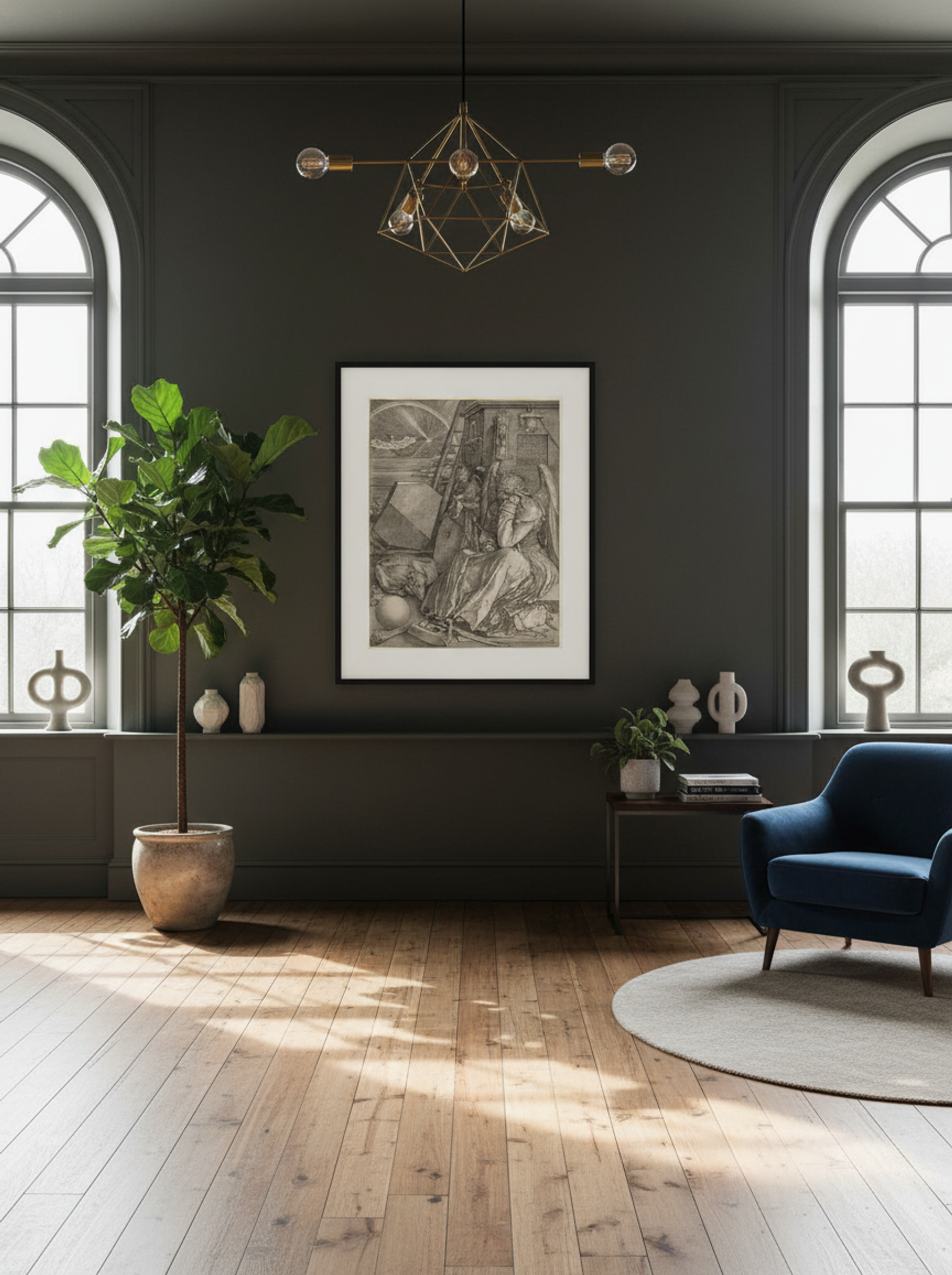 Melencolia I - Albrecht Dürer
Print · Framed
Regular price From $29.00 USDSale price From $29.00 USD Regular price -

 St. George and the Dragon - Albrecht Dürer
Print · Framed
Regular price From $29.00 USDSale price From $29.00 USD Regular price -

 The Entombment - Albrecht Dürer
Print · Framed
Regular price From $29.00 USDSale price From $29.00 USD Regular price -

 The Last Judgment - Albrecht Dürer
Print · Framed
Regular price From $29.00 USDSale price From $29.00 USD Regular price -

 The Last Supper - Albrecht Dürer
Print · Framed
Regular price From $29.00 USDSale price From $29.00 USD Regular price


Artist Biography
Albrecht Durer
Dürer brought the Italian Renaissance to northern Europe and took northern European printmaking to Italy. He went both ways. He visited Venice twice (1494-95 and 1505-07) and absorbed the colour, light, and anatomical precision of Bellini and Mantegna. He brought back a confidence in the human figure that German art had not previously possessed. In return, he showed the Venetians what could be done with a woodcut and an engraving burin.
He was born in Nuremberg, the son of a Hungarian goldsmith. He trained as a goldsmith himself before apprenticing with the painter and printmaker Michael Wolgemut. The metalwork training gave him the manual precision that made his prints extraordinary. Melencolia I, Knight, Death and the Devil, and Saint Jerome in His Study, all made between 1513 and 1514, are among the finest engravings ever produced. The density of cross-hatching, the control of tonal gradation, the rendering of fur, feathers, and stone: these are virtuoso performances in a medium that most artists treated as reproductive.
He drew a rhinoceros from a description and a sketch sent by letter. He had never seen one. Dürer's Rhinoceros (1515) is anatomically wrong in several respects (the animal has an extra horn and armour plating) but it remained the standard European image of a rhinoceros for three centuries.
He was one of the first artists to paint self-portraits as a primary subject. The Self-Portrait at Twenty-Eight (1500) shows him facing the viewer directly, with long hair and a fur coat, in a pose traditionally reserved for Christ. It was either an act of supreme confidence or deliberate blasphemy. Probably both.
He was born in Nuremberg, the son of a Hungarian goldsmith. He trained as a goldsmith himself before apprenticing with the painter and printmaker Michael Wolgemut. The metalwork training gave him the manual precision that made his prints extraordinary. Melencolia I, Knight, Death and the Devil, and Saint Jerome in His Study, all made between 1513 and 1514, are among the finest engravings ever produced. The density of cross-hatching, the control of tonal gradation, the rendering of fur, feathers, and stone: these are virtuoso performances in a medium that most artists treated as reproductive.
He drew a rhinoceros from a description and a sketch sent by letter. He had never seen one. Dürer's Rhinoceros (1515) is anatomically wrong in several respects (the animal has an extra horn and armour plating) but it remained the standard European image of a rhinoceros for three centuries.
He was one of the first artists to paint self-portraits as a primary subject. The Self-Portrait at Twenty-Eight (1500) shows him facing the viewer directly, with long hair and a fur coat, in a pose traditionally reserved for Christ. It was either an act of supreme confidence or deliberate blasphemy. Probably both.
Related Artists


Why Choose Us ?