

Collection
Maxfield Parrish
Explore curated art prints selected for distinctive homes and considered interiors.
-

 Alarums and Excursions - Maxfield Parrish
Print · Framed
Regular price From $29.00 USDSale price From $29.00 USD Regular price -

 The Century Midsummer Holiday Number - Maxfield Parrish
Print · Framed · Canvas
Regular price From $29.00 USDSale price From $29.00 USD Regular price -
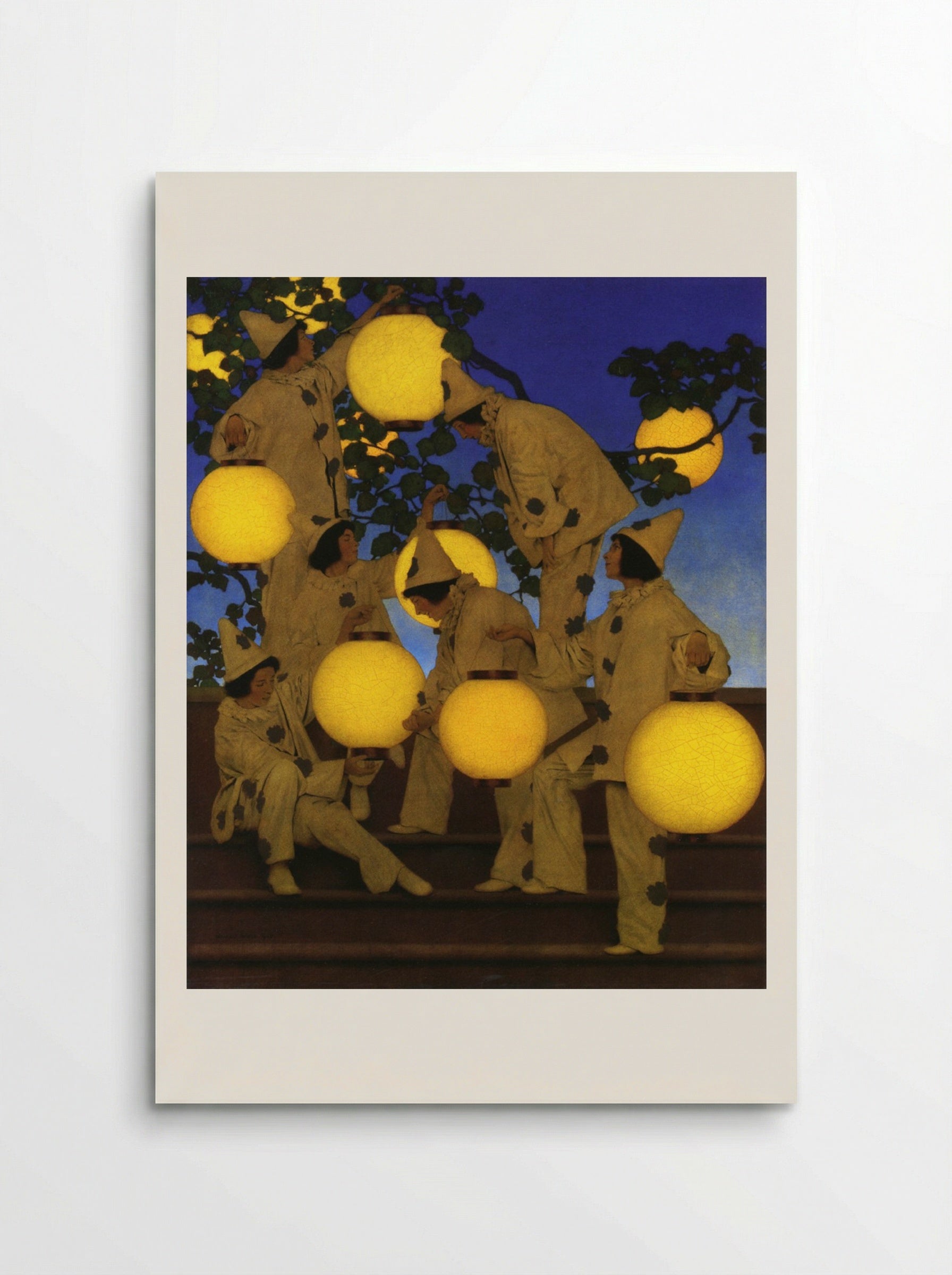 The Lantern Bearers - Maxfield Parrish
Print
Regular price From $29.00 USDSale price From $29.00 USD Regular price -
 Solitude - Maxfield Parrish
Print
Regular price From $39.00 USDSale price From $39.00 USD Regular price -
 Garden of Allah - Maxfield Parrish
Print
Regular price From $29.00 USDSale price From $29.00 USD Regular price -
 The Knave of Hearts - Maxfield Parrish
Print
Regular price From $29.00 USDSale price From $29.00 USD Regular price -
 Grand Canyon - Maxfield Parrish
Print
Regular price From $29.00 USDSale price From $29.00 USD Regular price -
 Cardinal Archbishop Sat on His Shaded Balcony - Maxfield Parrish
Print
Regular price From $29.00 USDSale price From $29.00 USD Regular price -
 Moonlight - Maxfield Parrish
Print
Regular price From $29.00 USDSale price From $29.00 USD Regular price -
 The Dinky Bird - Maxfield Parrish
Print
Regular price From $29.00 USDSale price From $29.00 USD Regular price -

 Birches in Winter - Maxfield Parrish
Print · Framed
Regular price From $39.00 USDSale price From $39.00 USD Regular price -

 Lady Ursula Kneeling before Pompdebile (from The Knave of Hearts) - Maxfield Parrish
Print · Framed
Regular price From $29.00 USDSale price From $29.00 USD Regular price -

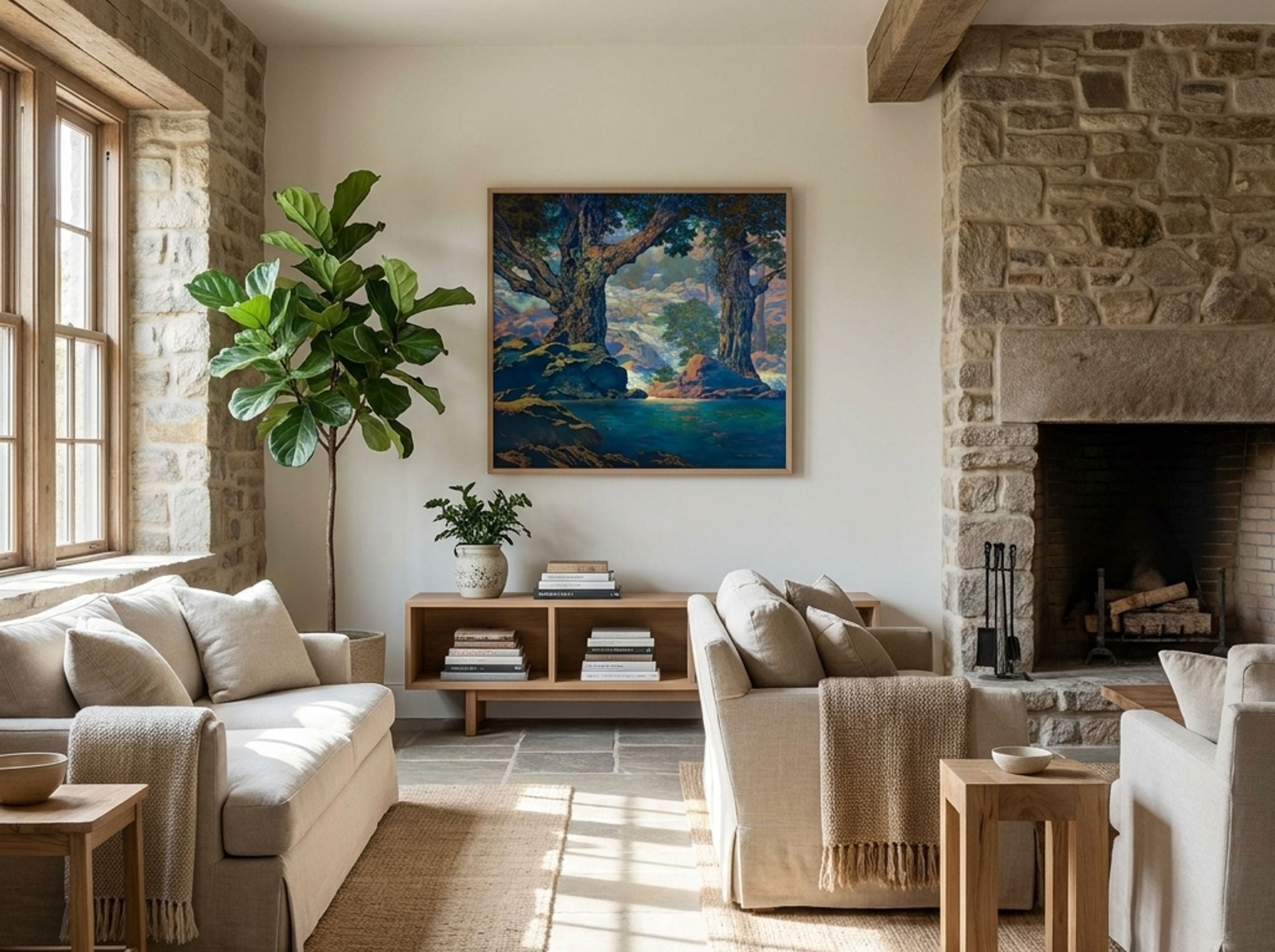 Cascades (Quiet Solitude) - Maxfield Parrish
Print · Framed
Regular price From $39.00 USDSale price From $39.00 USD Regular price -

 Contentment - Maxfield Parrish
Print · Framed
Regular price From $39.00 USDSale price From $39.00 USD Regular price -

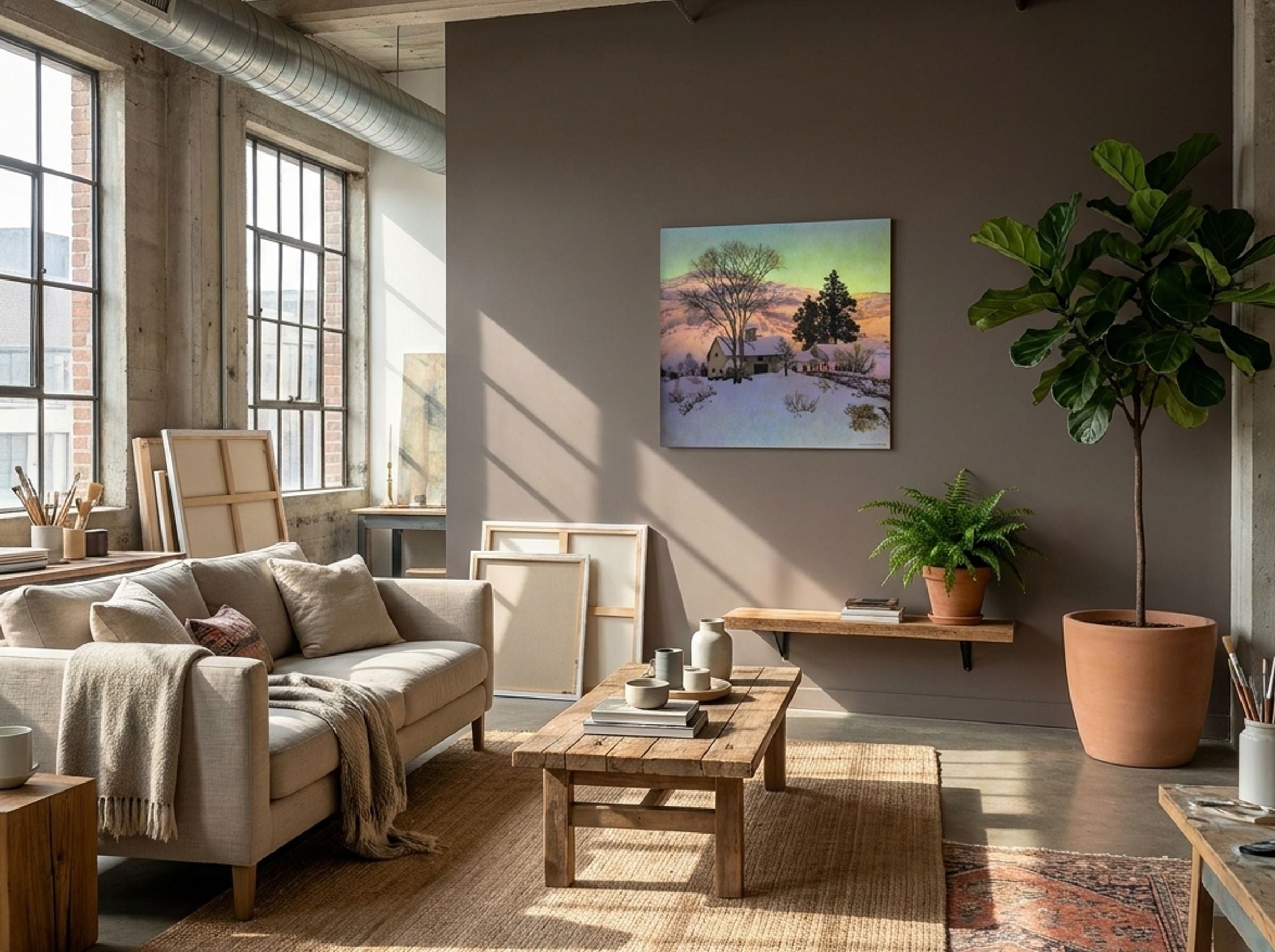 Afterglow - Maxfield Parrish
Print · Framed
Regular price From $39.00 USDSale price From $39.00 USD Regular price -

 Puss in Boots - Maxfield Parrish
Print · Framed
Regular price From $39.00 USDSale price From $39.00 USD Regular price -
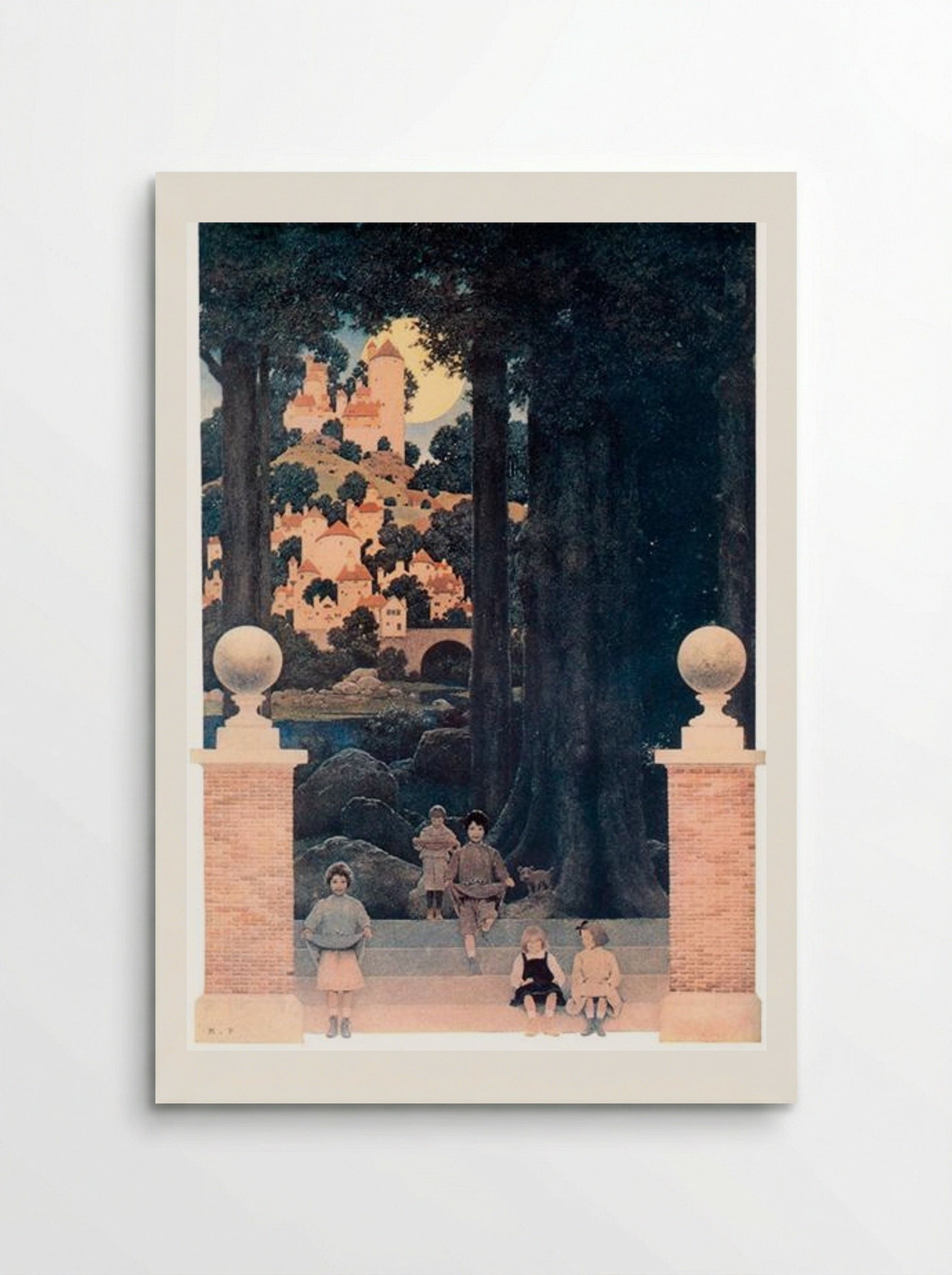
 The Sugar-plum Tree - Maxfield Parrish
Print · Framed
Regular price From $29.00 USDSale price From $29.00 USD Regular price


Artist Biography
Maxfield Parrish
Parrish's real name was Frederick. He adopted Maxfield, his grandmother's maiden name, as a professional name because it sounded better. His father, Stephen Parrish, was a landscape etcher who took the boy travelling through Europe at ten, sketching together in the manner of a Victorian gentleman educating his heir. The drawing lessons started before school did.
He called himself a mechanic who paints. Beneath his studio he built a workshop filled with machines, and used them to construct model scenes, props and lighting rigs for his paintings. The process was closer to set design than to plein air. He would build a miniature landscape, light it from specific angles, photograph it, then paint from the photograph using a layering technique borrowed from the Old Masters: thin coats of transparent oil glaze over a plaster base, each layer drying before the next, so the under-colours shone through. The method eliminated visible brushstrokes and produced a luminosity that looked like stained glass.
Daybreak, painted in 1922, became the most reproduced art print of the twentieth century. It outsold Warhol's Campbell's Soup Cans and Da Vinci's Last Supper in print form. By the mid-1920s it was estimated that one in four American households had a Parrish print on the wall. The image appeared in Terrence Malick's Badlands and inspired the poster for The Princess Bride. For three models he used his own daughter Jean, Kitty Owen (granddaughter of William Jennings Bryan), and his young nanny Susan Lewin.
In 1900, tuberculosis followed by a nervous breakdown forced him to stop working. The recovery period changed his technique: it was during this convalescence that he developed the glazing method that defined the rest of his career. He lived to ninety-five, painting until the last few years.
He called himself a mechanic who paints. Beneath his studio he built a workshop filled with machines, and used them to construct model scenes, props and lighting rigs for his paintings. The process was closer to set design than to plein air. He would build a miniature landscape, light it from specific angles, photograph it, then paint from the photograph using a layering technique borrowed from the Old Masters: thin coats of transparent oil glaze over a plaster base, each layer drying before the next, so the under-colours shone through. The method eliminated visible brushstrokes and produced a luminosity that looked like stained glass.
Daybreak, painted in 1922, became the most reproduced art print of the twentieth century. It outsold Warhol's Campbell's Soup Cans and Da Vinci's Last Supper in print form. By the mid-1920s it was estimated that one in four American households had a Parrish print on the wall. The image appeared in Terrence Malick's Badlands and inspired the poster for The Princess Bride. For three models he used his own daughter Jean, Kitty Owen (granddaughter of William Jennings Bryan), and his young nanny Susan Lewin.
In 1900, tuberculosis followed by a nervous breakdown forced him to stop working. The recovery period changed his technique: it was during this convalescence that he developed the glazing method that defined the rest of his career. He lived to ninety-five, painting until the last few years.


Why Choose Us ?