



Ahmed Karahisari
Ahmed Karahisari took his name from his birthplace in Afyonkarahisar in central Anatolia and spent his career in Istanbul at the Ottoman imperial court, living to an age of nearly a hundred. He died in 1566[1], the same year as Sultan Suleiman the Magnificent, for whom he had produced his most celebrated work: a complete manuscript of the Quran, now held at Topkapi Palace.
Biography
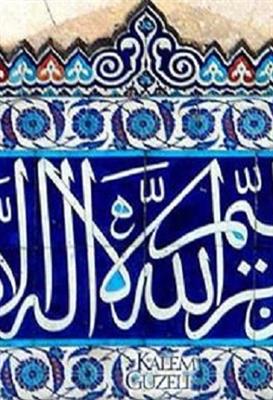
Where most Ottoman calligraphers of the sixteenth century followed the school of Sheikh Hamdullah, whose fluid Naskh set the court standard, Karahisari went backwards to go forward. He studied the Abbasid calligrapher Yaqut al-Mustasimi, who had worked in Baghdad in the thirteenth century, and rebuilt his Thuluth and Naskh scripts from that more ancient foundation. The choice placed him outside the mainstream: his style was not widely adopted by contemporaries, and only later scholarship ranked him alongside Hamdullah and Hafiz Osman as one of the three most significant Ottoman calligraphers.
The legacy was partly secured through his adopted son Hasan Celebi, originally a Circassian slave, who became equally celebrated in his own right and composed the epitaph for his master's tomb. Karahisari had arrived in Istanbul during the reign of Bayezid II to pursue both Sufi learning and calligraphic practice; his long life spanned the reigns of five sultans. His surviving works appear in the Topkapi and in the Khalili Collection in London, where the refinement of his letterforms confirms why, despite his unfashionable independence, the books eventually came to honour him.
Timeline
- 1468Born in Afyonkarahisar, central Anatolia.
- 1481Arrived in Istanbul during the reign of Bayezid II to study Sufi learning and calligraphy.
- 1481Began studying the work of Abbasid calligrapher Yaqut al-Mustasimi.
- 1481Developed his own Thuluth and Naskh scripts based on Yaqut al-Mustasimi's work.
- 1566Died in Istanbul, aged 98. He died the same year as Sultan Suleiman the Magnificent.
- 1566Completed a manuscript of the Quran for Sultan Suleiman the Magnificent; it is now held at Topkapi Palace.
- 1566His adopted son Hasan Celebi composed the epitaph for his tomb.
Notable Works
Tap to view larger.
Next stop
Browse the movements →
Every movement in the collection, from the Renaissance to Pop art.
Ahmed Karahisari prints
Hand-finished archival prints from Ahmed Karahisari's body of work.


Related Artists


Take Ahmed Karahisari home.
See all Ahmed Karahisari prints →Frequently Asked Questions
What is Ahmed Karahisari known for?
Ahmed Karahisari is known for producing a complete manuscript of the Quran for Sultan Suleiman the Magnificent; this manuscript is now held at Topkapi Palace.What is Ahmed Karahisari's most famous work?
It is difficult to name Ahmed Karahisari's single most famous work. He tutored the children of grandees in art, not unlike Ahmed’s palace atelier. Ahmed’s painting, Soldiers in Training, depicts military movements across a valley. Each event, site, and important character is labelled. The layering of figures in the foreground recalls manuscript painting. The image's three-dimensionality suggests an artist who knew about perspective but did not know how to place people within it. The painting represents events and figures as in a diagram, thus creating a realism of military pragmatism more than artistic ambition. Some scholars assert that until 1874 there was no real Turkish[1] art or artist, which has had remarkable sway over historiography, further eclipsing answers to coded mysteries of Ahmed’s painting. The tendency of nineteenth-century Muslim artists to paint inanimate objects has been attributed to Sunni Islam’s opposition to figuration, and to more practical reasons such as their education in early Tanzimat’s engineering and military schools that demanded analytic engagement with real through surveying tools as well as perspectival estimates of the naked eye.What should I know about Ahmed Karahisari's prints?
Ahmed Karahisari (c. 1468[1]-1561[1]) was an Ottoman calligrapher. He developed a style of script that is considered by some to be the apex of Ottoman calligraphy. Karahisari was born in Afyonkarahisar. He may have studied with Yahya Sufi, but his major influence was the work of Yaqut al-Musta'simi (d. 1298). Al-Musta'simi's calligraphy reached Karahisari through the work of Abdullah Sayrafi and Haydar Heravi. Karahisari spent years studying and copying al-Musta'simi's work. He broke with the established style of his period. Karahisari moved away from the calligraphy of Seyh Hamdullah (1429-1520[1]), which had become the standard. Some calligraphers criticised Karahisari's approach. His best-known work is a large Qur'an which he worked on for many years, but did not complete. His student Hasan Celebi completed the Qur'an after Karahisari's death. Examples of his calligraphy are in the Topkapi Palace Library and the Museum of Turkish[1] and Islamic Arts. Karahisari's style influenced later Ottoman calligraphers, although it was not widely followed.What techniques or materials did Ahmed Karahisari use?
Ahmed Karahisari (1468[1]-1556[1]) was an Ottoman calligrapher. He is regarded as one of the most important figures in Islamic calligraphy. Karahisari developed a distinctive style derived from the work of Yaqut al-Musta'simi (d. 1298). Yaqut's style was a refined version of the calligraphy of Ibn Muqla (d. 940) and Ibn al-Bawwab (d. 1022). These earlier masters had codified the six canonical scripts of Islamic calligraphy: *muhaqqaq, rayhani, thuluth, naskh, tauqi*, and *riqa*. Karahisari largely abandoned Yaqut's emphasis on proportional harmony. He instead pursued a more individual expression. His work is characterised by its scale and monumentality. He favoured the *thuluth* and *naskh* scripts. These are often seen in large-scale calligraphic panels and Qur'ans. His best-known work is a large Qur'an commissioned by Suleiman the Magnificent. It was completed by his student Hasan Celebi after Karahisari's death. The manuscript demonstrates his mastery of colour and illumination, alongside his skill in calligraphy. Traditional materials such as handmade paper, reed pens, and inks made from natural dyes were essential to his practice.What was Ahmed Karahisari known for?
Ahmed Karahisari (1468[1]-1556[1]) was an Ottoman calligrapher. He is considered one of the most important figures in Islamic calligraphy. Karahisari broke from the style of Sheikh Hamdullah, which had become the standard in Ottoman calligraphy. Instead, he developed a style inspired by the work of Yaqut al-Musta'simi, a famous calligrapher of the Abbasid era. This involved a return to more classical forms and principles. His style is characterised by its monumentality and precision. He paid great attention to the balance and harmony of the letters, creating compositions of great visual impact. Although he had many students, none were able to fully master his approach. Because of this, his style did not become widespread. His most famous work is probably the calligraphy on the dome of the Mosque of Suleiman the Magnificent in Istanbul. He also produced several important Qur'ans and other religious texts.When did Ahmed Karahisari live and work?
Ahmed Karahisari was an Ottoman calligrapher who lived during the 16th century. The timeline of Islamic art notes that the Ottoman Sultanate existed from 1299 to 1922. More specifically, Karahisari's career occurred during the rule of Süleyman I, also known in Europe as Süleyman the Magnificent, who reigned from 1520[1] to 1566[1]. During this period, the Ottoman Empire saw significant territorial expansion and cultural development. Karahisari is considered one of the most important Ottoman calligraphers, developing a distinctive style derived from the work of Yaqut al-Mustaʿsimi (d. 1298), a Baghdadi scribe known for mastering the six principal scripts used in writing the Qur’an. Karahisari's work is mainly associated with calligraphy, particularly the transcription of the Qur'an.Where can I see Ahmed Karahisari's work?
Ahmed Karahisari's work can be viewed in Istanbul. The Turkish[1] calligrapher (1468[1]-1556[1]) is known for his work on the Qur'an, and he was active during the reign of Süleyman I. Karahisari developed a distinctive style, building on that of earlier masters, and he is regarded as one of the most important Ottoman calligraphers. Examples of his calligraphy can be found in the Topkapı Palace Library, Istanbul. The palace complex was the main residence of the Ottoman sultans, and it houses a vast collection of manuscripts and other works of art. The library holds many important examples of Islamic calligraphy, including works by Karahisari. His work demonstrates the high level of artistic achievement during the Ottoman era.Where was Ahmed Karahisari from?
Ahmed Karahisari, also known as Ahmed Şemseddin Karahisari, was a 16th-century Ottoman calligrapher. Sources differ on his exact place of origin. Some accounts suggest he was from Karahisar (modern Şebinkarahisar), a town in north-eastern Turkey. This is reflected in his name, which incorporates "Karahisari" as a nisba, a component indicating origin. Other accounts propose a different birthplace. Certain sources claim Karahisari was born in Iran, specifically in the town of Afyonkarahisar. This theory suggests he later moved to Karahisar. Regardless of his birthplace, Karahisari spent a significant portion of his life in Istanbul, the Ottoman capital. He became a leading calligrapher there, associated with the court. His work is a high point of Ottoman calligraphy. He died in Istanbul around 1556[1].Who did Ahmed Karahisari influence?
It is difficult to identify specific individuals who were directly influenced by Ahmed Karahisari (1468[1]-1556[1]). Karahisari was a highly regarded Ottoman calligrapher during the reign of Suleiman the Magnificent. His style is considered one of the most important developments in Ottoman calligraphy. Karahisari's work represents a departure from the style of Sheikh Hamdullah, who had previously been the dominant influence. Karahisari revived and refined the Yakuti style, which was developed by Yaqut al-Musta'simi (d. 1298). His work is characterised by its precision, balance, and elegance. He trained his adopted son, Hasan Çelebi, who continued his style. It is likely that many other Ottoman calligraphers were influenced by Karahisari's style, even if they did not directly imitate it. His emphasis on classical principles and technical perfection had a considerable effect on the development of Ottoman calligraphy.Who was Ahmed Karahisari?
Ahmed Karahisari (c. 1468[1]-1556[1]) was an Ottoman calligrapher. He is considered one of the most important figures in Ottoman calligraphy. Born in Afyonkarahisar, his early life is not well documented. He likely received his initial training in the region. He later moved to Istanbul, the Ottoman capital, to further his studies. Here, he became associated with the court. Karahisari developed a distinctive style, building upon the work of earlier masters, particularly Yaqut al-Musta'simi. He favoured the *thuluth* and *naskh* scripts. These scripts were often used for religious texts and imperial decrees. His style is characterised by its precision and balance, as well as its subtle innovations in letterform. Karahisari's most famous work is the calligraphy of the Qur'an in the Süleymaniye Mosque in Istanbul. This project, commissioned by Sultan Suleiman the Magnificent, is a high point of Ottoman art. It demonstrates Karahisari's mastery and his contribution to Islamic art. His students included Hasan Çelebi, who continued his master's style. Karahisari's influence can be seen in subsequent generations of Ottoman calligraphers.Why are Ahmed Karahisari's works important today?
Ahmed Karahisari (1468[1]-1561[1]) was a prominent Ottoman calligrapher. He developed a distinctive style within the Islamic calligraphy tradition, building upon but also moving beyond the work of earlier masters like Yaqut al-Musta'simi. Karahisari is particularly known for his contributions to the development of the *muhaqqaq* script. This script is characterised by its elegant, sweeping lines and careful proportions. He revived its usage at a time when other scripts, such as *thuluth*, were more commonly favoured for important religious texts. His work on the Qur'ans commissioned by Suleiman the Magnificent are considered high points of Ottoman manuscript production. These manuscripts demonstrate Karahisari's mastery of various calligraphic styles, his refined sense of page design, and his ability to harmonise text with illumination. Karahisari's emphasis on classical principles, combined with his personal innovations, had a significant impact on subsequent generations of Ottoman calligraphers. His style influenced the development of Ottoman calligraphy for centuries after his death, and his manuscripts are prized examples of Islamic art.What was Ahmed Karahisari's art style?
Ahmed Karahisari studied the Abbasid calligrapher Yaqut al-Mustasimi and rebuilt his Thuluth and Naskh scripts from that more ancient foundation. This choice placed him outside the mainstream, as his style was not widely adopted by contemporaries.
Sources
Editorial draws on the following primary and tertiary references for Ahmed Karahisari.
- [1] wikipedia Wikipedia: Ahmed Karahisari Used for: biography, birth dates, death dates, identifiers, movement attribution, nationality.
- [2] book Janson, H. W. (Horst Woldemar), 1913-;Janson, Anthony F, History of art Used for: biography.
- [3] book Milwright, Marcus, Islamic Arts and Crafts: An Anthology Used for: biography.
- [4] book Sophie Junge; Erin Hyde Nolan, Survey Practices and Landscape Photography Across the Globe Used for: biography.
Editorial overseen by Solis Prints. Sources verified 2026-09-30. Click a source for details, or hover over [N] in the page above to preview.
Editorial standardsMethodologyCorrectionsAI disclosureAbout the editorial team