



Alberto Pasini
- Orientalism
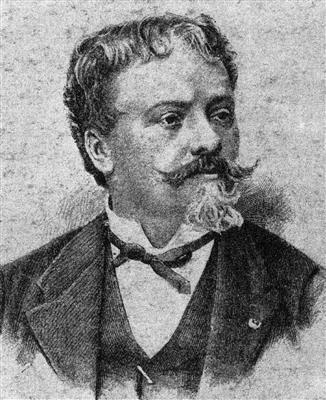
When the French government dispatched a diplomatic mission to Persia in 1855[3], it took an Italian[3] painter with it. Alberto Pasini, then twenty-eight and freshly trained in Paris under Théodore Chassériau, spent months travelling through a world few European artists had depicted at first hand: bazaars, caravansaries, Ottoman street markets, and the particular quality of light on Persian stone and tile.
Biography
Born in Busseto in 1826[3], Pasini had studied first at the Academy of Fine Arts in Parma, then moved to Paris where he worked under Pierre-Luc-Charles Cicéri of the Barbizon school before finding his way to Chassériau, whose own Orientalist work left a lasting impression. The 1855[3] Persian expedition with diplomat Nicolas Prosper Bourée transformed him into a specialist. Over the following decade he returned repeatedly to Egypt, Arabia, and Istanbul, accumulating the sketches that would supply his Paris Salon canvases for the rest of his career.
His speciality was architectural rather than figurative: not the harem fantasies favoured by some contemporaries but textured surfaces of old stone and tiled walls, archways and market streets populated by figures absorbed in their own business. One contemporary noted that his small canvases carried the visual weight of much larger pictures, the compression of detail working in his favour. By the 1870s his reputation had reached the Ottoman court: Sultan Abdul Aziz summoned him to Istanbul for commissions in 1876[3].
He never abandoned European subjects entirely. Venetian vedute, Riviera coast views, and studies of the Alhambra ran alongside his Oriental work until his death at Cavoretto, near Turin, in 1899.
Timeline
- 1826Born in Busseto, Italy
- 1855Joined French diplomatic mission to Persia
- 1855Studied under Théodore Chassériau in Paris
- 1855Travelled through Persia, depicting bazaars and markets
- 1855Studied under Pierre-Luc-Charles Cicéri of the Barbizon school
- 1870Reputation reached the Ottoman court
- 1876Summoned to Istanbul for commissions by Sultan Abdul Aziz
Notable Works
Tap to view larger.
Where to See Alberto Pasini
2 museums worldwide.
-
2 works
Cooper Gallery
Barnsley, United Kingdom
Mon–Sat 10:00–16:00, closed Sundays and Bank Holidays · Free
-
1 works
Musée des beaux-arts de Marseille
Marseille, France
Tue–Sun 09:00–18:00, closed Mondays


Next stop
Browse the movements →
Every movement in the collection, from the Renaissance to Pop art.
Related Artists



Frequently Asked Questions
What is Alberto Pasini known for?
Alberto Pasini is known for his architectural paintings, rather than figurative works. His paintings often featured textured surfaces of old stone and tiled walls, archways, and market streets populated by figures absorbed in their own business.What is Alberto Pasini's most famous work?
Alberto Pasini (1826[3]-1899) was an Italian[3] painter known for his Orientalist scenes. He travelled extensively in the Middle East; these travels greatly influenced his artistic output. While it is difficult to identify a single "most famous" work, several paintings are particularly well regarded. "Entrance of Mehmet II into Constantinople" is one example. It depicts the Ottoman sultan Mehmed II's entry into Constantinople in 1453. This painting is celebrated for its detailed depiction of a historical event and its careful rendering of Ottoman pageantry. Another notable work is "Festa a Costantinopoli". This painting captures a festive scene in Constantinople (now Istanbul), with a focus on the city's architecture and the activities of its inhabitants. Pasini's skill in capturing light and atmosphere is evident in this painting, making it a popular and admired work. His paintings often feature scenes from daily life in the Middle East, with an emphasis on architectural details and local customs. These works contributed to the wider European interest in Orientalist subjects during the 19th century.What should I know about Alberto Pasini's prints?
Alberto Pasini (1826[3]-1899) was an Italian[3] painter, known for his Orientalist scenes. Although he is not as well known for printmaking, reproductions of his paintings were made as prints. In the 17th century, printmaking was used to reproduce artworks in collections such as the Galleria Giustiniana. These prints allowed those who could not visit the collection to see the artworks. The prints were of such quality that they started conversations without needing explanatory text. The publication of the Galleria extended the walls of this free academy far beyond Rome. Piranesi's prints influenced stage design outside Rome. By 1760, Pierre-Antoine de Machy's prison set at the Paris Opéra was described as "one of the most beautiful examples of perspective that we have seen on the stage... taken from the engravings of the celebrated Piranesi". In 1776, Vincenzo Mazzi entitled a suite of his own prints Capricci di carceri tea[trali], linking Piranesi's visions of prisons to the stage. Pasini's paintings, with their detailed depictions of Middle Eastern life, lent themselves well to reproduction via printmaking. These prints made his art accessible to a wider audience, allowing people to own and appreciate his Orientalist visions.What style or movement did Alberto Pasini belong to?
Alberto Pasini is associated with the Orientalist movement, which gained momentum in the 19th century. This artistic trend saw European painters turning their gaze towards North Africa, the Middle East, and other parts of Asia for inspiration. The rise of Orientalism[3] can be traced back to several factors, including Napoleon's Egyptian campaign (1798-1801[3]), the Greek War of Independence (1821-1829[3]), and later, the French involvement in Algeria from 1830. These events piqued European interest in the region, leading many artists to visit and document what they saw. The opening of the Suez Canal in 1869 further increased accessibility to the East. Orientalist painters often sought to capture the exoticism, customs, and daily life of the people and places they encountered. While some artists created imaginative depictions of the East without ever travelling there, others, like Pasini, visited these regions to create more authentic representations. Orientalism provided a temporary escape from industrial development for the art-loving public.What techniques or materials did Alberto Pasini use?
Alberto Pasini was a painter, but specific details regarding his techniques are scarce in the provided texts. However, the passages do offer some general context on artistic techniques and materials of the Italian[3] Renaissance. Fresco painting involved applying pigments to wet plaster, a process that required careful timing and organisation. Sculpture involved carving in materials such as marble, wood, clay, bronze, gold, or silver. Printmaking techniques included woodcut, engraving, and etching, each involving a different method of creating an image on a block or plate. The texts emphasise the importance of understanding the relationship between an artist's aesthetic choices and the qualities of their materials. They also suggest that artists were not always limited by the medium in which they worked; instead, they made choices that transcended the constraints of materials and techniques.What was Alberto Pasini known for?
Alberto Pasini was an Orientalist painter. This style became popular in France during the 19th century. French artists became interested in the East following the Greek struggle for independence from Turkish rule and France's campaign in Algeria from 1830[3]. The opening of the Suez Canal in 1869 made travel to the East easier, further increasing its appeal as a subject for painters. Many artists who had never been to the East created their own depictions of these lands to meet the demand. Orientalist painting was geographically restricted, with little of China accessible to European travellers. For Salon Orientalists, the East began in Spain, with its Moorish history, and in Greece, where traces of Turkish rule remained after independence in 1824. The Holy Land also provided authentic material for Biblical subjects. Horace Vernet and Tissot travelled in the East, seeking figures and costumes to make Biblical subjects more immediate.When did Alberto Pasini live and work?
Alberto Pasini (1826[3]-1899) was an Italian[3] painter. He is best known for his Orientalist scenes. Pasini was born in Busseto, near Parma. He studied at the Academy of Fine Arts in Parma. Here, he was a pupil of Paolo Toschi. Toschi's influence encouraged Pasini to pursue printmaking, specifically lithography and engraving. In 1851[3], Pasini travelled to Paris. He joined the studio of Eugène Cicéri. This connection proved beneficial. Cicéri's studio produced illustrations for travel books; Pasini's early travels to the Middle East came through this work. Pasini accompanied French diplomat Prosper Bourée on missions to Persia from 1855 to 1856. Later, he travelled independently. He visited Egypt, the Red Sea, Arabia, and Turkey. These travels provided source material for his paintings. Pasini received several awards during his career. He was knighted in the Order of Saints Maurice and Lazarus. He also received honours at the Universal Exposition in Paris in 1867, and at Vienna in 1873. Pasini died in Cavoretto, near Turin.Where can I see Alberto Pasini's work?
Paintings by Alberto Pasini can be seen in many museums internationally. These include the Staatliche Museen zu Berlin, Gemaldegalerie; the Staatliche Museen zu Berlin, Kupferstichkabinett; and the Herzog Anton Ulrich-Museum, Kunstmuseum des Landes Niedersachsen in Braunschweig. Other museums include the Gemaldegalerie Alte Meister, Staatliche Kunstsammlungen Dresden; the National Gallery of Scotland in Edinburgh; and the Galleria degli Uffizi in Florence. You can also find his works in the Stadel Museum, Stadelsches Kunstinstitut und Stadtische Galerie in Frankfurt am Main; the Niedersachsisches Landesmuseum in Hanover; and the National Museums Liverpool, Walker Art Gallery. In London, Pasini's paintings are held in the National Gallery, the National Portrait Gallery, Tate, UCL Art Collections, University College, and the Victoria and Albert Museum. Outside of Europe, museums holding his work include the J. Paul Getty Museum in Los Angeles and the Metropolitan Museum of Art in New York.Where was Alberto Pasini from?
Alberto Pasini was an Italian[3] artist, born in San Secondo Parmense, near Parma, in 1826[3]. His early life was marked by political upheaval; the duchy of Parma, then ruled by Marie Louise, Napoleon's widow, experienced unrest. Pasini's artistic training began at the Academy of Fine Arts in Parma. He initially focused on lithography. Later, he turned to painting, developing an interest in genre scenes and, eventually, Orientalism[3]. His travels to the Middle East, particularly his time spent in Persia (now Iran) and Turkey, had a major impact on his artistic output. These experiences provided him with subject matter for many paintings. He captured the light, atmosphere, and daily life of these regions. Pasini gained recognition in France. He exhibited regularly at the Paris Salon, receiving medals in 1859[3] and 1863. He was also awarded a medal at the Universal Exposition of 1867. His success in France contributed to his international reputation as a painter of Orientalist scenes. Pasini died in Cavoretto, near Turin, in 1899.Who did Alberto Pasini influence?
Alberto Pasini's influence is most apparent in the work of artists who adopted Orientalism[3] during the 19th century. His paintings of Middle Eastern scenes, with their attention to detail and atmospheric effects, became a source of inspiration for many artists interested in depicting the region. While it is difficult to pinpoint specific artists who directly emulated Pasini, his impact can be seen in the broader movement of Orientalist painting. Artists such as Jean-Léon Gérôme and Eugène Fromentin, who also travelled to and painted the Middle East, shared a similar interest in capturing the light, colours, and customs of the region. Pasini's work contributed to the popularity of Orientalist themes and helped to shape the visual vocabulary used to represent the Middle East in Western art. His paintings offered a window into a world that was both exotic and accessible to European audiences. This, in turn, inspired other artists to explore similar subjects and styles.Who influenced Alberto Pasini?
Alberto Pasini (1826[3]-1899) was an Italian[3] painter known for his Orientalist scenes. Several artists and movements shaped his artistic style. Eugène Delacroix, a leading figure in the French Romantic movement, had a notable impact on Pasini. Delacroix's use of colour and dramatic compositions influenced Pasini's early works. Théodore Chassériau, a Romantic painter and pupil of Ingres, also influenced Pasini's approach to exotic subjects. Travel played a significant role in Pasini's artistic development. His journeys to the Middle East, particularly Persia and Egypt, exposed him to new visual stimuli. These experiences led him to create detailed depictions of Middle Eastern life, architecture, and light. The Orientalist movement, which was popular in Europe during the 19th century, provided a context for Pasini's work. Artists such as Jean-Léon Gérôme and Eugène Fromentin also contributed to this genre, and Pasini's paintings share similarities with their detailed and often romanticised portrayals of the East.Who was Alberto Pasini?
Alberto Pasini (1826[3]-1899) was an Italian[3] painter, born in Parma. He is best known for his Orientalist scenes, often featuring detailed depictions of Middle Eastern life and architecture. Pasini studied at the Academy of Fine Arts in Parma. Early in his career, he was influenced by the work of Francesco Hayez, a leading figure in Italian Romanticism. Pasini travelled extensively throughout the Middle East, including Persia, Turkey, and Egypt. These journeys provided him with the inspiration and source material for his paintings. His works gained popularity during the second half of the 19th century. Pasini exhibited regularly at the Paris Salon, receiving several awards for his contributions. His paintings are characterised by their attention to detail, use of light, and accurate representation of the cultures he encountered. He died in Cavoretto, near Turin.
Sources
Editorial draws on the following primary and tertiary references for Alberto Pasini.
- [1] museum Cooper Gallery Used for: museum holdings.
- [2] museum Musée des beaux-arts de Marseille Used for: museum holdings.
- [3] wikipedia Wikipedia: Alberto Pasini Used for: biography, birth dates, death dates, identifiers, movement attribution, nationality.
- [4] book guggenheim-italianartnowame00wald Used for: biography.
- [5] book Lilian H. Zirpolo, Historical Dictionary of Baroque Art and Architecture Used for: biography.
- [6] book Masterpieces of western art : a history of art in 900 individual studies from the Gothic to the present day Used for: biography.
Editorial overseen by Solis Prints. Sources verified 2026-09-22. Click a source for details, or hover over [N] in the page above to preview.
Editorial standardsMethodologyCorrectionsAI disclosureAbout the editorial team