



Albin Egger-Lienz
- Expressionism
- secession
Albin Egger-Lienz applied twice for a professorship at the Vienna Academy of Fine Arts and was rejected both times. The second rejection, in 1910[1], came with an unusual explanation: the heir to the throne, Archduke Franz Ferdinand, had personally opposed his appointment. Whatever the politics involved, the snub did not slow a career already producing some of the most distinctive figurative painting in Austrian[1] art.
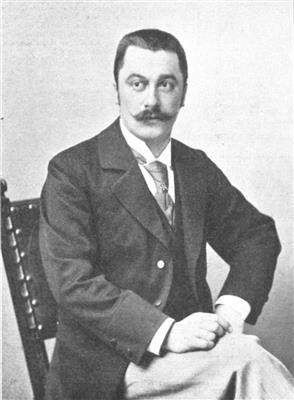
Biography
Egger-Lienz was born in Stribach, near Lienz in the Tyrol, in 1868[1], and the landscape of his childhood shaped everything that followed. His subjects were Tyrolean peasants: labouring, worshipping, dying. He built them from massive, simplified forms in a near-monochromatic palette of earth colours, working under the influence of the Swiss painter Ferdinand Hodler toward a grammar of monumental expressiveness that owed little to Vienna's more decorative tendencies.
The years around the First World War brought his most searching work. Der Totentanz von Anno Neun (1906[1]-08), depicting the dead of the Tyrolean uprisings against Napoleon, established the imagery of anonymous, collective death he would return to. Den Namenlosen (1916), painted during the war, extended the same theme to the industrialised slaughter of the Western Front. In 1925 he completed frescoes for a war memorial chapel in Lienz, among his last major works before his death from pneumonia in November 1926[1].
He had joined the Vienna Secession in 1909[1], a recognition of some standing, though his career remained rooted in Innsbruck and Lienz rather than the capital. A bronze medal at the 1900 Paris Universal Exhibition was among his earlier international recognitions.
Timeline
- 1868Born in Stribach, near Lienz in the Tyrol
- 1900Awarded bronze medal at Paris Universal Exhibition
- 1906Began painting 'Der Totentanz von Anno Neun'
- 1908Completed painting 'Der Totentanz von Anno Neun'
- 1909Joined the Vienna Secession
- 1910Rejected for professorship at Vienna Academy; opposed by Archduke Ferdinand
- 1916Painted 'Den Namenlosen'
- 1925Completed frescoes for war memorial chapel in Lienz
- 1926Died of pneumonia in November
Notable Works
Tap to view larger.
Next stop
Expressionism →
Explore the artists and ideas of Expressionism.
Related Artists


Frequently Asked Questions
What is Albin Egger-Lienz known for?
Albin Egger-Lienz is known for his distinctive figurative painting, particularly his depictions of Tyrolean peasants labouring, worshipping, and dying.What is Albin Egger-Lienz's most famous work?
Albin Egger-Lienz is best known for his monumental painting *Totentanz von Anno Neun* (*Dance of Death of the Year Nine*), created between 1908[1] and 1921. This large-scale work depicts the Tyrolean struggle against Napoleonic forces in 1809. Egger-Lienz repeatedly addressed the subject of war and sacrifice. He often portrayed peasants as heroic figures. His interest in such themes emerged during a period of growing national sentiment in Austria. The artist produced several versions of the *Dance of Death*. These paintings show his evolving artistic style and his preoccupation with the human cost of conflict. The final version is particularly striking for its scale and powerful imagery. It solidified Egger-Lienz's reputation as a significant Austrian[1] artist of the early 20th century. Other important works include *The Field Workers* and various depictions of the Passion of Christ. These paintings, like *Dance of Death*, demonstrate his talent for portraying solemn subjects with a sense of grandeur.What should I know about Albin Egger-Lienz's prints?
Albin Egger-Lienz (1868[1]-1926[1]) was an Austrian[1] artist known for his paintings and prints dealing with war, peasantry, and patriotic themes. Prints, because they are produced in multiples, allow artists to reach a wider audience than paintings. This was especially true in the late 19th and early 20th centuries, when prints gained recognition as a major artistic medium. Artists began signing their prints, differentiating them from commercial reproductions. They also started to limit edition sizes, influencing the price and preventing excessive wear on the printing plate. German Expressionist artists exploited the woodcut technique. The style influenced painting through massive forms, flatness, angularity, and summary treatment of form. The "Brücke" group raised black and white art to a symbolic language of inner agitation. Some Expressionist prints display an "ugliness" that expresses spirituality. Print collecting shifted toward artistic content over rarity, and prints became a popular art form.What style or movement did Albin Egger-Lienz belong to?
Albin Egger-Lienz is generally associated with Expressionism[1], although his career spanned a period of significant stylistic change. Expressionism, which gained traction in the early 20th century, involved the artist's subjective feelings to a greater extent than accurate depictions. Egger-Lienz's association with movements such as the Vienna Secession also complicates any simple categorisation. The Secession, which was linked to the Jugendstil style, was an anti-academic movement that favoured unconventional artistic ideas. Artists involved with the Secession paved the way for Expressionism and related styles. Egger-Lienz, like other Expressionists, was interested in conveying emotional and spiritual states through his art. The Expressionists favoured the German Gothic style, with its dramatic shapes, over the Classical. They aimed to communicate directly, using colour and form to evoke a response in the viewer, rather than appealing to a sense of cultural continuity.What techniques or materials did Albin Egger-Lienz use?
Albin Egger-Lienz (1868[1]-1926[1]) was an Austrian[1] artist known for his monumental paintings and printmaking. He explored various techniques, adapting his approach to suit the subject and intended effect. Egger-Lienz initially trained in academic painting, which emphasised precise drawing and realistic representation. However, he moved toward a more expressive style, influenced by artists such as Ferdinand Hodler. He often employed a tempera medium, which allowed for a matte surface and distinct colour layering. This can be seen in works such as "The Dance of Death Year 9" (1916[1]-1921[1]). The artist’s printmaking included woodcuts and lithographs. These graphic works often mirrored the themes found in his paintings, such as war, death, and peasant life. His woodcuts are characterised by bold lines and simplified forms, creating a powerful visual impact. He used these techniques to explore texture and contrast, adding depth to his compositions.What was Albin Egger-Lienz known for?
The passages provided do not contain information about Albin Egger-Lienz. Instead, the passages discuss the Austrian[1] artist Gustav Klimt. Klimt, along with other artists with similar ideas, established the Secession group in 1897[1]. The aim of the group was to go against traditional artistic attitudes and promote their own artworks. Klimt served as the president of the group. His art combines decorative and realistic approaches, often featuring sensual women. His stylised works contain symbols, two-dimensional embellishments similar to mosaics, and lifelike features. Klimt's allegorical murals for Vienna University were met with accusations of pornography. Although official commissions decreased, Klimt remained popular with private patrons, and his influence spread throughout Europe. Key works include *Idylle (Idylls)* (1884), *Judith and Holophernes* (1901), *The Beethoven Frieze* (1902), *The Three Ages of Woman* (1905), and *The Virgin* (1913).When did Albin Egger-Lienz live and work?
Albin Egger-Lienz (1868[1]-1926[1]) was an Austrian[1] painter known for his monumental, often tragic, depictions of peasant life and war. Born in Stribach, near Lienz in the Austrian Tyrol, as Albin Egger, he later added "Lienz" to his name to distinguish himself from other artists named Egger. He received his early training at the Academy of Fine Arts in Munich, where he studied from 1884[1] to 1893. Early works show the influence of Symbolism and Art Nouveau. Egger-Lienz spent significant periods in Vienna and the Tyrol. He taught at the Weimar Saxon Grand Ducal Art School from 1899 to 1910. His experiences as a soldier in the First World War profoundly affected his artistic output, leading to powerful anti-war statements. One example is the unfinished "Totentanz vom Jahre 1914" (Dance of Death of the Year 1914), a meditation on the carnage of war. He is associated with Expressionism[1], although his style remained distinctive. Egger-Lienz died in St Justina near Bolzano, Italy, in 1926.Where can I see Albin Egger-Lienz's work?
Albin Egger-Lienz's works appear in numerous public collections across Europe and the United States. In Austria, you can find his art in the Graphische Sammlung Albertina and the Österreichische Galerie, both in Vienna, and the Neue Galerie am Landesmuseum Joanneum in Graz. Several German museums also hold his pieces, such as the Brücke Museum and Nationalgalerie in Berlin, the Kunsthalle in Bremen, the Ludwig Museum and Wallraf-Richartz Museum in Cologne, the Folkwang Museum in Essen, and the Kunsthalle in Hamburg. Other European museums with works by Egger-Lienz include the Aargauer Kunsthaus in Aarau, Switzerland; the Museo de Arte Moderno in Barcelona; the Museum of Fine Art in Budapest; the Musée d'Art et d'Histoire in Geneva; and the Kunstmuseums in Lucerne, St. Gallen and Winterthur, Switzerland. In the United States, his art can be viewed at the Fogg Art Museum at Harvard University in Cambridge, Massachusetts; the Brooklyn Museum and the Museum of Modern Art, both in New York; the Herbert F. Johnson Museum of Art in Ithaca, New York; and the Carnegie Institute Museum of Art in Pittsburgh.Where was Albin Egger-Lienz from?
Albin Egger-Lienz was born in Stribach, near Dölsach, in the Austrian[1] Tyrol. His birth name was actually Albin Egger; Lienz was added to his name later, to distinguish him from other artists named Egger. He spent much of his career in Austria, though he also lived in Germany for a time. He taught at the Weimar Saxon Grand Ducal Art School from 1912[1] to 1913. Later, in 1919, he declined a professorship at the Vienna Academy. In 1922, he moved to St Justina near Bolzano, Italy; this area had been part of Austria before the First World War, but became part of Italy after the war. Egger-Lienz is considered an Austrian artist, although he lived in Italy during the final years of his life. He died in St Justina in 1926[1].Who did Albin Egger-Lienz influence?
Albin Egger-Lienz, an Austrian[1] artist, died in 1926[1]. Therefore, his direct artistic influence was on artists active in the early to mid-20th century. However, pinpointing specific artists who directly imitated Egger-Lienz's style proves difficult. His work, particularly his monumental paintings of Tyrolean peasants and soldiers, had a regional impact. Artists working in Austria, especially those interested in depicting rural life or patriotic themes, would have been familiar with his output. His focus on simplified forms and powerful compositions may have resonated with artists exploring similar themes. Egger-Lienz's war paintings, such as "The Volunteers of 1914[1]", also place him within a broader context of artists responding to the First World War. While it is difficult to trace a line of direct stylistic influence, his work contributes to the artistic discourse surrounding the conflict and its impact on society. His work is an important part of Austrian Expressionism[1].Who influenced Albin Egger-Lienz?
Albin Egger-Lienz (1868[1]-1926[1]) developed a style that combined several influences. Early in his career, he was trained in academic painting traditions. Later, Egger-Lienz encountered the work of Franz Defregger, a popular painter of Tyrolean subjects. Defregger's influence is visible in Egger-Lienz's early genre scenes depicting rural life. However, Egger-Lienz moved away from simple genre painting as his career progressed. He was also interested in the art of Ferdinand Hodler, a Swiss symbolist painter. Hodler's emphasis on simplified forms and expressive line had a noticeable impact on Egger-Lienz's style. The monumentality and starkness of Hodler's figures can be seen in Egger-Lienz's later, more stylised works. Egger-Lienz's exposure to the Vienna Secession movement also played a role in his artistic development. While he was not a member of the Secession, he exhibited with them, and he absorbed some of their ideas about art as a means of expressing modern experience. His palette became more restrained, and his compositions more simplified, reflecting the Secession's aesthetic.Who was Albin Egger-Lienz?
Albin Egger-Lienz (1868[1]-1926[1]) was an Austrian[1] painter known for his monumental, often sombre, depictions of peasant life and war. Born Albin Egger in Stribach, near Lienz in the Austrian Tyrol, he later added "Lienz" to his name. He studied at the Academy of Fine Arts in Munich. Early works show the influence of Symbolism and Art Nouveau. He developed a style characterised by simplified forms, strong outlines, and a muted colour palette. His subject matter often involved Tyrolean peasants, reflecting a concern with rural life and traditions. Egger-Lienz is also known for his war paintings. These works, such as "The Volunteers of 1813", present a tragic view of conflict, focusing on the suffering of soldiers and civilians. His style moved away from traditional heroic depictions of war. He taught at the Weimar Saxon Grand Ducal Art School from 1912[1] to 1913. Later, he settled in St. Justina near Bolzano. Egger-Lienz's work achieved considerable recognition in Austria during his lifetime, and he is considered an important figure in Austrian art of the early 20th century.
Sources
Editorial draws on the following primary and tertiary references for Albin Egger-Lienz.
- [1] wikipedia Wikipedia: Albin Egger-Lienz Used for: biography, birth dates, death dates, identifiers, movement attribution, nationality.
- [2] book guggenheim-guhe00solo Used for: biography.
- [3] book Husslein-Arco, Agnes, editor; Koja, Stephan, editor; Law, Rebecca (Translator), translator; McInnes, Robert (Translator), translator; Somers, Nick, translator; Monet, Claude, 1840-1926. Paintings. Selections; Österreichische Galerie Belvedere, h Used for: biography.
- [4] book Masterpieces of western art : a history of art in 900 individual studies from the Gothic to the present day Used for: biography.
Editorial overseen by Solis Prints. Sources verified 2026-08-17. Click a source for details, or hover over [N] in the page above to preview.
Editorial standardsMethodologyCorrectionsAI disclosureAbout the editorial team