



Alexander Bogen
- social realism
Alexander Bogen commanded a Jewish partisan unit in the Narocz Forests and spent part of the Nazi occupation making drawings with whatever materials were at hand. Those wartime works, produced under conditions that obliterated most other artistic practice, are the foundation of his reputation.
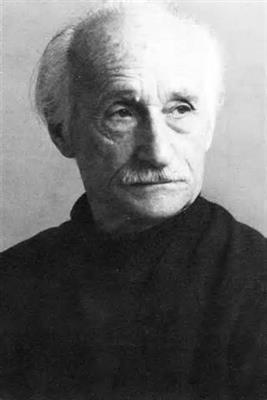
Biography
Born Wolf Wulf Bogen on 24 January 1916[1] in Tartu (then Yuryev, Russian Empire), he studied at the Stefan Batory art academy in Vilnius and later attended the École des Beaux-Arts in Paris. When the Germans occupied Vilna in 1941[1], he became involved with the United Partisan Organisation operating out of the ghetto. He eventually escaped to the forests, where he led an armed unit until liberation. Before leaving Vilna he helped smuggle the poet Abraham Sutzkever, along with artworks, to Moscow.
After the war Bogen was appointed professor at the Academy of Fine Arts in Łódź in 1947[1], and a major retrospective at the Łódź State Museum followed in 1950. He emigrated to Israel in 1951, where he built a second career as an educator: he led the art programme at a Tel Aviv school for twenty-two years from 1957 and lectured at Hebrew University in Jerusalem. His work crossed social realism[1], lyrical abstraction, abstract expressionism, and tachisme across more than fifty solo exhibitions in Europe and Israel.
His murals Revolt and Holocaust are installed at the Partisan Museum in Tel Aviv. He also illustrated volumes by the Yiddish poets Mordechai Gebirtig and Abraham Sutzkever. Awards included the Polish State Prize (1951[1]), the Histadrut Prize (1961), and the Shalom Aleichem Prize (1995). He died in Tel Aviv on 20 October 2010[1], aged 94.
Timeline
- 1916Born Wolf Wulf Bogen in Tartu, Russian Empire (now Estonia)
- 1941Involved with the United Partisan Organisation in Vilna after German occupation
- 1947Appointed professor at the Academy of Fine Arts in Łódź
- 1950Major retrospective at the Łódź State Museum
- 1951Emigrated to Israel
- 1951Received the Polish State Prize
- 1957Led art program at a Tel Aviv school for 22 years
- 1961Received the Histadrut Prize
- 1995Received the Shalom Aleichem Prize
- 2010Died in Tel Aviv
Notable Works
Tap to view larger.
Next stop
Browse the movements →
Every movement in the collection, from the Renaissance to Pop art.
Related Artists



Frequently Asked Questions
What is Alexander Bogen known for?
Alexander Bogen is known for his wartime drawings, which he produced while commanding a Jewish partisan unit during the Nazi occupation. These works, created with whatever materials he could find, established his reputation.What style or movement did Alexander Bogen belong to?
Alexander Bogen's artistic affiliations are complex. The term "realism" is often applied, but this requires careful consideration. Realism, in art, encompasses varied approaches. It can refer to a mid-19th-century French movement associated with Gustave Courbet; it can also describe a broader attitude that prioritises actuality and contemporary exigencies. In the late 19th century, realism involved a rejection of aristocratic "high art" in favour of middle-class values and everyday life. This shift coincided with the rise of socialist and egalitarian ideals, particularly in rapidly growing cities. Architects and artists began to emphasise practicality, comfort, and simplicity. However, realism should not be confused with a strict materialism that excludes artistic concerns. Some practitioners combined realism with idealism, seeking to satisfy both practical needs and artistic expression. Others adopted stylistic devices from Expressionism, using them for revolutionary purposes. It is important to note that Expressionism, while influential, was viewed with suspicion by some due to its association with progressive groups and the Weimar Republic.What techniques or materials did Alexander Bogen use?
Alexander Bogen worked in several media, including watercolour, oil, and graphics. His artistic approach involved consideration of both technique and materials. Technique, according to some views, involves resourcefulness, the ability to utilise means, foresee effects, and a feeling for compatibility. Bogen's techniques would have been related to his thinking and senses as he engaged with his chosen materials. Painters through the ages have employed diverse materials, from natural pigments in fresco to egg tempera, watercolour, and oil. Contemporary materials include acrylics, household emulsions, and mixed media, combining various materials in a single work. The characteristics of the surface depend on the materials, such as canvas, stucco, paper, stone, or glass. The tools associated with these materials also influence the final result.What was Alexander Bogen known for?
Alexander Bogen (1916[1]-2010[1]) was a Polish-Israeli visual artist, known for paintings and graphic art. After the Second World War, he was also known for his work as a partisan fighter and commander. He was associated with the École de Paris. After the war, some artists received state support for realist compositions depicting the activities of the lower classes, recording work and domestic life. These paintings often reflected the artists' lives. Some artists received state subsidy, and they epitomised “the faithful civil servant” who was trying to develop a new career as an artist. Some artists served as an employee of the Paris Préfecture de Police; they worked during the day and often painted in the evenings or in moments of leisure.When did Alexander Bogen live and work?
Alexander Bogen was born in what is now Belarus, but was then part of Russia. Sources differ on the exact date; some say 1916[1], others 1917[1]. He died in Israel in 2010[1]. During the Second World War, Bogen was a member of the Soviet partisan movement. He created art while fighting, and is known for his depictions of the Holocaust and partisan resistance. After the war, Bogen moved to Vilnius, Lithuania, where he helped to establish an art institute. He also taught there. In 1951, he emigrated to Israel, where he continued to paint and teach. He also held positions in art education administration. Bogen's work includes paintings, drawings, and sculptures. His art often deals with themes of war, suffering, and the Holocaust. He also created portraits and works depicting the Israeli landscape.Where can I see Alexander Bogen's work?
It is difficult to pinpoint exactly where one might view the work of Alexander Bogen. However, many major museums feature collections of art from the Art Deco and Post-Impressionism movements, with which Bogen was associated. These collections may include his work.  In the United States, museums with relevant collections include the Metropolitan Museum of Art (New York), the Los Angeles County Museum of Art, the Minneapolis Institute of Arts, the Museum of Modern Art (New York), the Charles Hosmer Morse Museum of American Art (Winter Park, Florida), the Virginia Museum of Fine Arts (Richmond), and the Wolfsonian at Florida International University (Miami Beach). In Canada, the Royal Ontario Museum (Toronto) and the Art Gallery of Ontario (Toronto) may hold pieces. In the United Kingdom, one might check the Victoria & Albert Museum (London), the Brighton Museum & Art Gallery, the Geffrye Museum (London), the Manchester Art Gallery, and the National Museums of Scotland (Edinburgh).Who did Alexander Bogen influence?
Alexander Bogen, active in Soviet Leningrad and Moscow, as well as the multilingual, multicultural region of Vilnius, influenced artists through his exploration of self-expression using alternative media. These included mixing oil, acrylic, or varnish with materials such as fabric, charcoal, sand, and plastics. In Tbilisi, the trend was shaped by mentor-student relationships, such as that of Alexander Bandzeladze to Gia Edzgveradze. Bandzeladze's work caused critic Leonid Bazhanov to realise the intensity of the unofficial art world of Tbilisi studios. Bandzeladze's colour-saturated, gestural images turned line into plane, and pigment into gesture. By the mid-1980s, Bandzeladze and younger artists, particularly Edzgveradze, explored the tension between paint as matter and concept through more graphic means. He compartmentalised his images and reduced his palette to black, greys, and whites. Letters and numerical symbols occasionally appeared in his work, making painting seem like a language of barely articulated ideas.Who influenced Alexander Bogen?
It is difficult to summarise Alexander Bogen's influences, as source material is limited. However, some information can be gleaned from the influences of his contemporaries. Many artists associated with Expressionism, a movement with which Bogen is sometimes linked, were influenced by figures such as Friedrich Nietzsche, the philosopher; Arthur Rimbaud, the poet; and Sigmund Freud, the psychoanalyst. Expressionist painters often drew inspiration from artists such as Edvard Munch, Vincent van Gogh, and El Greco. One source mentions that Wassily Kandinsky, a pioneer of abstract art, found inspiration in Claude Monet's Impressionistic paintings, particularly "Haystack". He also admired Richard Wagner's opera "Lohengrin". These works led Kandinsky to explore the power of colour and the potential for painting to evoke the qualities of music.Who was Alexander Bogen?
Alexander Bogen (1916[1]-2010[1]) was a Jewish artist, born in Estonia, who spent his working life in Vilna (today Vilnius). During the Second World War, he was a partisan fighter. After the war, he dedicated himself to commemorating the Holocaust through art and education. Bogen founded art schools in Vilnius and later in Tel Aviv, where he settled in 1951[1]. He created many paintings and graphic works reflecting his experiences in the war. He also produced Yiddish-themed art, including illustrations for the book *Spring on the Highway* by the Yiddish poet Elkhonon Vogler. Bogen also wrote about Vogler after his death, regretting that he had been unable to make Vogler happy and that Vogler had not visited Israel.Why are Alexander Bogen's works important today?
Alexander Bogen's art is important because it contributes to a broader understanding of Ukrainian avant-garde art, a field that has experienced suppression and misrepresentation. Recovering the history of Ukrainian modernism is an ongoing project. It involves incorporating Ukrainian artists into European narratives, and European trends into Ukraine's cultural story. Figures such as Archipenko, Burliuk, Malevich, Exter, and Hryshchenko are now recognised as part of both European and Ukrainian art. This reconstruction of art history coincides with debates about cultural memory and identity. The avant-garde in Ukraine faced tensions between the new and traditional, the international and national, and the ironic and intuitive. These tensions were artistically productive until rigid censorship was imposed. The need to choose between the local-national and European-international was a challenge accepted by the earlier avant-garde. Today, collections and archives continue to yield fresh information about this movement. Despite conflicting judgements, this avant-garde has gained recognition as a phenomenon with its own internal dynamic. It commands attention as a richly rewarding topic of study.What was Alexander Bogen's art style?
Alexander Bogen's work crossed social realism[1], lyrical abstraction, abstract expressionism, and tachisme.
Sources
Editorial draws on the following primary and tertiary references for Alexander Bogen.
- [1] wikipedia Wikipedia: Alexander Bogen Used for: biography, birth dates, death dates, identifiers, movement attribution, nationality.
- [2] book guggenheim-guhe00solo Used for: biography.
- [3] book guggenheim-masterp00solo Used for: biography.
- [4] book Masterpieces of western art : a history of art in 900 individual studies from the Gothic to the present day Used for: biography.
Editorial overseen by Solis Prints. Sources verified 2026-09-30. Click a source for details, or hover over [N] in the page above to preview.
Editorial standardsMethodologyCorrectionsAI disclosureAbout the editorial team