



Alvaro Lapa
The EDP Grand Prize that arrived in 2004[1], two years before his death, came as belated official recognition of what Portuguese[1] critics had known for decades: Álvaro Lapa occupied a territory no one else was charting. Born in Évora on 31 July 1939[1], he came to painting through philosophy rather than the academy, studying at the Faculty of Letters in Lisbon and remaining self-taught as an artist throughout his career. A 1961 visit to Paris brought early contact with painters associated with surrealism and with the work of Robert Rauschenberg, which set the tone for what followed.
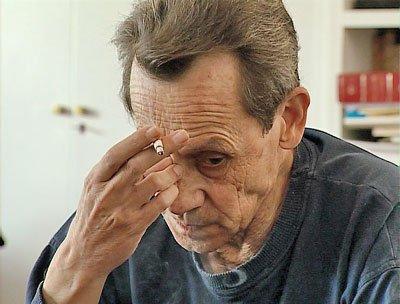
Biography
His first solo exhibition opened at Gallery 111 in Lisbon in March 1964[1], and by 1965 he had relocated to Lagos, where the structured series of paintings that would define his mature work began to take shape. Lapa built a visual language of recurring symbols: crosses, numbers, architectural fragments, cursive marks. Enamel and acrylic on platex gave his surfaces a quality distinct from conventional oil painting. The imagery was simultaneously legible and evasive, combining personal iconography with social observation in a way that resisted classification.
He was also a writer. Poetry, surrealist prose, and theoretical texts appeared alongside his exhibitions, and the two practices fed each other rather than competing. A long tenure as professor at the Escola Superior de Belas-Artes do Porto cemented his influence on younger generations even as he maintained a deliberate distance from the commercial art world.
From the 1980s onwards, institutional interest in Lapa's work grew steadily. Retrospectives at major Portuguese[1] museums followed, and his paintings entered significant collections. His death in Porto on 11 February 2006[1] came shortly after the EDP prize had at last placed him in the company of artists whose importance had been visible to close observers all along.
Timeline
- 1939Born in Évora on 31 July. He later studied philosophy at the Faculty of Letters in Lisbon.
- 1961Visited Paris, where he encountered painters associated with surrealism and the work of Robert Rauschenberg.
- 1964His first solo exhibition opened at Gallery 111 in Lisbon in March.
- 1965Relocated to Lagos, where he began developing the structured series of paintings that would define his mature work.
- 1980Institutional interest in Lapa's work began to grow steadily.
- 2004Received the EDP Grand Prize.
- 2006Died in Porto on 11 February, aged 66.
Notable Works
Tap to view larger.
Next stop
Browse the movements →
Every movement in the collection, from the Renaissance to Pop art.
Related Artists

Frequently Asked Questions
What is Alvaro Lapa known for?
Álvaro Lapa is known for his paintings that combined personal iconography with social observation, resisting easy categorisation. He built a visual language of recurring symbols, such as crosses, numbers, and architectural fragments, using enamel and acrylic on platex to create distinctive surfaces.What is Alvaro Lapa's most famous work?
Alvaro Lapa (1939[1]-2006[1]) was a Portuguese[1] artist and writer. He worked in painting, drawing, and printmaking, and also produced several novels and books of essays. It is difficult to identify a single "most famous work". However, his paintings from the 1960s and 1970s are well-regarded. These pieces often combine abstract elements with recognisable figures and objects. They show Lapa's interest in exploring the relationship between perception and representation. Later in his career, Lapa moved towards a more figurative style, with an emphasis on portraiture. His literary work also gained recognition. He received the Pen Club Award for his novel *Uma Leve Precariedade* in 1994[1]. His mixed-media pieces, combining painting and collage, are also significant within his body of work. These pieces often incorporate text and found objects, adding layers of meaning to the visual imagery. Lapa's art is characterised by its intellectual depth and its engagement with philosophical and literary ideas.What should I know about Alvaro Lapa's prints?
Alvaro Lapa (1925-2006[1]) was a Portuguese[1] artist known for his work across painting, drawing, and printmaking. He was also an author and professor. Lapa's prints often display an experimental approach, incorporating literary and philosophical themes. His style moved through different phases, including abstract expressionism and surrealism. Recurring motifs include the human figure, often rendered in distorted or fragmented forms, and textual elements. His prints can be understood in the context of his broader artistic output, which frequently engaged with political and social issues, particularly during the authoritarian Estado Novo regime in Portugal. His work often contains a critical edge, questioning established norms and power structures. He explored the use of colour and texture to create layers of meaning.What style or movement did Alvaro Lapa belong to?
Alvaro Lapa's artistic affiliations are complex. Some connect his work to Concrete art and Conceptual programs, while others see a relationship to the Baroque. One view places Lapa within a "tradition of rupture" because of his innovative style. This perspective suggests a kinship with the "writerly" text, as developed by Roland Barthes, and links it to the sermons of António Vieira, a Jesuit priest. Vieira's baroque vision shaped the poet’s vision of language. Another way to consider Lapa's style is through the lens of Galáxias, a work that blends clarity with obscurity and modernity with the baroque. This approach highlights the tensions within Lapa's work, as well as his engagement with literary and philosophical ideas. Ultimately, pinpointing a single movement is difficult. Lapa's art seems to draw from various sources and traditions, resulting in a style that defies easy categorisation.What techniques or materials did Alvaro Lapa use?
Alvaro Lapa (1925-2006[1]) was a Portuguese[1] artist known for his diverse artistic practice. He explored various media and techniques throughout his career. Lapa initially trained as a painter. Painting remained central to his work. He often employed oil paints, creating textured surfaces through layering and impasto techniques. Colour played a significant role in his compositions; he juxtaposed contrasting hues to create visual tension. Beyond painting, Lapa experimented with drawing, collage, and printmaking. His drawings often served as preparatory studies for larger works. He used a range of drawing materials, including graphite, charcoal, and ink. Collage allowed him to incorporate found objects and textual elements into his art. He also produced prints, exploring the possibilities of line and form through techniques such as etching and lithography. Lapa's multidisciplinary approach reflected his interest in pushing the boundaries of artistic expression. His willingness to experiment with different techniques and materials contributed to the distinctive character of his oeuvre.What was Alvaro Lapa known for?
Alvaro Lapa (1925-2006[1]) was a Portuguese[1] artist, professor, and writer. He is best known for his contributions to Portuguese modernism, particularly in painting and drawing, though he also wrote novels and essays. Lapa's artistic style is characterised by its intellectual and often critical approach to social and political issues. His works frequently incorporate symbolic elements and allusions, requiring interpretation. He often explored themes of alienation, identity, and the human condition within authoritarian regimes. As a professor, Lapa taught at various art schools in Portugal, influencing generations of artists. His writings offer insights into his artistic philosophy and his views on culture and society. His work resists easy categorisation, blending abstraction with elements of figuration to create art that invites reflection.When did Alvaro Lapa live and work?
Alvaro Lapa (1925-2006[1]) was a Portuguese[1] artist and writer. He was born in Évora, Portugal. Lapa studied at the School of Fine Arts in Porto, concluding his studies in 1950[1]. He later became a professor at the same institution, where he taught for many years. His work encompasses painting, drawing, and printmaking. Lapa's artistic style is characterised by its expressionistic qualities. His paintings often feature distorted figures, bold colours, and a sense of unease. He explored themes such as alienation, social critique, and the human condition. Beyond his visual art, Lapa was also a published author. He wrote novels, essays, and plays, exploring similar themes to those in his artwork. His literary work offers further insight into his artistic vision and intellectual concerns. He died in Vila Nova de Gaia.Where can I see Alvaro Lapa's work?
To view works by Alvaro Lapa, consider visiting museums that feature art from the periods and movements in which he participated. Several museums exhibit related material. The Museu Calouste Gulbenkian, located in Lisbon, Portugal, holds a collection of modern art. In Spain, the Museo Art Nouveau y Art Deco in Salamanca and the Museu d’Art Modern (MNAC) in Barcelona may hold relevant works. In the United States, the Metropolitan Museum of Art in New York City, the Los Angeles County Museum of Art (LACMA), and the Minneapolis Institute of Arts are possibilities. Other US museums include the Museum of Modern Art in New York, the Charles Hosmer Morse Museum of American Art in Winter Park, Florida, the Wolfsonian in Miami Beach, and the Virginia Museum of Fine Arts in Richmond. In the United Kingdom, one might check the collections at the Victoria & Albert Museum in London, the National Museums of Scotland in Edinburgh, the Manchester Art Gallery, the Brighton Museum & Art Gallery, and the Geffrye Museum in London.Where was Alvaro Lapa from?
Alvaro Lapa was born in Matosinhos, Portugal, in 1928. He is known as a Portuguese[1] painter and writer. Lapa studied at the Escola Superior de Belas Artes do Porto, now the Faculty of Fine Arts of the University of Porto. He was a professor at that school from 1961[1] to 1969. Later, he taught at the Escola Superior de Belas Artes de Lisboa. His artwork often incorporates literary references and reflects his interest in philosophical ideas. He published several books of essays and fiction, in addition to his work as a visual artist. Lapa's work engages with themes of alienation, political critique, and the human condition. Alvaro Lapa died in 2006[1].Who did Alvaro Lapa influence?
Alvaro Lapa (1925-2006[1]) was a Portuguese[1] artist and writer. His artistic output included painting, drawing, and illustration, and he also produced several novels and essays. It is difficult to identify specific artists directly influenced by Lapa, as his impact is more broadly felt in Portuguese culture. He taught at the Escola Superior de Belas Artes do Porto, where he likely affected his students' artistic development. His writings on art and culture also circulated among intellectual circles. Lapa's work often engaged with philosophical and literary themes. This interdisciplinary approach may have inspired later artists to explore connections between visual art and other fields. His paintings frequently incorporate text and symbolic imagery, a method that could have influenced younger artists interested in conceptual art or visual poetry. His legacy exists both through his direct teaching and through the example of his multifaceted creative practice.Who influenced Alvaro Lapa?
Alvaro Lapa (1925-2006[1]) was a Portuguese[1] artist and writer. His artistic formation involved several influences. Lapa studied at the Escola Superior de Belas Artes do Porto. There, he was a pupil of painter Guilherme Camarinha. Camarinha's instruction certainly played a role in Lapa's early development. Later, Lapa's time in Paris during the 1950s exposed him to new ideas. He encountered the work of modern masters. These included Paul Klee, whose art likely resonated with Lapa's developing style. He also admired Joan Miró. Miró's surrealist approach may have impacted Lapa's move toward abstraction. These encounters broadened his artistic perspective. Lapa also engaged with philosophical and literary figures. His intellectual pursuits further shaped his creative output. His work is characterised by a synthesis of visual and intellectual concerns.Why are Alvaro Lapa's works important today?
Alvaro Lapa (1925-2006[1]) was a Portuguese[1] artist, art critic, and writer. His work resists easy categorisation, but is often associated with expressionism and surrealism. Lapa's importance stems from his challenge to conventional artistic boundaries. He combined painting, drawing, and writing, creating works that are both visually stimulating and intellectually engaging. His pieces often incorporate literary and philosophical references, inviting viewers to consider the relationship between art, language, and thought. Lapa's art developed in opposition to the Salazar dictatorship, a period of censorship and repression in Portugal. His work can be seen as a form of resistance, questioning authority and promoting individual expression. He explored themes of alienation, identity, and the human condition, reflecting the social and political anxieties of his time. His influence can be seen in later generations of Portuguese artists who continue to explore similar themes.
Sources
Editorial draws on the following primary and tertiary references for Alvaro Lapa.
- [1] wikipedia Wikipedia: Alvaro Lapa Used for: biography, birth dates, death dates, identifiers, movement attribution, nationality.
- [2] book guggenheim-newimagesfromspa00ro Used for: biography.
- [3] book guggenheim-twopri00weis Used for: biography.
- [4] book Braun, Emily, 1957-; Asor Rosa, Alberto; Royal Academy of Arts (Great Britain), Italian art in the 20th century : painting and sculpture, 1900-1988 Used for: biography.
Editorial overseen by Solis Prints. Sources verified 2026-09-30. Click a source for details, or hover over [N] in the page above to preview.
Editorial standardsMethodologyCorrectionsAI disclosureAbout the editorial team