



Anatol Petrytsky
Anatol Petrytsky grew up in an orphanage in Kyiv, the son of a father paralysed into poverty, and spent the first years of his professional life designing theatre for a city in the midst of political transformation. At seventeen he was a student at the Kyiv Art School; at twenty-one he was designing productions for Les Kurbas' Young Theatre, one of the most ambitious experimental directors in the Soviet world.
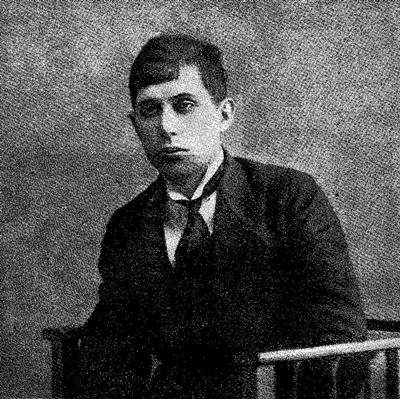
Biography
He studied at Vkhutemas in Moscow between 1922[1] and 1925, working under Aleksandr Drevin and Nadezhda Udaltsova, two painters who brought Cézannism and non-objective colour theory into the Russian[1] avant-garde orbit. A fire in 1924 destroyed most of the work he made there. Returning to Kharkiv (then the capital of Soviet Ukraine), he co-founded the futurist group "New Generation" in 1927 alongside Vadym Meller and Geo Shkurupiy, and worked as costume designer for the State Opera.
The works that survived this period reveal his range. His 1927[1] design for Gliere's The Red Poppy at the Kharkov State Opera deploys watercolour, gold, and silver paint on paper across a 72 x 52 cm sheet, marrying avant-garde graphic economy with operatic spectacle. The next year he applied the same approach to Puccini's Turandot, then in 1929 to Viktor Oransky's agitprop opera The Soccer Player, where athletic figures in gouache replace imperial heraldry. All four works appeared at the Guggenheim's landmark 1992 survey of the Russian[1] and Soviet avant-garde.
His painting Disabled was exhibited at the Venice Biennale in 1930[1]. The following decades brought the characteristic Soviet accommodation: formalism charges, partial retreat, then rehabilitation. He received the title People's Artist of the USSR in 1944 and two Stalin Prizes, in 1949 and 1951. Over five hundred of his stage designs are held at the Museum of Theatre, Music and Cinema of Ukraine in Kyiv, where he died in March 1964[1].
Timeline
- 1895Born in Ukraine. He grew up in an orphanage in Kyiv after his father became paralysed.
- 1912At 17, he was a student at the Kyiv Art School.
- 1916At 21, he designed productions for Les Kurbas' Young Theatre.
- 1922Began studying at Vkhutemas in Moscow under Aleksandr Drevin and Nadezhda Udaltsova.
- 1924A fire destroyed most of his work made while studying in Moscow.
- 1927Co-founded the futurist group "New Generation" in Kharkiv with Vadym Meller and Geo Shkurupiy.
- 1927Worked as costume designer for the State Opera and designed costumes for Gliere's "The Red Poppy" at the Kharkov State Opera.
- 1930His painting "Disabled" was exhibited at the Venice Biennale.
- 1944Received the title People's Artist of the USSR.
- 1964Died in Kyiv in March. Over five hundred of his stage designs are held at the Museum of Theatre, Music and Cinema of Ukraine.
Notable Works
Tap to view larger.
Next stop
Browse the movements →
Every movement in the collection, from the Renaissance to Pop art.
Related Artists



Frequently Asked Questions
What is Anatol Petrytsky known for?
Anatol Petrytsky is known for his stage designs, with over five hundred held at the Museum of Theatre, Music and Cinema of Ukraine in Kyiv. His designs for operas like The Red Poppy, Turandot, and The Soccer Player received recognition, including an appearance at the Guggenheim's 1992 survey of the Russian[1] and Soviet avant-garde.What should I know about Anatol Petrytsky's prints?
Anatol Petrytsky (1907[1]-1964[1]) was a Ukrainian stage and costume designer. He is known for his contributions to Ukrainian theatre. When considering Petrytsky's prints, it is helpful to understand some basics about printmaking. Prints have existed since ancient times, with early examples including impressions from seals or stamps. As paper became readily available in Europe around the end of the fourteenth century, printmaking began to flourish. Woodcuts served as book illustrations, religious icons, and playing cards. Prints were initially viewed as a craft for commercial reproduction. However, artists such as Dürer, Rembrandt, and Goya elevated printmaking to a high art form. By the late nineteenth century, prints were considered a major artistic medium. The quality of each impression gained importance. Artists began signing their prints to distinguish original graphics from reproductions. They also started limiting edition sizes and using high-quality papers. Prints allowed artists to reach a wider audience because they could be produced in greater quantities and at a lower cost than other art forms.What techniques or materials did Anatol Petrytsky use?
Anatol Petrytsky (1895[1]-1964[1]) was a Ukrainian stage and costume designer. He is known for his work in theatre, opera, and ballet. Petrytsky's designs incorporated diverse materials. He worked in watercolour, gouache, tempera, and pencil. These media allowed him to explore colour and texture in his designs. His stage work involved large-scale painted sets. His costume designs included sketches and fabric samples. These swatches gave directors and costume makers a sense of the intended look and feel. Petrytsky's approach combined artistic skill with practical considerations for stage production. He adapted his techniques to suit the needs of each project. His designs demonstrate an understanding of both artistic expression and the technical aspects of theatre.When did Anatol Petrytsky live and work?
Anatol Petrytsky (1895[1]-1964[1]) was a Ukrainian stage and costume designer. He was also a professor, painter, and graphic artist. Much of his career was centred in Kyiv. Born in 1895[1], Petrytsky studied at the Kyiv Art School from 1916 to 1922. There, he was taught by Vasyl H. Krychevsky and Mykhailo L. Boichuk. From 1924 to 1926, Petrytsky taught at the Kyiv Art Institute. He became a professor there in 1947. Petrytsky designed sets and costumes for numerous theatrical productions. These included operas, ballets, and dramas in Kyiv, Kharkiv, and other Ukrainian cities. He is known for his expressive, colourful designs, which often combined constructivist and expressionist elements. Petrytsky died in 1964.Where can I see Anatol Petrytsky's work?
Anatol Petrytsky's set designs and costume sketches contributed significantly to the development of Ukrainian theatre in the 1920s and 1930s. However, locating his work outside Ukraine can be difficult. Some museums with holdings of Art Deco or Russian[1] avant-garde art may occasionally display his pieces. Institutions to consider include the Los Angeles County Museum of Art (LACMA), the Metropolitan Museum of Art, the Minneapolis Institute of Arts, the Museum of Modern Art, the Royal Ontario Museum, and the Wolfsonian at Florida International University. In the UK, the Victoria & Albert Museum, the Brighton Museum & Art Gallery, and the National Museums of Scotland may hold relevant works. The Solomon R. Guggenheim Museum in New York, the Musée National d’Art Moderne in Paris, and the San Francisco Museum of Art are also possibilities. Checking their online collections or contacting the museums directly is advisable to confirm current availability.Where was Anatol Petrytsky from?
Anatol Petrytsky (1895[1]-1964[1]) was a Ukrainian stage and costume designer. He was born in Kyiv, then part of the Russian[1] Empire. Petrytsky studied at the Kyiv Art School from 1912[1] to 1918. His teachers included Oleksandr Murashko and Hryhoriy Svitlytsky. He became a prominent figure in Ukrainian theatre during the early 20th century. Petrytsky worked with various theatres in Ukraine, including the Kyiv Opera and the Kharkiv Ukrainian Drama Theatre. His designs often incorporated elements of Ukrainian folk art and constructivism. He aimed to create visually striking and symbolic representations of the characters and themes within a play. He achieved recognition for his innovative approach to stage design. During his career, Petrytsky also worked as a painter and graphic artist. He produced portraits and illustrations, in addition to his theatrical work. He remained active in the arts until his death in Kyiv.Who did Anatol Petrytsky influence?
It is hard to identify specific artists who were directly influenced by Anatol Petrytsky. The art world has become so pluralistic that it is nearly impossible for one artist to dominate a significant group. However, it is almost impossible for a painter to ignore what Pablo Picasso accomplished. His institutional legacy, museums, books, and exhibits, has been significant, as many artists have testified. Chuck Close said that when Picasso died, "it was like the death of a much-respected but extremely domineering father; you were sad but also a little relieved". After that brief sigh of relief, Picasso’s influence has not been exhausted. The domineering father is still being called back from the grave for close study and emulation, a "revisiting and recasting [of] the master’s work," as some artists state the case. Artists who take that calling seriously may not be Picassoites, but they surely fall under the shadow of Picasso, a larger-than-life artist of the twentieth century.Who influenced Anatol Petrytsky?
Anatol Petrytsky was part of a generation of Ukrainian artists whose influences included both native traditions and western European movements. Petrytsky, along with other Ukrainian avant-garde artists, drew inspiration from artists such as Alexander Archipenko and Wladimir Baranoff-Rossiné; both had gained international attention for their work. The work of Oleksandr Bohomazov also had an impact, as did that of Mykhailo Boichuk and the Boichuk School. The avant-garde in Ukraine was connected to developments in Paris and other European centres. Artists associated with Der Blaue Reiter also provided a source of ideas. Primitivism, with its interest in folk art and non-academic approaches, was another significant factor. These influences helped to shape Petrytsky's artistic vision, which he then used in stage design and other art forms.Who was Anatol Petrytsky?
Anatol Petrytsky (dates unknown) was a designer working in the Ukrainian city of Kharkiv during the 1920s. Petrytsky designed costumes for theatrical productions at the Kharkiv State Opera. These included Giacomo Puccini's *Turandot* (1928[1]), Reinhold Glière's ballet *The Red Poppy* (1927), and Viktor Oransky's ballet *The Soccer Player* (1929). His designs for *Turandot* were created with ink, collage, and pencil on paper. His designs for *The Red Poppy* were created with watercolour, gold, silver, and pencil on paper. His designs for *The Soccer Player* were created using gouache, pencil, ink, and watercolour. Examples of Petrytsky's costume designs for *The Soccer Player* are held at the State Bakhrushin Museum in Moscow. Examples of his costume designs for *Turandot* and *The Red Poppy* are held in a private collection in Germany.Why are Anatol Petrytsky's works important today?
Anatol Petrytsky (1895[1]-1964[1]) was a Ukrainian painter, stage designer, and art theorist. He is remembered for his contributions to theatrical design and his engagement with various avant-garde movements. Petrytsky's importance stems from his innovative approach to stagecraft. He moved away from traditional, realistic sets, embracing constructivism and other modern styles. His designs often featured bold colours, geometric shapes, and dynamic compositions, which created a visually striking theatrical experience. He worked with prominent directors and theatres, influencing the development of stage design in Ukraine and beyond. His artistic output includes costume designs, set models, and paintings. These works provide insight into the artistic climate of his time. Petrytsky's theories on art and theatre further add to his significance. He explored the relationship between art, technology, and society, contributing to the discourse on modernism in the early to mid-20th century. His work remains relevant to those interested in the history of stage design and the development of modern art in Eastern Europe.How did Anatol Petrytsky die?
Anatol Petrytsky died in 1964[1] at the age of 69.
Sources
Editorial draws on the following primary and tertiary references for Anatol Petrytsky.
- [1] wikipedia Wikipedia: Anatol Petrytsky Used for: biography, birth dates, death dates, identifiers, movement attribution, nationality.
- [2] book Natalya Strizhkova Andrei Sarabyanov, Art and Power_ The Russian Avant-garde under Soviet Rule, 1917–1928 Used for: biography, stylistic analysis.
- [3] book Myroslav Shkandrij, Avant-Garde Art in Ukraine, 1910–1930 _ Contested Memory Used for: biography, stylistic analysis.
- [4] book Shkandrij, Myroslav, Avant-Garde Art in Ukraine, 1910–1930 _ Contested Memory Used for: biography, stylistic analysis.
- [5] book guggenheim-guhe00solo Used for: biography.
- [6] book guggenheim-peggygu00alle Used for: biography.
- [7] book guggenheim-thirdenlargedcat1938reba Used for: biography.
Editorial overseen by Solis Prints. Sources verified 2026-09-30. Click a source for details, or hover over [N] in the page above to preview.
Editorial standardsMethodologyCorrectionsAI disclosureAbout the editorial team