



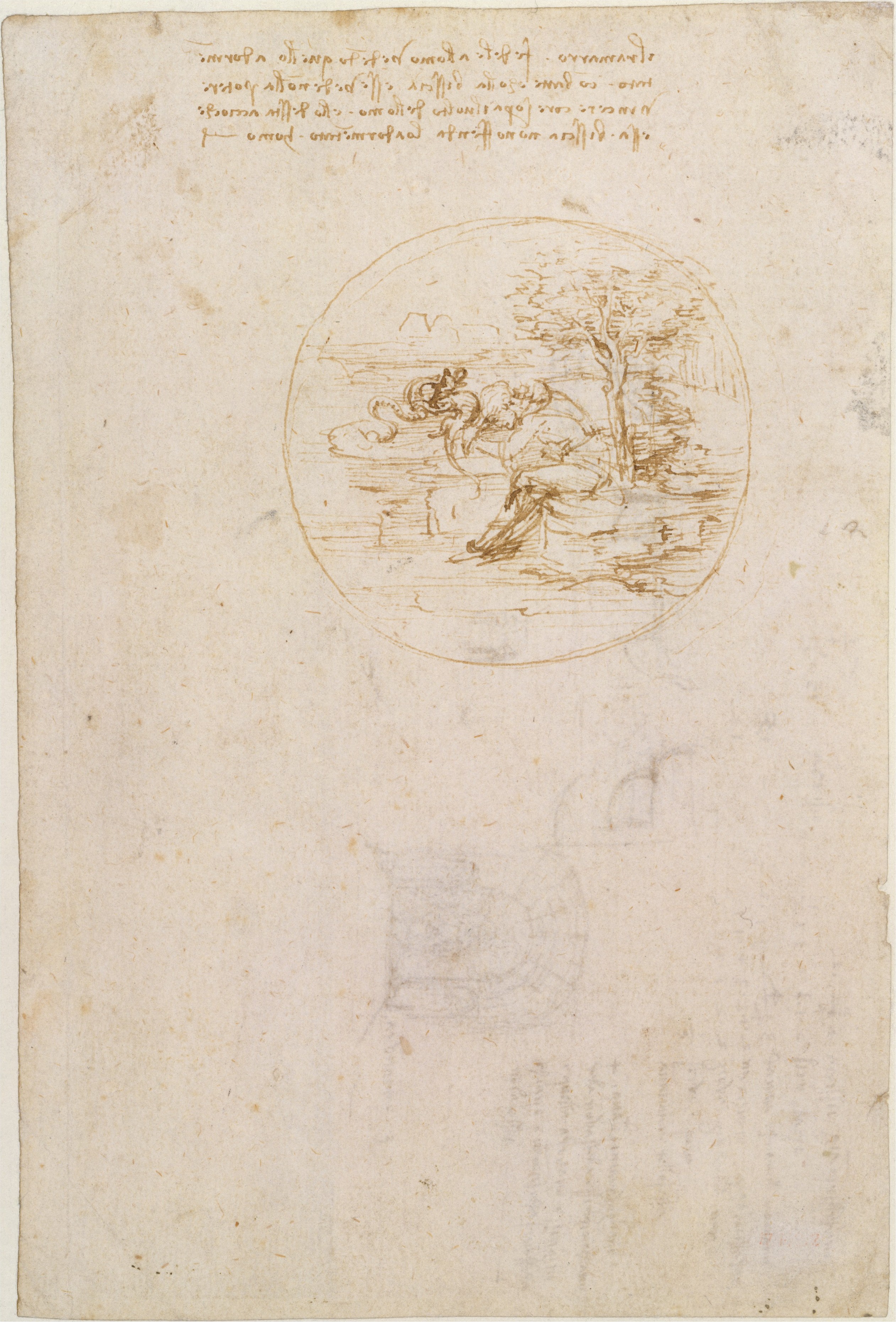


Andrea del Verrocchio and Leonardo da Vinci
Andrea del Verrocchio began his career as a goldsmith and developed his sculptural style slowly. When a young Leonardo da Vinci joined his studio around 1467, the master was only seventeen years his senior. While tradition suggests the teacher shaped the pupil, evidence indicates Leonardo likely pushed Verrocchio toward a more fluid style. By 1473, Leonardo was already using his signature mirror writing in nature studies. Verrocchio continued decorative projects, such as a marble fountain for King Mathias Corvinus, until his death in 1488.
Biography
The collaboration between these two artists produced a shift away from the stiff figures common in fifteenth-century Florence. They favoured a living quality, using complex draperies and soft skin textures to create a sense of movement. Verrocchio is a master of pensive, melancholy faces. His figures often share a specific disillusioned smile that later became a hallmark of Leonardo's independent works. Their shared approach focused on the science of form rather than dramatic theatrical displays.
Modern collectors value these works for their extraordinary sincerity and focus on singular, poetic subjects. A simple study of a woman holding a flower or a child with a dolphin contains a lifetime of observation. These prints offer a connection to the precise moment when Renaissance art moved toward naturalism. The use of light and shadow creates a quiet atmosphere that suits contemporary interiors.
Notable Works
Tap to view larger.
Next stop
Browse the movements →
Every movement in the collection, from the Renaissance to Pop art.
Frequently Asked Questions
What is Andrea del Verrocchio and Leonardo da Vinci known for?
Andrea del Verrocchio and Leonardo da Vinci is known for andrea del Verrocchio and his pupil Leonardo da Vinci transformed Renaissance art by replacing rigid decorative formulas with fluid, living forms and a shared mastery of light and shadow.