

Skip to content Loading

Buy any 3 full-price artworks and save 15%

Mastoid (Drinking Cup) by Anne Claude Philippe, Comte de Caylus
An Athlete Stopping a Lion, from "Group of Subjects Drawn From Antiquity" by Anne Claude Philippe, Comte de Caylus
A Hunter Grabbing a Bear, from "Group of Subjects Drawn From Antiquity" by Anne Claude Philippe, Comte de Caylus
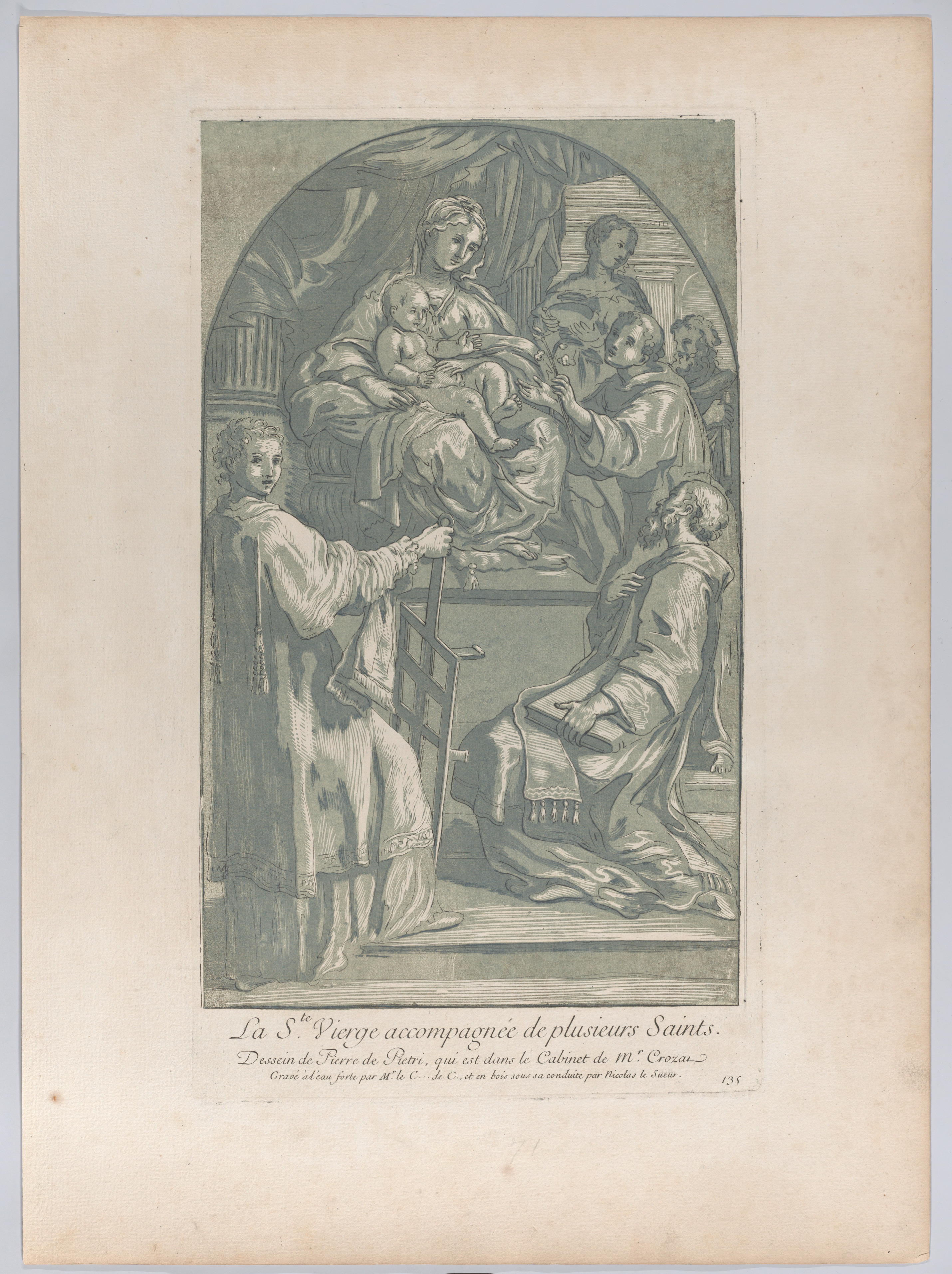
The Virgin and Child seated on a pedestal at center, to the right a monk offers a flower, and in the foreground a saint kneels before them while Saint Lawrence rests his hands on a gridiron; from 'Recueil d'estampes d'après les plus beaux tableaux et d'après les plus beaux desseins qui sont en France, Cabinet Crozat' after a drawing by Pietro Antonio de' Pietri by Anne Claude Philippe, Comte de Caylus
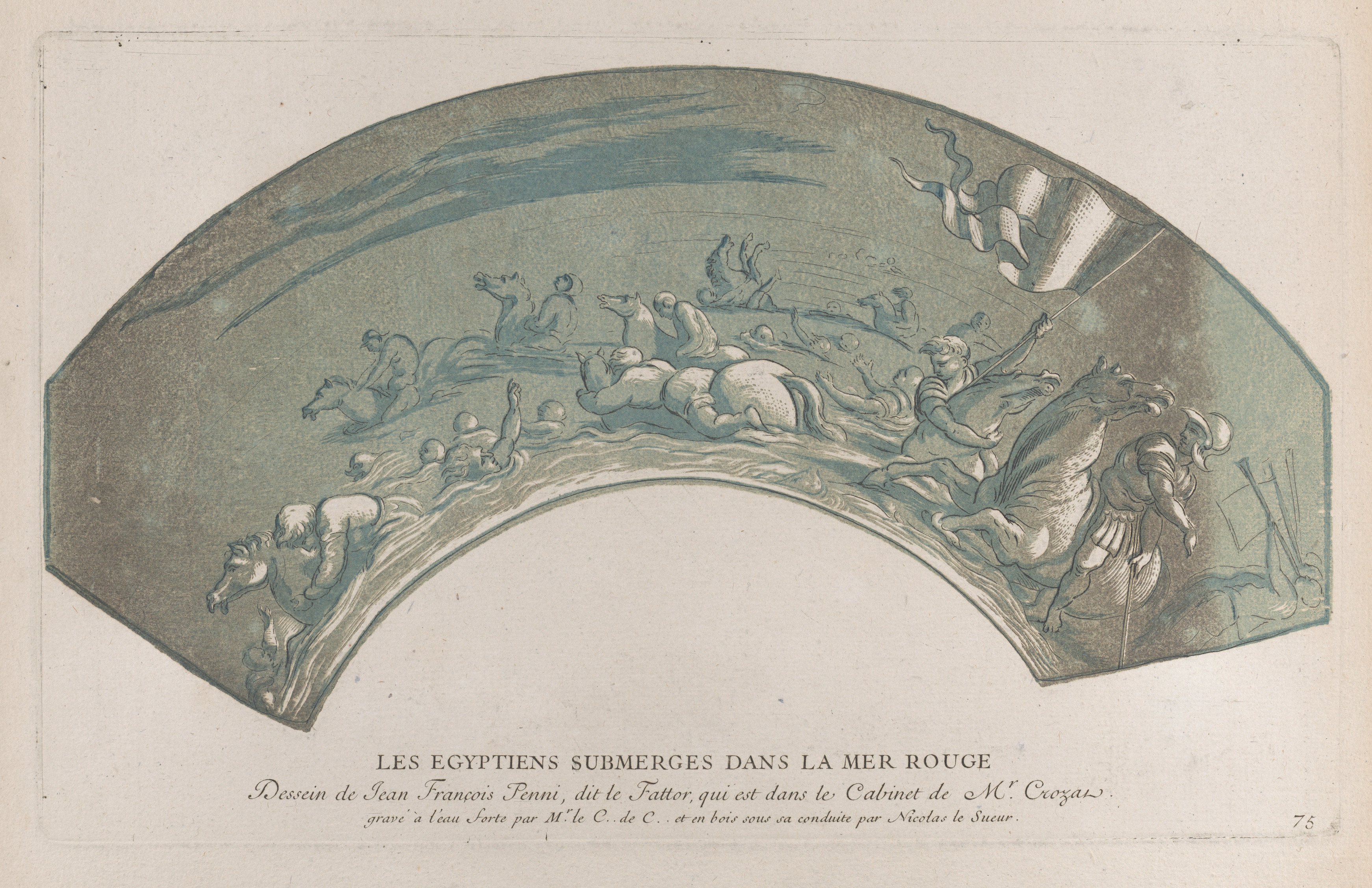
Pharaoh's army engulfed by the Red Sea; from 'Recueil d'estampes d'après les plus beaux tableaux et d'après les plus beaux desseins qui sont en France, Cabinet Crozat' after Giovanni Francesco Penni by Anne Claude Philippe, Comte de Caylus
Woman's Head by Anne Claude Philippe, Comte de Caylus
Woman's Head (turned to right) by Anne Claude Philippe, Comte de Caylus
Woman's Head (turned to left) by Anne Claude Philippe, Comte de Caylus
1692–1765 · French

Anne Claude Philippe, Comte de Caylus

Anne Claude Philippe, Comte de Caylus, began his career in the military before becoming a scholar. His mother was the niece of Madame de Maintenon and a chronicler of the court of Louis XIV. Caylus travelled through Italy and Greece to study ancient sites. He taught himself drawing and engraving because he wanted to document his archaeological finds with accuracy. This practical skill allowed him to join the Royal Academy of Painting and Sculpture as an honorary member.

Portrait of Anne Claude Philippe, Comte de Caylus

Biography

The Comte de Caylus used his etchings to promote the standards of classicism. While many of his peers focused on grand historical scenes, Caylus also recorded the daily life of Paris. He helped catalogue the Royal Collections and produced etchings with clear lines and a focus on form. In etchings like The Faggot Seller, he applies the precision of an archaeologist to a common subject. He avoided the decorative excesses of the Rococo style. Instead, he preferred a more direct and observational method.

Collectors today value the work of Caylus for its historical clarity. His etchings provide a view of eighteenth-century France without the usual sentimentality. The compositions are balanced and restrained. These qualities make his etchings suitable for modern interiors that require a sense of order. His dual identity as a soldier and a scholar gives his etchings a unique perspective. His etchings remain a record of both ancient history and the streets of his own time.

Next stop

Browse the movements →

Every movement in the collection, from the Renaissance to Pop art.

Frequently Asked Questions

  • When was Anne Claude Philippe, Comte de Caylus born?
    Anne Claude Philippe, Comte de Caylus was born in 1692 and died in 1765.
  • What is Anne Claude Philippe, Comte de Caylus known for?
    Anne Claude Philippe, Comte de Caylus is known for anne Claude Philippe, Comte de Caylus, was a French aristocrat and archaeologist who mastered engraving to document both ancient ruins and the street life of eighteenth-century Paris.

Keep exploring

Your cart
Rated 4.7 on Judge.me
Your cart is empty
Have an account? Log in to check out faster.
Continue shopping Continue shopping
Cart total $0.00 USD
Product image Product information Quantity Product total