



Antonio Palolo
António Palolo moved through styles the way other painters move through rooms. In two decades, he shifted from Op Art to Pop, from geometric abstraction to Neo-Expressionist figuration, and from painting to video and installation. The restlessness was both his strength and his vulnerability: each phase was accomplished, but the constant shifting prevented any single body of work from fully consolidating.

Biography
Born in Évora, Portugal, in 1946[1], Palolo was largely self-taught. He emerged in the late 1960s as one of the most adventurous young Portuguese[1] artists, producing geometric paintings and Op Art that placed him in dialogue with international movements.
By the 1970s, he had moved to Pop-influenced work; by the 1980s, to Neo-Expressionist figuration. He was also among the first Portuguese[1] artists to work extensively with video art.
Palolo died in Lisbon in 2000[1] at fifty-four. His work is held by the Museu Nacional de Arte Contemporânea and the Centro de Arte Moderna. A major retrospective attempted to make sense of a career that refused to stay in one place.
Timeline
- 1946Born in Évora, Portugal
- 1960Largely self-taught as an artist
- 1960Emerged as a young artist in the late 1960s
- 1970Moved to Pop-influenced work
- 1980Moved to Neo-Expressionist figuration
- 1980Began working extensively with video art
- 2000Died in Lisbon at age 54
Notable Works
Tap to view larger.
Next stop
Browse the movements →
Every movement in the collection, from the Renaissance to Pop art.
Related Artists

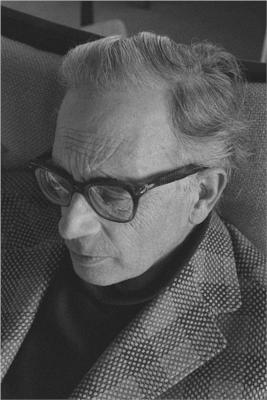
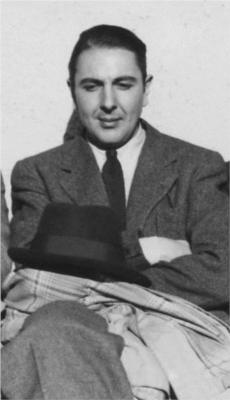
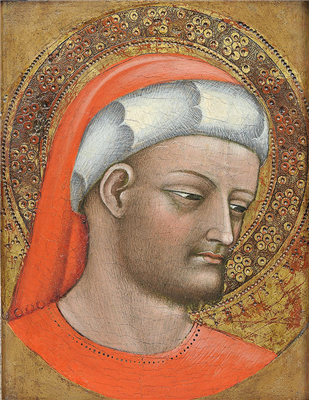
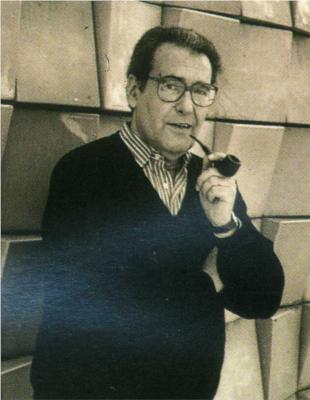
Frequently Asked Questions
What is Antonio Palolo known for?
António Palolo is known for his diverse artistic styles and his willingness to experiment. He produced geometric paintings, Op Art, Pop-influenced work, and Neo-Expressionist figuration. He was also among the first Portuguese[1] artists to work extensively with video art.What should I know about Antonio Palolo's prints?
Antonio Palolo (dates unknown) is a Portuguese[1] artist known for his printmaking. Since 1980[1], he has experimented with etching, aquatint, woodcut, and linocut. These techniques can give his archetypal figures a spectral quality. Paladino's prints are often conceived in series, such as the drypoint *Caves of Naples* (1983) and the linocuts based on James Joyce's *Ulysses* (1984). Since 1984, he has printed with the Giorgio Upiglio atelier in Milan. His work draws on diverse archaeological and stylistic sources, including Egyptian, Etruscan, Graeco-Roman, early Christian and Romanesque art, which reflects the complex cultural history of his native region. His enigmatic allegories depict a somnambulent realm where the dead and living coexist and participate in unspecified rituals; skulls, skeletons and spirits commingle with animals and human figures, often dismembered or with flayed skin and mask-like faces.What techniques or materials did Antonio Palolo use?
Antonio Palolo's artistic practice involved a range of materials and methods. In the early 1970s, he focused on drawing, incorporating mythological subjects. By 1977[1], he was working with large-scale pastels directly on gallery walls. This exploration of scale led him to oil on canvas. Between 1978 and 1980, Palolo created monochromatic paintings using primary colours. He attached geometric elements and found objects, such as twigs and masks, to the canvas surface. From 1983, Palolo began adding sculptural forms, often carved or battered wood, to his canvases. These additions enhanced the object quality of the paintings. Palolo also worked with bronze, creating archaic figures with coloured patinas. In 1985, he produced totemic objects in limestone, reminiscent of Martini's archaism. His wall installation *It Won't Have a Title* (1985) combined bronze figures with minimalist panels, blurring the line between painting and sculpture. Paladino also experimented with printmaking techniques, including etching, aquatint, woodcut, and linocut.When did Antonio Palolo live and work?
Antonio Palolo was born in Portugal in 1946[1]. He is known for his painting and printmaking. Palolo is associated with the rise of conceptual art in Portugal during the 1960s. His work often incorporates geometric shapes and explores the relationship between colour and form. He began exhibiting in the late 1960s, gaining recognition for his distinctive approach to abstraction. Throughout his career, Palolo has explored various themes, including urban spaces and social issues, often using a minimalist aesthetic. His work has been exhibited in Portugal and internationally, securing his position as a significant figure in contemporary Portuguese[1] art. He continues to live and work, contributing to the development of art in Portugal.Where can I see Antonio Palolo's work?
Information on Antonio Palolo's work in public collections is limited in the provided references. However, some museums with holdings of related art styles are listed. The Fondazione Regionale Cristoforo Colombo is located at Palazzo Ducale, Piazza Matteotti 9, 16123 Genova. Another option is the Museo del Bijou di Casalmaggiore, situated at Via A. Porzio 9, Casalmaggiore. Finally, the Museo Richard-Ginori della Manifattura di Doccia can be found at Viale Pratese 31, 50019 Sesto Fiorentino. These museums may provide context for Palolo's artistic milieu. Additionally, works by Nicolas Poussin are held in the M. H. de Young Memorial Museum; the Museu de Arte, SÃo Paulo; the John and Mable Ringling Museum of Art in Sarasota; and the Nationalmuseum in Stockholm. Other locations include the National Trust at Stour Head, the Art Gallery of Toronto, the Galleria Sabauda in Turin, and the Kunsthistorisches Museum in Vienna. The National Gallery of Art in Washington, D.C. also possesses Poussin's paintings. These collections may allow for comparison and contrast with Palolo's techniques.Who influenced Antonio Palolo?
It is difficult to isolate specific influences on Antonio Palolo. However, the milieu in which he worked, and the artists with whom he exhibited, suggest some figures who may have been important to his development. Palolo was part of the larger Futurist movement. Key figures of Futurism include F. T. Marinetti, Umberto Boccioni, Carlo Carra, and Giacomo Balla. These artists explored themes of technology, speed, and modernity. Their work encompassed painting, sculpture, and literature. Other artists associated with Futurism include Luigi Russolo, known for his work with sound and noise, and Antonio Sant’Elia, an architect who imagined a futuristic urban landscape. Fortunato Depero contributed to Futurist painting and graphic design. While it is not possible to say definitively who influenced Palolo most, these artists represent the broader intellectual and artistic environment that shaped his work.What was Antonio Palolo's art style?
Antonio Palolo's style shifted throughout his career. He worked in geometric abstraction, Op Art, Pop, and Neo-Expressionist figuration.How did Antonio Palolo die?
Antonio Palolo died in 2000[1] at the age of 54.
Sources
Editorial draws on the following primary and tertiary references for Antonio Palolo.
- [1] wikipedia Wikipedia: Antonio Palolo Used for: biography, birth dates, death dates, identifiers, movement attribution, nationality.
- [2] book guggenheim-masterp00solo Used for: biography.
- [3] book Braun, Emily, 1957-; Asor Rosa, Alberto; Royal Academy of Arts (Great Britain), Italian art in the 20th century : painting and sculpture, 1900-1988 Used for: biography.
- [4] book Masterpieces of western art : a history of art in 900 individual studies from the Gothic to the present day Used for: biography.
Editorial overseen by Solis Prints. Sources verified 2026-10-16. Click a source for details, or hover over [N] in the page above to preview.
Editorial standardsMethodologyCorrectionsAI disclosureAbout the editorial team