



Audrey Flack
- photorealism
When *Marilyn (Vanitas)* was completed in 1977[1], critics struggled to classify it. At 244 × 244 centimetres, the painting arrays black-and-white photographs of Monroe against a distinctly modern vanitas ensemble: a pink hourglass, a burning candle, an alarm clock, a calendar, lipstick tubes, pearls, and fruit so glossily waxed it reads as fake on purpose. Flack had borrowed the entire vocabulary of 17th-century Dutch still-life painting, updated it with the objects of post-war consumer culture, and projected it through an airbrush onto canvas. The result hangs in the University of Arizona Museum of Art, Tucson, acquired through the Edward J. Gallagher Jr. Memorial Fund.
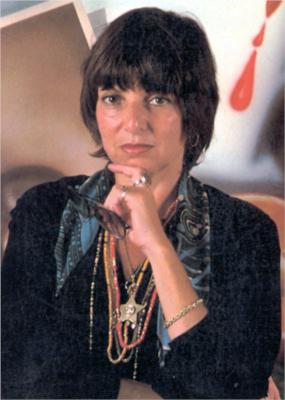
Biography
The airbrush was the key. Flack builds her paintings by projecting a photographic slide directly onto the canvas and then working in acrylic or oil using the tool originally designed for retouching photographs. The result is a surface with no visible brushwork, tonal gradations as smooth as a magazine reproduction, and a peculiarly frozen quality that deliberately mimics the photographic image. Scholars have consistently insisted this is not a technical stunt: the paintings are, in the formulation used in every major survey textbook from Gardner's to Janson's, conceptual inquiries into how photography constructs reality rather than transcriptions of it.
Flack was a core figure in the Photorealism movement of the 1960s and 1970s, alongside Chuck Close, Richard Estes, and Don Eddy. She was the first woman included in H.W. Janson's *History of Art*, long the most widely taught survey in American[1] universities. From the 1980s she moved progressively into large-scale figurative bronze sculpture, producing monumental works drawing on classical mythology. Born in New York in 1931[1], she studied at the Cooper Union and Yale.
Timeline
- 1931Born in New York.
- 1955Studied at Cooper Union.
- 1960Studied at Yale.
- 1960Became a core figure in the Photorealism movement.
- 1977Completed the painting "Marilyn (Vanitas)".
- 1980Progressively moved into large-scale figurative bronze sculpture.
Notable Works
Tap to view larger.
Next stop
Browse the movements →
Every movement in the collection, from the Renaissance to Pop art.
Related Artists



Frequently Asked Questions
What is Audrey Flack known for?
Audrey Flack is known for her contributions to the Photorealism movement during the 1960s and 1970s. From the 1980s, she moved into large-scale figurative bronze sculpture, producing monumental works drawing on classical mythology.What is Audrey Flack's most famous work?
Audrey Flack, born in 1931[1], is known for paintings that address twentieth-century issues, such as feminism. One of her most famous works is "Queen", completed between 1975[1] and 1976. The acrylic on canvas painting is a square, measuring six feet eight inches. The work is now held in a private collection, and is represented by the Louis K. Meisel Gallery, New York. Flack borrows from Dutch Renaissance artists, specifically the "vanitas" painting style. These still lifes feature objects that symbolise the fleeting nature of life. In "Queen", each object acts as an allegory for women's roles in the modern world. The queen chess piece, for example, represents women as versatile and powerful, but ultimately subordinate.What should I know about Audrey Flack's prints?
Audrey Flack is an American[1] artist, well known for her photorealist paintings and sculptures. Her prints often share similar themes and techniques. Flack began making prints in the 1970s, often working with silkscreen and lithography. These prints allowed her to explore the same subjects as her paintings, such as still life, beauty, and the passage of time, but in a more accessible medium. Many of Flack's prints are characterised by their sharp focus and high level of detail. She often incorporates photographic elements into her printmaking, creating images that mimic the look of photographs. This is consistent with the photorealist style she developed in her paintings. Some of her notable prints include versions of her well-known paintings. These prints offer collectors an opportunity to own a piece related to Flack's larger body of work at a lower price point than an original painting. Her prints have been exhibited in various museums and galleries, contributing to her recognition as a significant figure in contemporary art.What style or movement did Audrey Flack belong to?
Audrey Flack (born 1931[1]) is associated with Superrealism, a post-war American[1] art movement. Because many Superrealists used photography as source material, the style is also known as Photorealism. Flack was one of the pioneers of this movement. Flack used photographs in slide form, projecting the images onto canvases. She then employed an airbrush, originally a photo-retouching tool, to replicate the gradations of tone and colour found in photographs. Flack observed that she had studied art history through photographs, since the paintings were in Europe. She noted the influence of "photo-vision" from television and magazines. Her paintings, such as *Marilyn* (1977[1]), were not merely technical exercises. They were conceptual inquiries into the nature of photography, and how photography shapes our understanding of reality. Flack also explored realism in relation to feminism. Her painting *Queen* (1975-76) is an allegory incorporating personal and feminist viewpoints.What techniques or materials did Audrey Flack use?
Audrey Flack is known for photorealist paintings that often incorporate airbrushing techniques. Her work frequently uses still-life compositions. These paintings often feature carefully arranged objects rendered with a high degree of detail. Flack's artistic process often begins with photography. She arranges objects and photographs them, then projects the image onto a canvas. This projected image forms the basis for her painting. She then uses an airbrush to apply layers of colour, building up the image in a meticulous manner. This technique allows her to achieve smooth gradations and realistic textures. In addition to airbrushing, Flack also uses traditional painting methods, such as glazing, to add depth and luminosity to her work. Her materials include acrylic paints and occasionally oil paints. She sometimes incorporates other media, such as collage or sculpture, into her practice. Her work challenges traditional notions of painting by combining it with photographic and sculptural elements.What was Audrey Flack known for?
Audrey Flack is best known for her photorealist paintings of the 1960s and 1970s. She later expanded into sculpture. Born in New York in 1931[1], Flack studied art at Cooper Union, and later Yale University, where she earned a BFA in 1952[1]. Early in her career, she worked in an Abstract Expressionist style; however, by the late 1960s, she had shifted to photorealism[1]. Flack's photorealist paintings often featured still-life compositions. These paintings are characterised by their high level of detail and use of bright colours. Common subjects included cosmetics, fruit, and other everyday objects. They often incorporated elements of vanitas imagery; that is, symbolic objects that reflect on the transience of life. Examples of her paintings from this period include *Queen* (1976) and *Marilyn (Vanitas)* (1977). In the 1980s, Flack moved away from painting and began to work in sculpture. Her sculptures often depict female figures, and explore themes related to feminism and mythology.Where can I see Audrey Flack's work?
Audrey Flack's artworks can be found in numerous museums across the globe. In the United States, notable institutions holding her pieces include the Metropolitan Museum of Art (New York), the Museum of Modern Art (New York), the Los Angeles County Museum of Art (LACMA), the Minneapolis Institute of Arts, the Virginia Museum of Fine Arts (Richmond), the Wolfsonian at Florida International University (Miami Beach), the High Museum (Atlanta), the J. Paul Getty Museum (Los Angeles), the Art Institute of Chicago, and the Philadelphia Museum of Art. In Canada, her work is exhibited at the Royal Ontario Museum (Toronto). European locations include the Victoria & Albert Museum (London), the National Museums of Scotland Royal Museum (Edinburgh), the Musée d’Orsay (Paris), the Musée du Louvre (Paris), and the Kunsthistorisches Museum (Vienna). Other international locations include the Hong Kong Museum of History, the MOA Museum of Art (Atami, Japan), and the Queen Sirikit Museum of Textiles (Bangkok, Thailand).Who did Audrey Flack influence?
Audrey Flack (born 1931[1]) was one of the pioneers of Superrealism, also referred to as Photorealism, a post-war movement that used photographs as sources. Her paintings, such as *Marilyn* (1977[1]), were not simply technical exercises in recording objects with minute detail; they were also conceptual inquiries into the nature of photography. Flack observed that photography influenced everything, from art history to television. She also found the photograph's formal qualities intriguing. Flack employed photographic techniques by projecting an image in slide form onto the canvas. She then used an airbrush, originally designed as a photo-retouching tool, to duplicate the smooth gradations of tone and colour found in photographs. As a feminist, Flack used realism to explore the world around her and her relation to it from a personal viewpoint. Her painting *Queen* (1975-76) is an extended allegory. The queen is the most powerful figure on the chessboard, yet she remains expendable in defence of the king.Who influenced Audrey Flack?
As a young artist, Audrey Flack was drawn to the work of Jackson Pollock. She felt that his paintings resonated with her and opened the way for her own artistic contribution. She also investigated the methods of Old Masters, Cubists, Manet, Monet, Miró, and Gorky, often making abstract responses to their works. For example, she claims she did not properly understand Manet until she made 'For E. M.' (1981[1]), a version of his painting 'Fish (Still Life)' (1864). She also notes that she came to appreciate the colour work of Matisse and Monet later in her career. Flack received early training from teachers influenced by Cubism. She learned to apply the rules and laws of Analytic Cubism to everything she looked at. In high school, she studied with Rufino Tamayo, and during her college years, with Paul Feeley at Bennington. During nonresident terms, she studied with Vaclav Vytlacil at the Art Students League, and she worked in Wallace Harrison's drawing class in New York.Who was Audrey Flack?
Audrey Flack, born in New York City in 1931[1], is an American[1] painter and sculptor. She is known for her photorealist paintings of the 1960s and 1970s. Flack studied art at Cooper Union, graduating in 1951[1]. She continued her education at Yale University, where she earned a Bachelor of Fine Arts degree in 1952. Early in her career, Flack worked in an abstract expressionist style. By the late 1960s, she shifted to photorealism[1], using projected photographs to create highly detailed paintings. These works often featured still-life compositions with commercial objects, cosmetics, and fruit. Later paintings frequently included historical figures and classical themes. In the 1980s, Flack moved away from painting and began working primarily in sculpture. Her sculptures often explore themes of mythology, history, and feminism. Public commissions include the statue *Civitas*, installed in Columbia, South Carolina, in 1989, and *Gateway to the Imagination*, installed in St. Louis, Missouri, in 1997. Flack has taught at several institutions, including the University of Pennsylvania and the National Academy of Design.Why are Audrey Flack's works important today?
Audrey Flack is an important figure in both the Photorealist and feminist art movements of the late 20th century. Born in New York in 1931[1], she initially worked in an Abstract Expressionist style, but by the late 1960s she had turned to Photorealism. This style involved creating paintings that closely resembled photographs, often using an airbrush to achieve a smooth, almost hyperreal effect. Flack’s work often incorporates images of everyday objects, cosmetics, and historical figures. What sets her apart is her willingness to engage with traditionally feminine subjects, such as beauty products and still life arrangements. These were often dismissed as trivial by the male-dominated art world. Her large-scale paintings, such as "Queen" (1976[1]), challenged these assumptions by elevating these subjects to the scale and status of history painting. Later in her career, Flack moved away from Photorealism and began creating sculptures. These sculptures often explore themes of mythology and female empowerment. Flack’s willingness to challenge artistic conventions and address social issues has made her an important figure for subsequent generations of artists. She continues to exhibit and lecture, and her work is held in major museum collections.What was Audrey Flack's art style?
Audrey Flack was one of the pioneers of Superrealism, also known as Photorealism. Her paintings were not simply technical exercises in recording objects in minute detail, but also conceptual.
Sources
Editorial draws on the following primary and tertiary references for Audrey Flack.
- [1] wikipedia Wikipedia: Audrey Flack Used for: biography, birth dates, death dates, identifiers, movement attribution, nationality.
- [2] book Fred S. Kleiner, Gardner's Art through the Ages Used for: biography.
- [3] book Unknown, Reclaiming female agency : feminist art history after postmodernism Used for: biography.
- [4] book Carol Strickland and John Boswell, The Annotated Mona Lisa Used for: biography.
Editorial overseen by Solis Prints. Sources verified 2026-10-07. Click a source for details, or hover over [N] in the page above to preview.
Editorial standardsMethodologyCorrectionsAI disclosureAbout the editorial team