

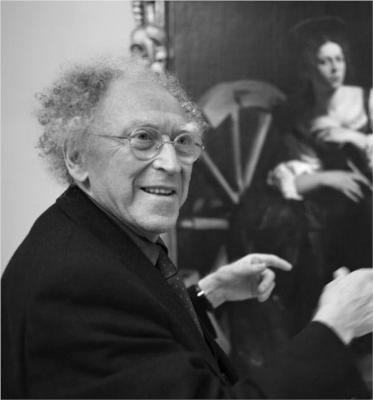
Avigdor Arikha
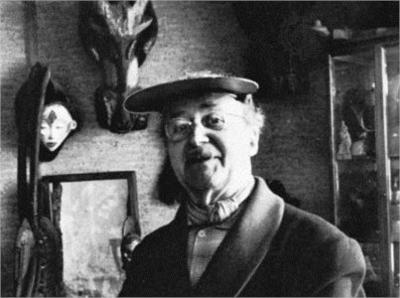
- portrait
Arikha spent nearly a decade making abstract paintings before renouncing the practice in 1973[1], returning to observational work from which he never looked back. The decision was radical: he would paint only from life, completing each canvas in a single session without revisions. Born in 1929[1] in Radautz, Romania, he survived deportation to a Ukrainian labour camp as a teenager before emigrating to Israel and later settling in Paris.
Biography
Robert Hughes identified him as the most interesting realist working in France, describing his paintings as "small, low-coloured, and high-keyed": a characterisation that captures their peculiar intimacy. Subject matter was pointedly ordinary: battered shoes, a pottery jug, a bunch of asparagus tied in blue paper (a deliberate echo of Manet). Hughes heard in the work "an odd undercurrent of unease" and "scrupulous improvisation and anxiety," qualities Arikha himself acknowledged. "To paint from life at this point in time," he said, "demands both the transgression and the inclusion of doubt."
Beyond painting, Arikha was a serious art historian who produced widely cited studies of Ingres and Poussin. He was a close friend of Samuel Beckett, whose portrait[1] he drew on numerous occasions. He died in Paris in 2010[1].
Timeline
- 1929Born in Radautz, Romania.
- 1940Deported to a Ukrainian labour camp as a teenager during the Second World War.
- 1949Emigrated to Israel after surviving the labour camp.
- 1970Began a close friendship with Samuel Beckett, drawing his portrait on numerous occasions.
- 1973Renounced abstract painting, returning to observational work, painting only from life and completing each canvas in a single session.
- 2010Died in Paris at 81.
Next stop
Browse the movements →
Every movement in the collection, from the Renaissance to Pop art.
Avigdor Arikha prints
Hand-finished archival prints from Avigdor Arikha's body of work.


Related Artists
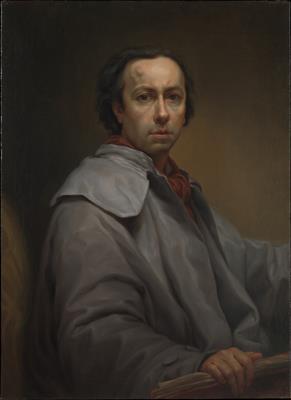
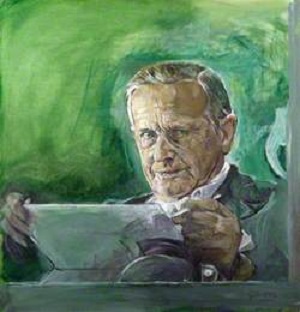

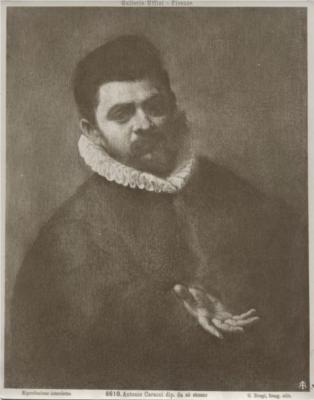
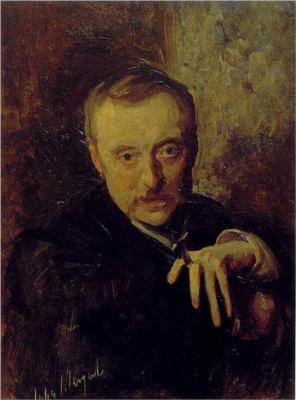
Take Avigdor Arikha home.
See all Avigdor Arikha prints →Frequently Asked Questions
What is Avigdor Arikha known for?
Avigdor Arikha is known for his realist paintings, often of ordinary subject matter, completed in a single session from life. Robert Hughes described his paintings as "small, low-coloured, and high-keyed", capturing their peculiar intimacy.What is Avigdor Arikha's most famous work?
It is difficult to name one single work as Avigdor Arikha's 'most famous'. He is best known for still lifes and portraits executed from life, in a style that combines abstraction and realism. Arikha rejected abstract art in 1965[1], after which he embraced a representational style, working exclusively from direct observation. His subjects included portraits of his family and friends, still lifes, and depictions of everyday objects. Arikha worked in a variety of media, including drawing, etching, and painting. He is noted for his limited colour palette, often using only black, white, and a few earth tones. Examples of his portraiture include those of the art historian Sir Ernst Gombrich and the artist Lucian Freud.What should I know about Avigdor Arikha's prints?
Avigdor Arikha was a painter, printmaker, and art historian. Studying his prints requires understanding some basic printmaking conventions. Printmakers often create a limited edition of impressions, each of which is considered an original. The artist conceives the image as a print and executes it solely as a print. Each print in the edition is an original, printed from a plate, stone, screen, or block created for that purpose. Each print is inked and pulled individually; it is a multi-original medium. The number of prints in the edition is decided by the artist. The prints are numbered sequentially (for example, 12/25, meaning print number 12 from an edition of 25). The artist usually signs each print in pencil. According to printmakers' conventions, the edition number is written on the left bottom margin of the print, the title in the middle, and the signature on the right.What style or movement did Avigdor Arikha belong to?
Avigdor Arikha (1929[1]-2010[1]) was an Israeli[1] artist who lived and worked in Paris. He is best described as a realist painter. His paintings are characterised by their small scale, low colour, and high key. Arikha's work often featured single images of ordinary objects: shoes, jugs, or asparagus. These images are presented with a sense of unease, reflecting the difficulty inherent in description. Arikha aimed to stabilise a sight amidst unpredictable markings. His work displays concentration, scrupulous improvisation, and anxiety. He believed that painting from life at that point in time required both transgression and the inclusion of doubt. His approach set him apart from spectacle and the "tyranny of impact".What techniques or materials did Avigdor Arikha use?
Avigdor Arikha's paintings are noted for their directness and apparent simplicity. Working primarily with oil paints, he favoured small-scale formats and a limited range of low-key colours. Arikha's approach involved painting directly from life, aiming to capture a single, concentrated image. His subjects were often ordinary, everyday objects: shoes, jugs, or food items. These were rendered with a sense of unease, reflecting the difficulty inherent in accurately representing reality. His technique emphasised the importance of doubt and improvisation. He sought to stabilise a fleeting sight amidst unpredictable variations, resulting in works that convey both meticulous observation and a degree of anxiety. This approach sets him apart from artists who favour spectacle or grand gestures.What was Avigdor Arikha known for?
Avigdor Arikha (1929[1]-2010[1]) was an Israeli[1] artist who lived and worked in Paris. He is best known as a realist painter working in a period dominated by abstraction. Arikha's paintings are small, low-coloured, and high-keyed. His work implies a dislike of spectacle and the imposition of impact. Arikha typically depicted single images and enumerations of ordinary objects. These included a battered pair of black shoes, a pottery jug, or a Manet-like bunch of asparagus tied in blue paper. His paintings have an odd undercurrent of unease and a sense of the difficulty of description. Arikha tried to stabilise a sight amid unpredictable markings. His work is full of concentration and has an air of scrupulous improvisation and anxiety. He argued that painting from life at that point in time demanded both transgression and the inclusion of doubt.When did Avigdor Arikha live and work?
Avigdor Arikha was born in Romania in 1929[1] and died in Paris in 2010[1]. Arikha's early life was marked by displacement. As a Jewish child during the Second World War, he survived a Nazi concentration camp due to his artistic talent; he made drawings of the camps, which secured his release. After the war, he emigrated to Palestine in 1944[1]. He studied at the Bezalel School of Art in Jerusalem, later moving to Paris in 1949 to study at the École des Beaux-Arts. Although he began as an abstract artist, by the mid-1960s, Arikha abandoned abstraction. He returned to figurative art, developing a distinctive style of painting and drawing directly from life. Arikha worked primarily in Paris, but he also spent time in London and New York. He is known for his portraits, still lifes, and interior scenes.Where can I see Avigdor Arikha's work?
Avigdor Arikha's works can be viewed in several locations. In London, you might find his pieces at the National Gallery, the National Portrait Gallery, the Tate Gallery, or the Victoria and Albert Museum. Outside of London, Leeds City Art Gallery and the National Museum of Wales in Cardiff have collections that may include his work. Additionally, the Scottish National Gallery of Modern Art in Edinburgh sometimes displays his pieces. For those outside the UK, museums such as the Art Gallery and Museum in Aberdeen and the Ulster Museum in Belfast may also hold his art. Always check with the museum in advance about specific works on display, as collections can change.Who did Avigdor Arikha influence?
Avigdor Arikha's impact on other artists is difficult to measure precisely. One art critic noted that Arikha's paintings imply "a loathing of spectacle, of the tyranny of impact," and that his work embodies concentration and "an air of scrupulous improvisation and anxiety". While it is nearly impossible to identify "Arikha-ites" in the same way that one could identify "Picasso-ites" or "Matisse-ites" in the early 20th century, some artists have followed similar paths. R. B. Kitaj, for example, was a figurative painter who explored his Jewish identity in his art, and who connected his art to the Jewish scholarly tradition of midrash. Jerome Witkin is another figurative painter who has created narrative paintings about the Holocaust. Tobi Kahn is a painter and sculptor who explores "the redemptive possibilities of art" in his work.Who influenced Avigdor Arikha?
Avigdor Arikha's artistic development involved several influences. In St Petersburg, Marc Chagall studied with Lev Bakst, who taught him the value of colour, precise ornaments, and theatrical design. Chagall also absorbed Symbolist tendencies, folk art, and an interest in mystical scenes. He fused Christian art elements (iconography, icons) with Jewish motifs, reflecting the duality of modern Jewish culture. Chagall felt that both Pen and Bakst were old-fashioned. He went to Paris, where he connected with Fauvism and Cubism. His poetic style anticipated Surrealism and Expressionism, and he associated with poets and painters such as Blaise Cendrars, Guillaume Apollinaire, and Robert and Sonia Delaunay. Chaim Soutine's turbulent style was influenced by Vincent van Gogh. Soutine was uninterested in the Fauves and Cubists, preferring his own style and an affinity with Old Masters such as Rembrandt. Artists at the Museum of Painterly Culture had studied Cézanne with the Jack of Diamonds artists, and colour and design with Stepanova, Popova, and Aleksandr Vesnin. Deineka, an admirer of Ferdinand Hodler, adapted graphic devices used in woodcuts and engraving by his professor at Vkhutemas, Favorskii.Who was Avigdor Arikha?
Avigdor Arikha (1929[1]-2010[1]) was a Romanian-born Israeli[1] painter, printmaker, and art historian. Born in Romania, his family fled to Palestine in 1944[1] to escape the Holocaust. Arikha initially embraced abstraction, but by the mid-1960s he rejected it in favour of representational art. He developed a distinctive style of painting and drawing directly from life, often in a single sitting. This approach, influenced by his study of Old Master techniques, emphasised capturing the immediate visual experience. Throughout his career, Arikha wrote extensively on art history. He produced catalogues raisonnés of the works of Nicolas Poussin and Alberto Giacometti. He also wrote on subjects such as Piero della Francesca and Diego Velázquez. Arikha's writings offer insights into his artistic thinking and his deep engagement with the history of art.Why are Avigdor Arikha's works important today?
Avigdor Arikha (1929[1]-2010[1]) was an Israeli[1] artist who lived and worked in Paris. He is significant for his realist paintings, which imply a dislike of spectacle and the imposition of effect. Arikha's paintings are usually small, low-coloured, and high-keyed. They depict single images and enumerations of ordinary objects: a battered pair of black shoes, a pottery jug, or a bunch of asparagus. These objects are described with an odd undercurrent of unease, and imbued with a sense of the difficulty of any kind of description. Arikha believed that painting from life at this point in time demands both the transgression and the inclusion of doubt. His work is all concentration and breathes an air of scrupulous improvisation and anxiety. He attempts to stabilise a sight in the midst of an unpredictable frequency of markings.
Sources
Editorial draws on the following primary and tertiary references for Avigdor Arikha.
- [1] wikipedia Wikipedia: Avigdor Arikha Used for: biography, birth dates, death dates, identifiers, movement attribution, nationality.
- [2] book guggenheim-chagallj00chag Used for: biography, stylistic analysis.
- [3] book guggenheim-newhorizonsiname00denn Used for: biography.
- [4] book Robert Hughes, The Shock of the New, 1980 Used for: biography.
- [5] book Charlene Spretnak (auth.), The Spiritual Dynamic in Modern Art _ Art History Reconsidered, 1800 to the Present Used for: stylistic analysis.
- [6] book Beckett, Wendy, The story of painting Used for: biography.
Editorial overseen by Solis Prints. Sources verified 2026-10-08. Click a source for details, or hover over [N] in the page above to preview.
Editorial standardsMethodologyCorrectionsAI disclosureAbout the editorial team