

Billy Apple
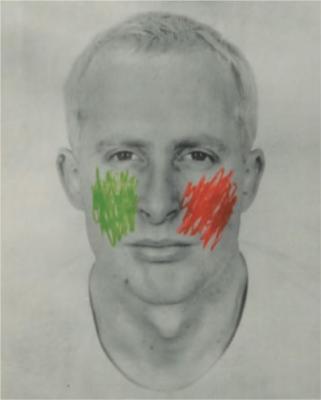
Billy Apple legally became Billy Apple at 8pm on 22 November 1962[2], when Barrie Bates, a New Zealand-born Royal College of Art student, bleached his hair and eyebrows with Lady Clairol Instant Creme Whip and announced the persona change at Gallery One, London. The name shift was itself an artwork: a deliberate dismantling of the inherited self and its replacement with a brand, an act that prefigured conceptual art's interrogation of identity and authorship.
Biography
Apple arrived in New York in 1964[2] and found himself in the right city at the right moment. He participated in The American Supermarket that year alongside Warhol, Oldenburg and Jasper Johns, a show staged at Paul Bianchini's gallery that simulated a supermarket to probe the aesthetics of consumerism. His subsequent neon works, shown in Neon Rainbows (1965) and Unidentified Fluorescent Objects (1967), made him an early practitioner of neon as fine art, years before the medium became fashionable.
Between 1969[2] and 1973 he ran an alternative gallery space at 161 West 23rd Street, serving as a platform for emerging conceptual practice. He returned permanently to New Zealand in 1990, and his later work engaged increasingly with New Zealand cultural and institutional contexts. A solid gold apple cast in 1983 was valued at NZ$85,000. Works are held by Tate Britain, the Guggenheim, and Te Papa Tongarewa. He died in Auckland in September 2021[2], aged 85.
Timeline
- 1935Born Barrie Bates in New Zealand.
- 1962Legally changed his name to Billy Apple on 22 November at Gallery One, London, bleaching his hair and eyebrows as part of the announcement.
- 1964Participated in The American Supermarket exhibition in New York with Warhol, Oldenburg and Jasper Johns.
- 1965Exhibited neon works in Neon Rainbows.
- 1967Exhibited neon works in Unidentified Fluorescent Objects.
- 1969Ran an alternative gallery space at 161 West 23rd Street, New York.
- 1983A solid gold apple cast was valued at NZ$85,000.
- 1990Returned permanently to New Zealand.
- 2021Died in Auckland in September, aged 85.
Notable Works
Tap to view larger.
Next stop
Pop Art →
Explore the artists and ideas of Pop Art.
Related Artists
_%E2%80%93_LOC.jpg)




Frequently Asked Questions
What is Billy Apple known for?
Billy Apple is known for his early adoption of neon in fine art and for running an alternative gallery space. He was an early practitioner of neon as fine art, years before the medium became fashionable, and he ran a gallery space that served as a platform for emerging conceptual practice.What is Billy Apple's most famous work?
It is difficult to name Billy Apple's single 'most famous work' because his practice spanned several decades and encompassed diverse media. He is known for his involvement in the Conceptual art movement, and for his focus on branding and the art market itself. His early work involved changing his name to 'Billy Apple' and trademarking the name. He opened 'Apple', a gallery space in New York, in 1969[2]. Apple's practice often incorporated neon, photography, and printmaking. He created series of works that explored commercial exchange, identity, and the role of the artist. Later in his career, Apple developed 'The Immortalisation of Billy Apple,' a project that involved cryogenically preserving his body after his death. This performative work continued his exploration of identity, commodification, and the boundaries of art.What should I know about Billy Apple's prints?
When considering Billy Apple's prints, bear in mind the distinction between an original print and a reproduction. An original print is conceived as a print, made solely as a print, and is usually part of a numbered, signed edition. Each print is individually inked and pulled; it is a "multi-original medium". The artist decides the number of prints in the edition. Numbering accounts for the prints, for example, 12/25 means it is print number 12 from an edition of 25. Early prints were not always numbered or signed. A reproduction is a copy of artwork initially conceived in another medium, such as painting. It is usually created using photo-mechanical methods. Numbering or signing a reproduction does not make it an original print. Printmakers often adhere to conventions: the edition number on the bottom left, the title in the centre, and the signature on the right, all in pencil. These claims add value if honoured.What style or movement did Billy Apple belong to?
Billy Apple, born Barrie Bates in Auckland, New Zealand, in 1935[2], is associated with Pop Art[2] and Conceptual Art. He changed his name in 1962[2], coinciding with his artistic focus on his constructed persona. Apple's work often incorporates his name and logo, blurring the lines between art, commerce, and identity. His early work, produced in London and then New York, engaged with the Pop Art interest in consumer goods and advertising. He created sculptures and installations using neon, chrome, and other industrial materials. In 1969, Apple co-founded Apple Art, a non-profit gallery that operated on a fifteen-percent commission. This venture reflected his increasing interest in the art market as a subject. His later work moved further into Conceptual Art, including explorations of branding, corporate identity, and the commodification of the artist. He often examines the legal and economic structures of the art world. Apple's practice involves interventions in public spaces and collaborations with other artists and businesses. He died in 2021[2].What techniques or materials did Billy Apple use?
Billy Apple, born Barrie Bates, worked across diverse media throughout his career. He began as a graphic designer, and his early work included sculpture and screen prints. In the 1960s, he explored neon art. One example is *Apple Sees Red: 5 Beams* (1968[2]), which uses red neon tubes. He often incorporated the Apple name and logo into his pieces, blurring the lines between art and commerce. Later, Apple engaged with more conceptual and performative works. These included body art, such as his *Body Apple* series (1969), where he had his skin tattooed. He also created works involving saliva, blood, and other bodily fluids. Apple often collaborated with scientists and researchers, particularly in his later work. This interdisciplinary approach led to artworks that explored scientific concepts. An example of this is his work with DNA, such as *DNA Signature* (2007), which visualises his genetic code. His practice consistently questioned the nature of art, identity, and the art market itself.When did Billy Apple live and work?
Billy Apple (born Barrie Bates) was a New Zealand-born artist who lived from 1935[2] to 2021[2]. He worked in both the United Kingdom and the United States. Apple studied at the Royal College of Art in London from 1959[2]. There, he associated with other pop artists, including David Hockney and Derek Boshier. By 1962, he was exhibiting in London alongside Peter Blake. In 1964, he moved to New York City, where he continued to produce work. His practice spanned several media and styles. He created sculpture, installation art, and prints. Apple engaged with themes of branding, commodity, and the art market itself. He legally changed his name in 1962 and began using his new name and image as a brand. Later in life, Apple returned to New Zealand. He continued to produce and exhibit art until his death.Where can I see Billy Apple's work?
Billy Apple's artwork has been exhibited in various locations internationally. These include both solo exhibitions dedicated to his work and group exhibitions featuring a selection of pieces. Some notable venues that have presented Apple's art include the following. In 1974[2], the Serpentine Gallery in London held a solo show. More recently, in 2015-2016[2], the Auckland Art Gallery Toi o Tāmaki presented "Billy Apple: The Artist Has to Live Like Everybody Else". This was a major survey exhibition of his career. Apple's work has also appeared in group exhibitions at institutions like the Museum of Modern Art in New York. Additionally, his pieces are held in numerous public and private collections. Checking the online catalogues of major museums or searching art databases may provide information on current or upcoming exhibitions featuring his work. You may also wish to consult the artist's website or contact galleries that represent his estate for further details on where to view his art.Where was Billy Apple from?
Billy Apple, originally named Barrie Bates, was born in Auckland, New Zealand, on 31 December 1935[2]. His early life was spent there before he moved abroad for his art education. In 1959[2], Bates relocated to London to study at the Royal College of Art. It was during this period, in 1962, that he changed his name to Billy Apple. This renaming was part of his artistic exploration, coinciding with his creation of artworks under this new identity. Apple's career saw him move to New York City in 1964, where he became involved in the Pop Art[2] movement. He established himself as a figure associated with both Pop Art and Conceptual Art. Although he spent significant time in both London and New York, his origins remained in Auckland. He died in Auckland in 2021[2].Who did Billy Apple influence?
It is difficult to name specific artists directly influenced by Billy Apple. The concept of artistic influence is complex; some critics consider it a marketing tactic. Identifying influence can be a way of declaring who was first, and therefore, who was "greatest". After Marcel Duchamp's death, some art historians argued that contemporary art had its own roots, quite apart from Duchamp or European Dada. They felt pressured to acknowledge Duchamp as a precedent, even when artists were not particularly interested in his work. Figures such as Robert Rauschenberg were inspired by earlier artists like Kurt Schwitters. Rauschenberg said Schwitters "made it all just for me." Similarly, Richard Hamilton and James Rosenquist used mass media publications as source material for Pop art. Some artists resisted the label of Neo-Dada, viewing it as derogatory. Dada's spirit migrated, but its characteristics were not always welcomed by later artists.Who influenced Billy Apple?
Billy Apple, like many artists, drew influence from a range of sources. Early on, he was exposed to Analytic Cubism, particularly the work of Braque and Picasso. He also studied early Kandinsky and Miró, analysing their structures. Apple also looked at Matisse and Mondrian, although he felt more affected by Cubist drawing initially. Later, Apple found inspiration in the New York School artists. Pollock, de Kooning, and Rothko became important figures for him around 1950[2]-51. He saw Gorky's 1951 exhibition at the Whitney, which included *Agony* and *The Liver Is the Cock's Comb*. He also saw Pollock's 1940s works, as well as his later enamel paintings. Exposure to works by Still, Rothko, and Newman at Betty Parsons's gallery also affected Apple's sense of scale. He knew some of these artists, including Gottlieb, Stamos, Reinhardt, and Baziotes, personally. He also found himself intrigued by Louis's Veils and Unfurleds, and Noland's targets and chevrons.Who was Billy Apple?
Billy Apple (born Barrie Bates in Auckland, New Zealand, in 1935[2]; died in 2021[2]) was a Pop and Conceptual artist. He changed his name in 1962[2] as part of a personal branding exercise. Apple studied at the Royal College of Art in London, alongside David Hockney, Peter Blake, and Pauline Boty. During this period, his work shifted from abstract expressionism to Pop Art[2]. His early Pop pieces often featured bright colours and commonplace objects. In 1969, Apple moved to New York City. There, he founded Apple, a company that functioned as his artistic platform. Through Apple, he explored the intersection of art and commerce. His practice included branding, performance, and installation art. Apple's work often questioned authorship, identity, and the art market itself. He explored corporate identity systems, commodity exchange, and the role of the artist in society.Why are Billy Apple's works important today?
Billy Apple's art questioned originality, authorship, and commerce, themes that remain pertinent. Emerging in 1960s Pop Art[2], Apple, born Barrie Bates, changed his name in 1962[2] to a trademarked brand. This act blurred art and life, challenging conventional artistic identity. Apple's work engaged directly with the marketplace. He created sculptures from neon beer signs and sold artworks as commodities, prefiguring later debates about art's commodification. His practice extended to 'selling' portions of his body and trademarking his personal identity. These actions critiqued the art world's entanglement with commerce. Apple's conceptual approach, combined with his focus on business, anticipated later artistic strategies. His work remains relevant because it questioned the boundaries of art, commerce, and identity, issues that continue to shape contemporary art practices.
Sources
Editorial draws on the following primary and tertiary references for Billy Apple.
- [1] museum Victoria and Albert Museum Used for: museum holdings.
- [2] wikipedia Wikipedia: Billy Apple Used for: biography, birth dates, death dates, identifiers, movement attribution, nationality.
- [3] book Martin Gascoigne, Rosalie Gascoigne: A Catalogue Raisonné Used for: biography, stylistic analysis.
Editorial overseen by Solis Prints. Sources verified 2026-09-30. Click a source for details, or hover over [N] in the page above to preview.
Editorial standardsMethodologyCorrectionsAI disclosureAbout the editorial team