



Boushra Yahya Almutawakel
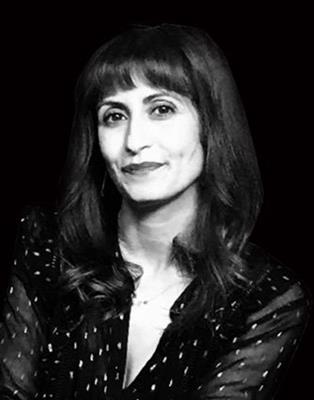
Boushra Almutawakel returned to Yemen[1] from Washington D.C. in 1994, having studied at the American University there, and found herself in a position almost without precedent: a woman who wanted to work professionally as a photographer in a society where the camera had barely been used to document women's lives from a woman's perspective. She became one of the first Yemeni women to practise photography professionally, and that position, inside the culture she was documenting, shaped everything about how she approached her subjects.
Biography
Her most widely exhibited series, "Mother, Daughter, Doll" (2010), follows three generations of women from a single family through progressively more conservative dress, moving from uncovered to fully veiled across a sequence of photographs that refuses to editorialise. The work does not treat the hijab as oppression or liberation; it observes the process, and the observation is the argument.
In 1996 she co-founded Al-Halaqa, an arts display and discussion space in Sana'a, one of the very few forums for contemporary art in Yemen[1] at the time. She also photographed for the British Council, CARE, and the United Nations, and served as cultural affairs consultant for the Yemeni embassy in Washington. In 2014 she joined Rawiya, a collective of women photographers documenting the Middle East.
She left Sana'a for France in August 2013 with her husband and four daughters as conditions in Yemen[1] deteriorated. In 2018, the BBC named her one of its 100 Women. Her practice sits within a broader tradition of Middle Eastern women photographers, alongside Shirin Neshat and Shadi Ghadirian, who have made the politics of dress and appearance central to their work.
Timeline
- 1969Born in Yemen.
- 1994Returned to Yemen from Washington D.C. after studying at the American University.
- 1996Co-founded Al-Halaqa, an arts display and discussion space, in Sana'a.
- 2010Created the photography series "Mother, Daughter, Doll".
- 2013Left Sana'a for France with her husband and four daughters.
- 2014Joined Rawiya, a collective of women photographers documenting the Middle East.
- 2018Named one of the BBC's 100 Women.
Notable Works
Tap to view larger.
Next stop
Browse the movements →
Every movement in the collection, from the Renaissance to Pop art.
Frequently Asked Questions
What is Boushra Yahya Almutawakel known for?
Boushra Yahya Almutawakel is known for being one of the first Yemeni women to practise photography professionally. Her series, "Mother, Daughter, Doll" (2010), is widely exhibited and follows three generations of women through progressively more conservative dress.What is Boushra Yahya Almutawakel's most famous work?
Boushra Yahya Almutawakel is a Yemeni photographer best known for her series of portraits exploring perceptions of the hijab. One such series, entitled "The Hijab Series", is often cited as her most recognised work. It comprises a set of photographs that examine the varying representations and interpretations surrounding the hijab in modern society. The series begins with a fully unveiled woman and progressively adds layers of veiling, culminating in a fully black niqab. Almutawakel's intention was to explore how the hijab is often misunderstood or misrepresented in Western contexts, while also addressing the complexities of female identity, cultural expectations, and religious expression within the Muslim world. Almutawakel has stated that she hopes the series encourages dialogue and challenges preconceived notions about Muslim women and the hijab. Her work has received international attention for its insightful commentary on cultural and social issues.What should I know about Boushra Yahya Almutawakel's prints?
When considering Almutawakel's prints, bear in mind some basic printmaking conventions. Printmakers often create limited editions, where a set number of prints are produced, and each is numbered, for example, 35/100, where 100 is the total and 35 is the print's individual number. Some artists also create artist's proofs, marked AP. The artist's signature is usually added in pencil. The edition claim (numbering), title, and signature are typically written on the bottom margin of the print. An original print is conceived and executed solely as a print, often in a numbered edition, and signed by the artist. Each print is made individually from a matrix. A reproduction, however, is a copy of artwork initially created in another medium, such as painting or watercolour, and reproduced via photomechanical means. In photography, a vintage print is made around the time the negative was taken. A period print is made within approximately 10 to 15 years of the shooting date. A modern print is a recent print from the original negative, while a facsimile aims to replicate a vintage print using similar materials and processes. An original print in photography is made by the artist or under their direct supervision.What style or movement did Boushra Yahya Almutawakel belong to?
It is difficult to place Boushra Yahya Almutawakel within a specific artistic movement. Born in Yemen[1] in 1969[1], Almutawakel's photography often addresses themes of cultural identity, representation, and the complexities of being a Muslim woman in a changing world. Her work frequently incorporates portraiture and staged scenes. These images invite viewers to consider issues of gender, tradition, and modernity within the context of Yemen and the broader Islamic world. Some observers link her to feminist art, because her photographs challenge conventional representations of women. Others see her as a conceptual artist, given her interest in ideas and social commentary. Because Almutawakel's art tackles such a range of subjects, it defies easy categorisation. Her individual approach resists being labelled, and her photography remains uniquely her own.What was Boushra Yahya Almutawakel known for?
Boushra Yahya Almutawakel, a Yemeni photographer born in 1969[1], is known for work that examines cultural identity and gender, particularly as it relates to the hijab. Almutawakel's series often confronts stereotypes about Muslim women. One of her best-known projects, a series of photographs titled "The Hijab Series", explores the various ways in which women are veiled. The series starts with a woman in Western clothing and gradually adds layers of veiling, culminating in a fully covered figure. This project encourages viewers to consider the complexities and nuances associated with the practice of veiling, moving beyond simplistic or biased assumptions. Her art often acts as a form of social commentary, prompting conversations about tradition, modernity, and the diverse experiences of women within Islamic societies. Almutawakel's work provides a visual platform for discussing important cultural issues.Where can I see Boushra Yahya Almutawakel's work?
Boushra Yahya Almutawakel is a Yemeni photographer whose work explores themes of gender, identity, and cultural perception, often within the context of the hijab. Almutawakel's photographs have been exhibited in a range of international venues. These include the British Museum, in London; the Museum of Fine Arts, in Boston; and the National Museum of Sana'a, in Yemen[1]. Her art has also been part of shows at smaller galleries and cultural institutions across Europe, the Middle East, and the United States. While Almutawakel's work is held in some public collections, specific details about current displays can vary. Interested individuals should check the websites of major museums that have featured her art, or consult exhibition listings from art publications. These resources will provide the most up-to-date information on where her photographs are being exhibited.Who did Boushra Yahya Almutawakel influence?
It is difficult to identify specific individuals who were directly influenced by Boushra Yahya Almutawakel. However, parallels to the wall-painting practices of north-eastern Ghana can be found in similar traditions of Wé, South Sotho, Ndebele, and Igbo women, among others. Wé-speaking women in Côte d’Ivoire traditionally embellished pots, walls, and bodies with designs. Igbo women in Nigeria have historically been known for their uli paintings on bodies and walls. South Sotho women in South Africa and Lesotho painted their homes’ walls with designs passed down from one generation to the next. Ndebele women in South Africa painted their walls with designs that evoked traditions of adornment, domestic spaces, everyday life, and modern culture. As with paintings in north-eastern Ghana, Ndebele murals reflected and reinforced elements of tradition and adaptation to changing circumstances over time.Who was Boushra Yahya Almutawakel?
Boushra Yahya Almutawakel is a Yemeni photographer, born in 1969[1]. She is known for her work exploring cultural and gender identity, particularly regarding the hijab and its various interpretations. Almutawakel received a Bachelor of Arts in Mass Communications from American University in Washington, D.C. She studied in the United States, then returned to Yemen[1] in 1994. She established herself as a photographer there. Her series "The Hijab Series" is one of her most recognised projects. It presents a sequence of images of a young girl dressed in progressively more concealing forms of Islamic dress. This includes a niqab and, ultimately, a full burqa. The project intends to question Western stereotypes regarding the hijab. It also examines the complex relationship between women, religion, and cultural expectations. Almutawakel's photography has been exhibited internationally, including at the British Museum. She was the first Yemeni woman to become a professional photographer. She continues to work on projects that address social issues and promote cross-cultural understanding.Why are Boushra Yahya Almutawakel's works important today?
Boushra Yahya Almutawakel is a Yemeni artist whose photography explores aspects of cultural identity and representation, particularly regarding Muslim women. Her images often deal with complex issues of tradition, modernity, and the challenges women face in the Middle East. Almutawakel's series, "The Hijab Series", is one of her most recognised bodies of work. It presents a visual narrative around the hijab; it starts with a fully unveiled woman and concludes with a figure covered entirely by a niqab. This work prompts conversations about the varied interpretations and implications of veiling. It allows viewers to consider the assumptions they might hold about dress codes and identity. Her work is important because it provides a nuanced perspective from within a culture often viewed through a Western lens. Almutawakel's art invites dialogue about representation, cultural norms, and the complexities of female identity in the Arab world. By addressing these subjects, she makes a contribution to contemporary discussions about culture and identity.When was Boushra Yahya Almutawakel born?
Boushra Yahya Almutawakel was born in 1969[1].
Sources
Editorial draws on the following primary and tertiary references for Boushra Yahya Almutawakel.
- [1] wikipedia Wikipedia: Boushra Yahya Almutawakel Used for: biography, birth dates, death dates, identifiers, movement attribution, nationality.
- [2] book Dorling Kindersley, Artists: Inspiring Stories of the World's Most Creative Minds Used for: biography.
- [3] book Paolo Costa; Yemen National Museum, Used for: biography.
- [4] book Paolo Costa; Yemen National Museum, Used for: biography.
- [5] book Hodge, Susie, 1960- author, The short story of women artists : a pocket guide to movements, works, breakthroughs, & themes Used for: biography.
Editorial overseen by Solis Prints. Sources verified 2026-09-30. Click a source for details, or hover over [N] in the page above to preview.
Editorial standardsMethodologyCorrectionsAI disclosureAbout the editorial team