



Brian Froud
Brian Froud has spent five decades constructing a visual mythology of faeries and goblins so complete that two of the most celebrated fantasy films of the 1980s were built around it. Born in Winchester in 1947[1] and raised in rural Hampshire, he studied graphic design at Maidstone College of Art, graduating with first-class honours in 1971.
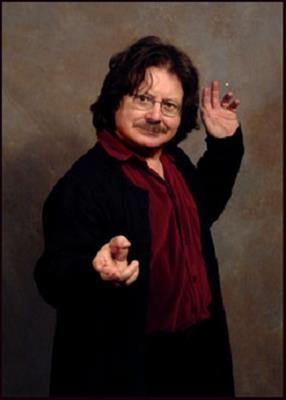
Biography
He spent four years as a commercial illustrator in London before moving to Chagford, Devon, where his interest in European folklore deepened. In 1978 he and fellow artist Alan Lee published *Faeries*, a richly illustrated compendium that reached number four on the *New York Times* bestseller list and established Froud as the preeminent visual interpreter of the faerie world. The book drew on Victorian-era beliefs about the supernatural, filtered through the influence of Arthur Rackham, Edmund Dulac, and the Pre-Raphaelites.
Jim Henson saw the book and hired Froud as conceptual designer for *The Dark Crystal* (1982). Four years later, Froud returned as designer on *Labyrinth* (1986), for which his infant son Toby appeared as the baby Toby in the film. Together these productions gave his visual language an audience of millions. He returned to the same world decades later as primary conceptual designer for Netflix's *The Dark Crystal: Age of Resistance* (2019).
*Wired* described him as "one of the most pre-eminent visualisers of the world of faerie and folktale." He has received the Hugo Award (1995), the Inkpot Award (2001), and multiple Chesley Awards. He continues working from Devon, where the landscape of Dartmoor informs his sense of a world layered beneath the visible one.
Timeline
- 1947Born in Winchester, Hampshire.
- 1971Graduated with first-class honours in graphic design from Maidstone College of Art, at 24.
- 1978Published *Faeries* with Alan Lee; the book became a *New York Times* bestseller.
- 1982Worked as conceptual designer for the film *The Dark Crystal*.
- 1986Worked as designer on the film *Labyrinth*; his son Toby appeared in the film as the baby Toby.
- 1995Received the Hugo Award.
- 2001Received the Inkpot Award.
- 2019Worked as primary conceptual designer for Netflix's *The Dark Crystal: Age of Resistance*.
Notable Works
Tap to view larger.
Next stop
Browse the movements →
Every movement in the collection, from the Renaissance to Pop art.
Related Artists



Frequently Asked Questions
What is Brian Froud known for?
Brian Froud is known as a pre-eminent visualiser of the world of faerie and folktale. His 1978 book, *Faeries*, which he created with Alan Lee, reached number four on the *New York Times* bestseller list.What is Brian Froud's most famous work?
Brian Froud is best known for his distinctive fantasy art, particularly his conceptual design work. He served as a conceptual designer for Jim Henson's films *The Dark Crystal* (1982) and *Labyrinth* (1986), creating the look and feel of these films' characters and settings. These films brought Froud's vision to a broad audience. He also collaborated with Terry Jones of Monty Python on *The Story of the Frog Prince* (1991) and *Lady Cottington's Pressed Fairy Book* (1994). These books combine Froud's illustrations with Jones's narrative skill. His work is characterised by its whimsical, slightly unsettling depictions of faeries and mythical creatures, often set in detailed natural environments. Froud's art has had a significant impact on the fantasy genre, influencing other artists and filmmakers.What should I know about Brian Froud's prints?
Brian Froud's prints are often produced as limited editions. This means a set number of prints are made, adding to their value for collectors. The artist typically decides on the edition size, and this is stated on the print itself. Each print in a limited edition is numbered, for example, 35/100. This indicates the specific print number (35) and the total number of prints in the edition (100). Artists may also create a small number of artist's proofs, marked "AP". It is common practice for Froud to sign and number his prints in pencil. Original prints are created by hand, using techniques such as woodcut, etching, or lithography. The image is made directly on the plate or block by the artist. This differs from reproductions, which are copies of existing artworks made using photochemical methods. Giclée prints are another type, created using inkjet technology. Canvas transfers, where the image is transferred to canvas, are also available. When buying a print, check for the edition number, signature, and the type of print to ensure its authenticity and value.What style or movement did Brian Froud belong to?
Brian Froud is best known for his distinctive work in fantasy art and illustration, often associated with the genres of fairy art and fantasy illustration. His style blends elements of surrealism, gothic, and folklore, creating imaginative and otherworldly images. His work draws inspiration from European mythology, as well as the landscapes of Dartmoor, where he has lived for many years. Movement, expression, and emotion are central to Froud's art. Whether depicting dancing figures or expressive faces, his art conveys a sense of life and energy. His characters often show intense feelings, capturing extremes of human experience. This emphasis on movement and emotion aligns with broader artistic traditions that value the expression of character through physical activity. His art invites viewers to connect with the depicted figures on an emotional level.What techniques or materials did Brian Froud use?
Without specific reference material, a detailed overview of Brian Froud's techniques and materials is difficult to provide. However, some general observations about artistic techniques can be made. Artists often develop a preferred palette of colours, sometimes using a limited selection to avoid unwanted complexities. They will typically use artists' quality paints to ensure colour saturation, permanence, and stability. Various supports are used, such as gessoed MDF, primed canvas stuck to MDF, or simply primed canvas. Some artists prime and stretch their own canvases to guarantee quality and prepare for painting. Throughout history, painters have employed diverse materials, including natural and chemical pigments in fresco, egg tempera, watercolour, and oil. Contemporary materials include acrylics, household emulsions, and mixed media. Techniques range from applying oil paint thickly in impasto to thinly in glazes. Brushwork can be fine, disguised, or applied with a palette knife.When did Brian Froud live and work?
Brian Froud is a contemporary British[1] artist, born in 1947[1] in Winchester. He is best known for his distinctive fantasy artwork, including faerie paintings and creature designs. Froud studied at the Maidstone College of Art before beginning his career as a professional artist in the late 1960s and early 1970s. He has worked as an illustrator, author, and conceptual designer for film and television. His work often draws inspiration from folklore, mythology, and the Devon countryside, where he has lived for many years. His work includes concept design for Jim Henson's films *The Dark Crystal* (1982) and *Labyrinth* (1986). He has also collaborated with Terry Jones on books such as *Lady Cottington's Pressed Fairy Book*. Froud continues to create and exhibit his artwork, and his books have been translated into multiple languages.Where was Brian Froud from?
Brian Froud is from Dartford, Kent, which is on the outskirts of Greater London. He was born in 1932, the eldest of three children. His father was an electrician, and his mother was a nurse; the family was lower middle class. A significant event during his childhood was the Second World War, which began in September 1939, shortly after his seventh birthday. He recalled the panic and how children were placed in an Anderson shelter, expecting an imminent German attack. He and his sister were evacuated privately the next day by his mother, who was about to give birth to his brother. He considered becoming a painter but was encouraged to pursue graphic design. He applied to the Royal College of Art to study graphics, submitting a portrait of his sister. The college recognised his talent and offered him a place to study painting. Before starting, he served in the RAF as a teleprinter operator, stationed around the West Country, Northern Ireland, and Lincolnshire. He found that his time in the RAF helped him overcome his shyness. During this period, he began a self-portrait wearing his RAF jacket over harlequin trousers, against a wall covered in circus posters.Who did Brian Froud influence?
Brian Froud is best known for his distinctive fantasy art and creature designs. His work has had an impact on various artists and filmmakers in the fantasy genre. One notable example is the Jim Henson film *The Dark Crystal* (1982), for which Froud served as conceptual designer. His designs shaped the film's characters, creatures, and overall visual style. This film, in turn, influenced later generations of fantasy artists and filmmakers. Froud's influence can also be seen in the work of other artists who create fantasy illustrations and designs. His distinctive style, which often blends elements of folklore, mythology, and surrealism, has inspired many to explore similar themes and aesthetics in their own creations. He has also collaborated with his wife, Wendy Froud, who is a respected doll maker and sculptor. Together, they have created a body of work that has inspired many artists working in three dimensions. Although it is difficult to name every individual artist affected by his work, his impact on the fantasy genre is clear.Who influenced Brian Froud?
Brian Froud's influences are diverse, drawing from different artistic movements and individual artists. The Pre-Raphaelites, with their interest in medievalism and spiritual themes, were a notable source of inspiration. The Pre-Raphaelite Brotherhood, including artists such as John Everett Millais, sought to return to the artistic ideals before Raphael, finding inspiration in the Bible, Shakespeare, and legends of King Arthur. William Blake, a mystic artist, also had an impact. Blake's unique style of poetry, art, and idiosyncratic Christianity inspired many artists. Samuel Palmer, encouraged by Blake, developed imaginative styles and founded The Ancients, a group that embraced pre-Renaissance art for its spiritual presence. Later, the Pre-Raphaelites sought out Palmer because of his art and his connection with William Blake. Additionally, Edward Burne-Jones, influenced by Rossetti, created pen and ink drawings for Archibald Maclaren’s *The Fairy Family*, borrowing from illustrators such as Cruikshank and ‘Dickie’ Doyle.Who was Brian Froud?
Brian Froud is an English fantasy artist and illustrator. He is best known for his distinctive creature designs and his work on Jim Henson's films *The Dark Crystal* (1982) and *Labyrinth* (1986). Born in 1947[1], Froud studied at Maidstone College of Art. His early work included book covers and illustrations for magazines. His first major publication was *The Land of Froud* (1977), a collection of his paintings and drawings of faeries and mythical creatures. This established his reputation as a leading fantasy artist. Froud's designs for *The Dark Crystal* involved creating the characters, creatures, and environments. He worked closely with Henson and the film's conceptual designer, Tim Kirk. His work on *Labyrinth* included designing the goblins and other creatures. He also co-wrote the book *The Goblins of Labyrinth* with Terry Jones, which expanded on the film's mythology. Froud has also produced a number of other books, including *Faeries* (1978, with Alan Lee), *Good Faeries/Bad Faeries* (1998), and *Brian Froud's World of Faerie* (2007). His work often explores the relationship between the human and faerie realms, and his art is characterised by its imaginative detail and whimsical style.Why are Brian Froud's works important today?
Brian Froud's art connects to traditions of fantasy illustration that remain influential. The Pre-Raphaelite Brotherhood, for example, influenced later illustrators such as Laurence Housman and Charles Ricketts. These artists took Pre-Raphaelite illustration in new directions. Today, they are leading figures in the Private Press movement, which produces limited editions of poetry and literature based upon Pre-Raphaelite models of tasteful design. Froud's work also connects to a longer history of interest in esoteric and occult traditions in the arts. A century ago, many upper-class figures, such as Sir William Crookes, Victor Hugo, and Sir Arthur Conan Doyle, subscribed to esoteric ideas. These interests affected both literary and pictorial arts. Today, mass culture and media often present creativity and imagination as lacking in ordinary people. This creates a demand for art that seems to offer spiritual or imaginative enrichment.What was Brian Froud's art style?
Froud's art style draws on Victorian-era beliefs about the supernatural. His work is influenced by Arthur Rackham, Edmund Dulac, and the Pre-Raphaelites.
Sources
Editorial draws on the following primary and tertiary references for Brian Froud.
- [1] wikipedia Wikipedia: Brian Froud Used for: biography, birth dates, death dates, identifiers, movement attribution, nationality.
- [2] book Dorling Kindersley, Artists: Inspiring Stories of the World's Most Creative Minds Used for: biography, stylistic analysis.
- [3] book Beard, Lee, 1973- author, Butler, Adam, author; Van Cleave, Claire, author; Fortenberry, Diane, author; Stirling, Susan, author, Beard, Lee, 1973- author, Butler, Adam, author; Van Cleave, Claire, author; Fortenberry, Diane, author; Stirling, Susan, author - The Art Book_ New Edition, Mini Format Used for: biography.
- [4] book Masterpieces of western art : a history of art in 900 individual studies from the Gothic to the present day Used for: biography.
- [5] book Beckett, Wendy, Sister Wendy's odyssey : a journey of artistic discovery Used for: biography.
Editorial overseen by Solis Prints. Sources verified 2026-09-30. Click a source for details, or hover over [N] in the page above to preview.
Editorial standardsMethodologyCorrectionsAI disclosureAbout the editorial team