



Charles Turner
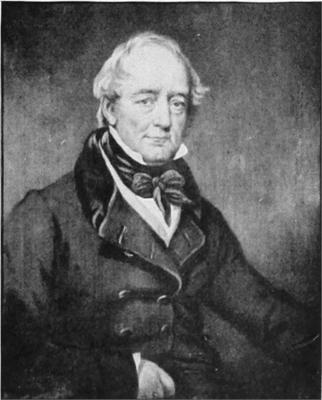
Charles Turner spent six decades converting paint into paper, producing 921 prints that spread British[1] landscape and portraiture across Europe and America. Born in Woodstock, Oxfordshire in 1774[1], he arrived in London around 1789[1] to work for the publisher John Boydell and enrolled at the Royal Academy Schools, cutting his first mezzotint in 1795.
Biography
The collaboration that defined his career began in 1806[1], when J.M.W. Turner (no relation) recruited him to engrave plates for the Liber Studiorum, a project modelling itself on Claude Lorrain's Liber Veritatis. The arrangement lasted three years before a disagreement over money ended it, but those plates stand as some of the finest examples of mezzotint tonality combined with etched outline. The same year, he engraved J.M.W. Turner's The Shipwreck onto a copper plate stretching 82 centimetres across.
In 1812[1] he received the appointment of Mezzotinto Engraver in Ordinary to the King, and in 1828 was elected Associate of the Royal Academy, one of the highest formal recognitions available to a printmaker at the time. Of his 921 prints, 637 were portraits after Lawrence, Reynolds, Hoppner and other leading painters, giving Turner a near-encyclopaedic role in distributing the likenesses of Georgian society to a wider public.
He worked on into the Victorian era, producing five plates for J.M.W. Turner's Rivers of England from 1823[1], a period that saw the shift from copper to steel plate change the economics of the trade entirely. He died on Warren Street, London, in August 1857[1], aged 82, and was buried at Highgate Cemetery.
Timeline
- 1774Born in Woodstock, Oxfordshire.
- 1789Moved to London to work for the publisher John Boydell.
- 1795Cut his first mezzotint.
- 1806Began collaborating with J.M.W. Turner on the Liber Studiorum project.
- 1806Engraved J.M.W. Turner's "The Shipwreck" onto a copper plate.
- 1812Appointed Mezzotinto Engraver in Ordinary to the King.
- 1823Began working on five plates for J.M.W. Turner's Rivers of England.
- 1828Elected Associate of the Royal Academy.
- 1857Died in Warren Street, London, aged 82. He was buried at Highgate Cemetery.
Notable Works
Tap to view larger.
Next stop
Browse the movements →
Every movement in the collection, from the Renaissance to Pop art.
Charles Turner prints
Hand-finished archival prints from Charles Turner's body of work.
 Ann Maria Tree - Charles Turner
From £28.00
Ann Maria Tree - Charles Turner
From £28.00
 Andrew Barnard - Charles Turner
From £28.00
Andrew Barnard - Charles Turner
From £28.00
 Arthur Wellesley, 1st Duke of Wellington - Charles Turner
From £28.00
Arthur Wellesley, 1st Duke of Wellington - Charles Turner
From £28.00
 James Saumarez, 1st Baron de Saumarez - Charles Turner
From £28.00
James Saumarez, 1st Baron de Saumarez - Charles Turner
From £28.00
 King Charles II - Charles Turner
From £28.00
King Charles II - Charles Turner
From £28.00
 Henry Phipps, 1st Earl of Mulgrave - Charles Turner
From £28.00
Henry Phipps, 1st Earl of Mulgrave - Charles Turner
From £28.00
Related Artists


Take Charles Turner home.
See all Charles Turner prints →Frequently Asked Questions
What is Charles Turner known for?
Charles Turner is known for producing 921 prints that spread British[1] landscape and portraiture. He is also known for his collaboration with J.M.W. Turner (no relation) on the Liber Studiorum, which produced some of the finest examples of mezzotint tonality combined with etched outline. In 1812[1], he received the appointment of Mezzotinto Engraver in Ordinary to the King.What is Charles Turner's most famous work?
J.M.W. Turner (1775[1]-1851[1]) was a prolific British[1] artist associated with the Romantic movement. Two of his most well-known works are The Shipwreck (1805) and Snow Storm: Hannibal and His Army Crossing the Alps (1812). Turner's artistic talent was evident early in life. At the age of 15, he became a student at the Royal Academy of Arts. By 26, he was a full member. Turner's early work shows the influence of Claude Lorrain and Dutch marine painters. He travelled extensively in Britain and Europe, sketching scenery. His style became more expressive after 1830, as he experimented with applying paint using palette knives and rags. Turner was known as "the painter of light" because of his focus on light and atmospheric effects. John Ruskin, a respected art critic, admired and championed Turner's work.What should I know about Charles Turner's prints?
Charles Turner was among a generation of younger engravers who revived older methods. In particular, there was renewed interest in copperplate engraving, etching, dry-point and mezzotint around 1880. These methods allowed artist-engravers to produce fresh prints with less deterioration; the plates wore down more quickly and could not sustain large print runs. To ensure quality and exclusivity, plates were often destroyed after editions of just 200 to 400 prints. Demand for fine-art etchings grew during this period. Print publishers issued magazines especially for etchers and collectors, such as *The Etcher* (1879-83) and *English Etchings* (1881-91). The Printsellers’ Association did not require declaration of proof impressions for etchings, so full details of edition sizes are not always available, as they are for mezzotint, line, and mixed-method engravings.What style or movement did Charles Turner belong to?
It is difficult to assign Charles Turner to one specific movement. Artistic style is a matter of tendencies, not absolutes; judging a style means judging a tendency. Movements may begin with individuals, who then attract followers and create a sense of shared identity. Artists may adopt a style as a badge or means of distinguishing themselves. Styles can be understood as weighted preferences; those aiming for a plain style will favour a short word, while others prefer polysyllabic alternatives. We may discern a tendency 'globally' without being able to pin it down in every individual case. The aims of competition may influence an artist's choice of a novel modification. It is important not to reduce an artist's choices to a few alternatives.What techniques or materials did Charles Turner use?
Charles Turner was a prolific artist who experimented with diverse materials and methods. His early training as a watercolourist informed his later oil painting techniques. He used transparent washes, reserving highlights and mixing browns and blues to create optical greens. Turner produced over 20,000 sketches and watercolours, now at the Tate Gallery. He transferred mental images directly to the support, with minimal underdrawing except for outlines of buildings or ships. Turner's oil painting techniques involved absorbent primings, often lead white in whole egg medium or oil. These surfaces allowed for rapid colour indication and compositional development. He thinned paint excessively, sometimes adding drying oil on the palette, resulting in recognisable blobs. He applied sky paint thickly with a palette knife, using good quality lead white. Turner often modified the sky with opaque scumbles, rarely glazing it, which created contrast with the glazed foreground. He used bitumen, megilp, and resinous glazes, particularly in his Italian the 1820s to 1840s. Turner also used bright colours for initial lay-ins, typically brown for the and blue for the sky, leaving white priming for sunlight effects. He glazed down the colours as he worked, overlaying thin paint layers lightened with lead white.What was Charles Turner known for?
Charles Turner (active 1797[1]-1857[1]) was an engraver, not a painter. He is best known for his work translating the paintings of J.M.W. Turner (1775-1851) into prints. Turner's paintings were exhibited at the Royal Academy from 1790. He became an associate in 1799, and a full member in 1802. He was appointed Professor of Perspective in 1811, and acting president in 1845. He is considered among the most influential painters of the Romantic period. Charles Turner's engravings made J.M.W. Turner's works accessible to a wider audience. J.M.W. Turner made studies aboard Admiral Nelson’s ship, H.M.S. Victory, and used these drawings when he painted his battle scene. Charles Turner also produced vignettes designed to illustrate various literary works. He worked on the Liber Studorium from 1809 until 1819, but only produced 71 of his proposed 100 prints.When did Charles Turner live and work?
Joseph Mallord William Turner (1775[1]-1851[1]) was born in Maiden Lane, London. Showing artistic talent from a young age, he sold his watercolours from the age of twelve. At fifteen, Turner exhibited at the Royal Academy. He became an associate of the Royal Academy in 1799, and a full member in 1802. Turner's early work consisted of calm rural scenes. Later, after travelling in Europe, he began to paint more dramatic subjects, such as storms and fires. His style became more abstract as he attempted to inspire feeling through colour. He abandoned brown or buff priming, using white undercoats to increase luminosity. Examples of his work include the 1844 painting, *Rain, Steam, and Speed: The Great Western Railway*. Turner was appointed Professor of Perspective at the Royal Academy in 1808, lecturing until 1828. Turner died in Cheyne Walk and was buried at St Paul’s Cathedral.Where can I see Charles Turner's work?
Without more specific information about which Charles Turner is of interest (there have been several artists by that name), it is difficult to provide a detailed list of locations. However, I can offer some general guidance. To locate works by Charles Turner, it is best to consult major museum catalogues, auction records, and art databases. Key institutions to investigate include the British[1] Museum, the Victoria and Albert Museum, and the National Portrait Gallery in London. These museums often hold significant collections of British prints and drawings. Additionally, regional museums and galleries throughout the United Kingdom may also possess examples of his work. Examining exhibition catalogues and scholarly publications focused on British printmaking from the late 18th and early 19th centuries can offer further information. Online resources such as Art UK provide images and locations for artworks held in public collections across the UK.Where was Charles Turner from?
Joseph Mallord William Turner was born in London in 1775[1]. Although his exact birth records were lost, Turner liked to say he was born on 23 April, which is both Shakespeare’s birthday and Saint George’s Day. His father, William Turner, worked as a barber and wig maker in London. Turner's father displayed the young artist's drawings in his shop and sold them. Turner spent time in other areas near London. When he was ten years old, his mother began to exhibit mental health problems, and he stayed with an uncle in Brentford. Later, he rented houses in Isleworth and Hammersmith. In 1807, Turner bought land near Marble Hill, between Twickenham and Richmond Bridge. He intended to build a house there, away from London, where he could relax, sketch and live with his father.Who influenced Charles Turner?
Charles Turner's artistic development was shaped by a number of influences, both from earlier masters and his contemporaries. The president of the Royal Academy, Sir Joshua Reynolds, advocated studying the "great Masters" as a foundation for artistic skill. Turner took this advice to heart, examining Dutch paintings in sale rooms and private collections. Turner's interest in Dutch art is evident in several of his works. Jan van Goyen, Willem van de Velde the Elder and Younger, Aelbert Cuyp, and Jacob van Ruisdael all inspired Turner's marine paintings. For example, Van Tiomp’s Shallop, at the Entrance of the Scheldt and Rotterdam Ferry Boat reflect the style of van Goyen and the van de Veldes. French painters also played a role. Claude-Joseph Vernet's approach to seascapes is seen in Fishermen at Sea. Later, French Impressionists, such as Claude Monet and Camille Pissarro, were influenced by Turner's atmospheric effects and handling of light.Why are Charles Turner's works important today?
Charles Turner's works are relevant because they participate in a larger effort to recover occluded histories and challenge dominant narratives. Contemporary scholars, curators, and writers are engaged in investigatory research that redefines the intellectual commons of the field. This activity entails not telling wholly new stories, but retelling familiar ones in light of post-essentialist breakthroughs. This scholarship involves studies of 19th-century artists such as Edmonia Lewis and Meta Warrick Fuller, early modernists such as Richmond Barthé, Jacob Lawrence, and Archibald Motley Jr, and thematic studies of slave daguerreotypes. It analyses art exhibited in world's fairs, picturesque postcards of West Indian colonies, and surveys of contemporary art in African, African American, European, and Caribbean contexts. This work analyses cross-cultural encounters, dynamics of travel and migration, and the sharing of signifying materials among asymmetrically positioned identities.
Sources
Editorial draws on the following primary and tertiary references for Charles Turner.
- [1] wikipedia Wikipedia: Charles Turner Used for: biography, birth dates, death dates, identifiers, movement attribution, nationality.
- [2] book Getty, Getty - The Silver Canvas Daguerreotype Masterpieces Used for: stylistic analysis.
- [3] book Margaret Lamar Stearns (editor), Illustrated Catalogue of the Willitts J. Hole Art Collection _ Old Masters Collected by the Late Willitts J. Hole and Given to the University of California, Los Angeles, by Samuel K. and Agnes Hole Rindge Used for: biography.
- [4] book Kenner, Robert, Kenner, Robert - First Impressions_ JMW Turner (First Impressions) Used for: biography.
- [5] book Chandler, Robert J.; Tyler, Ron; Moore, Shirley Ann Wilson, San Francisco Lithographer Used for: stylistic analysis.
- [6] book Antoinette LaFarge, Sting in the Tale Used for: stylistic analysis.
- [7] book Carol Strickland and John Boswell, The Annotated Mona Lisa Used for: biography.
- [8] book Carol Strickland and John Boswell, The Annotated Mona Lisa Used for: biography.
Editorial overseen by Solis Prints. Sources verified 2026-09-27. Click a source for details, or hover over [N] in the page above to preview.
Editorial standardsMethodologyCorrectionsAI disclosureAbout the editorial team