



Claude Rutault
The founding gesture of Claude Rutault's career was almost comically modest: a 20x20cm canvas painted grey and hung on the grey kitchen wall of his Paris apartment in 1973[1]. He called it Definition/Method No. 1, and it set the terms for everything that followed. A canvas, he decided, should always be painted the same colour as the wall it hangs on. The work is never finished because walls get repainted.
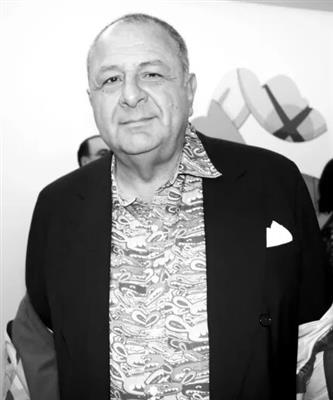
Biography
By the late 1990s Rutault had produced approximately 300 Definitions/Methods, each one a set of instructions rather than a fixed object. The critical innovation was the figure of the "undertaker", the collector or institution who takes on responsibility for realising the work. They choose the dimensions, the wall colour, the placement. The artist proposes; someone else disposes. This transfer of authorial control was not a gimmick. It was a serious critique of how painting accumulates meaning, market value, and signature weight.
Some of the Definitions/Methods have a theatrical edge. D/m 83, Suicide Painting No. 1 (1978[1]), stipulated that a 100x100cm canvas be reduced by one-eighth each year for twenty-four years, stopping only if acquired or the artist died. D/m 112, Pile ou Face (Heads or Tails), introduced a game-like exchange between artist and collector. Travaux Publics (1984) took the work entirely outside galleries, with posters and guidebooks directing the public to private homes where canvases were installed.
Born in Trois-Moutiers in 1941[1], Rutault came to his radical position via Figuration Critique, the French[1] movement that made painting self-critical rather than self-promotional. His later practice was the logical extension of that instinct: if you want to prevent a painting from becoming a logo or a signature, make sure it looks different every time someone sees it.
Timeline
- 1941Born in Trois-Moutiers, France.
- 1973Created "Definition/Method No. 1", a grey canvas hung on a grey wall in his Paris apartment, establishing the principle that a canvas should match the wall's colour.
- 1978Created "Suicide Painting No. 1 (D/m 83)", stipulating an annual reduction of a canvas by one-eighth for twenty-four years, unless acquired or the artist died.
- 1984Created "Travaux Publics", using posters and guidebooks to direct the public to private homes where canvases were installed.
- 1990By the late 1990s, Rutault had produced approximately 300 "Definitions/Methods", each a set of instructions for realising the work.
Notable Works
Tap to view larger.
Next stop
Browse the movements →
Every movement in the collection, from the Renaissance to Pop art.
Related Artists


Frequently Asked Questions
What is Claude Rutault known for?
Claude Rutault is known for his 'Definitions/Methods', which are sets of instructions for creating art rather than fixed objects. His most famous instruction is to paint a canvas the same colour as the wall it hangs on, with the 'undertaker' (collector or institution) responsible for realising the work.Who was Claude Rutault?
Claude Rutault was born in Trois-Moutiers in 1941[1] and began his career with Definition/Method No. 1, a grey canvas hung on a grey wall in his Paris apartment. He is known for his radical approach to painting and challenging traditional artistic norms.What was Claude Rutault's art style?
Claude Rutault's art style emerged from Figuration Critique, a French[1] movement focused on self-critical painting. His work often involves a transfer of authorial control to the collector or institution, challenging conventional notions of artistic signature and meaning.When was Claude Rutault born?
Claude Rutault was born in 1941[1].
Sources
Editorial draws on the following primary and tertiary references for Claude Rutault.
- [1] wikipedia Wikipedia: Claude Rutault Used for: biography, birth dates, death dates, identifiers, movement attribution, nationality.
- [2] book Hal Foster, Brutal Aesthetics _ Dubuffet, Bataille, Jorn, Paolozzi, Oldenburg Used for: stylistic analysis.
- [3] book guggenheim-amsterdamparisdu00solo Used for: biography, stylistic analysis.
- [4] book guggenheim-invested00blis Used for: biography, stylistic analysis.
- [5] book guggenheim-masterp00solo Used for: biography.
Editorial overseen by Solis Prints. Sources verified 2026-10-07. Click a source for details, or hover over [N] in the page above to preview.
Editorial standardsMethodologyCorrectionsAI disclosureAbout the editorial team