



Dado
Miodrag Đurić arrived in Paris in 1956[1] with little money and no contacts. Born in Cetinje, Montenegro, on 4 October 1933[1], he had spent time working for a printing company in Dubrovnik before making the crossing to France. Two years later, art dealer Daniel Cordier walked into a Montparnasse studio and immediately offered him a show. The work on display was populated by distorted, half-dissolved figures that seemed to be decomposing in front of the viewer.
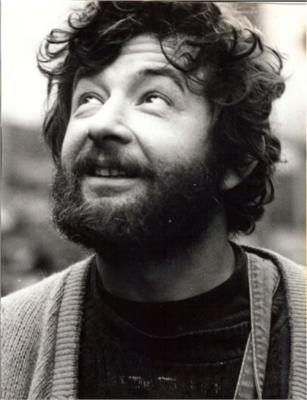
Biography
Cordier gave him the name Dado. The shows that followed brought comparisons to Bosch and Goya, but the work resisted easy categorisation: too raw for Surrealism, too figurative for the gestural abstraction then fashionable in Paris. In 1960[1] Dado moved into a converted water mill at Hérouval, Oise, which became his studio and home for the next fifty years. From there he painted vast canvases, made engravings, produced ceramics and sculptures, and illustrated books: his edition of Georges Perec's Alphabets (1976) is among the more unusual artist-writer collaborations of the period.
The 1980s brought wider recognition. He was made Chevalier of the Ordre des Arts et des Lettres in 1984[1] and began an ambitious series of wall frescos. At the 2009 Venice Biennale he showed twenty-seven bronze sculptures titled Les Élégies Zorzi.
Dado died in Pontoise on 27 November 2010[1]. Works are held at the Centre Pompidou, MoMA, and the National Museum of Montenegro.
Timeline
- 1933Born Miodrag Đurić in Cetinje, Montenegro, on 4 October.
- 1956Arrived in Paris with limited funds and no connections.
- 1958Offered a show by art dealer Daniel Cordier after Cordier visited his Montparnasse studio; Cordier also gave him the name Dado.
- 1960Moved to a converted water mill at Hérouval, Oise, which became his studio and home for the next 50 years.
- 1976Illustrated Georges Perec's "Alphabets".
- 1984Made Chevalier of the Ordre des Arts et des Lettres.
- 2009Showed twenty-seven bronze sculptures titled "Les Élégies Zorzi" at the Venice Biennale.
- 2010Died in Pontoise on 27 November.
Notable Works
Tap to view larger.
Next stop
Browse the movements →
Every movement in the collection, from the Renaissance to Pop art.
Frequently Asked Questions
What is Dado known for?
Dado is known for his vast canvases, engravings, ceramics, sculptures, and book illustrations. One of his more unusual artist-writer collaborations was his edition of Georges Perec's Alphabets (1976[1]).What is Dado's most famous work?
It is difficult to name one single work as Dado's 'most famous'. Throughout his career, the Montenegrin-French artist (born Miodrag Djuric, 1933[1]-2010[1]) produced a large output of paintings, drawings, prints, and sculptures. His nightmarish surrealist style, with its characteristic use of mutated figures and decaying forms, earned him considerable attention. Some of his better-known pieces include compositions from the late 1950s and early 1960s, such as his series of 'Butchers' Shops'. These works set the stage for his later explorations of violence, death, and political commentary. His confrontational imagery often incorporates elements of both personal experience and wider social anxieties. Dado's works are held in collections internationally, including the Musée National d’Art Moderne, Paris and the Museum of Modern Art, New York.What style or movement did Dado belong to?
Dado is associated with Dada, an artistic and literary movement that began during World War I. Dada arose as a reaction to what its participants saw as the absurdity and horror of the war, and the social and political values that they felt had enabled it. Dada's aesthetics were wide-ranging, anarchic, and often nonsensical. Dada artists employed satire, irony, and chance, rejecting traditional artistic conventions. They made use of collage, photomontage, and found objects in their work. Dada also encompassed performance, poetry, and other media. Key figures connected with Dada include Jean Arp, Marcel Duchamp, Hannah Höch, Kurt Schwitters, and Tristan Tzara. Dada activity occurred in various European cities, including Zurich, Berlin, Cologne, and Paris, as well as in New York. Dada influenced later movements such as Neo-Dada and Surrealism.What techniques or materials did Dado use?
Dado's practice involved a range of materials and methods. Contemporary daga house construction begins with a timber framework. This is then packed and plastered with daga, both internally and externally, in a method similar to wattle and daub construction. Daga is a building material with varied applications. It is made from carefully selected clay mineral deposits, derived from the local geology. The most carefully selected and worked daga produces a hard, smooth surface able to survive considerable wear and exposure. The material was also used for constructing smelting furnaces and grain bins. Different daga surface textures and colour changes were achieved by exploiting the varied clay mineral deposits. Cow dung is sometimes added to the material to act as a binder and for colour variations. A higher ratio of clay to gravel gives the material greater plasticity for moulding fittings such as the fireplace, bench and wall shelves. For walls, the gravel ratio is increased to give the surface a rougher but strong finish.What was Dado known for?
Miodrag Djuric (1933[1]-2010[1]), known as Dado, was a Montenegrin-born artist who spent much of his career in France. He is best known for paintings, drawings, prints, and sculptures that explore themes of decay, destruction, and the grotesque. Dado's imagery often features nightmarish figures, distorted bodies, and scenes of devastation. His work can be interpreted as a response to the horrors of the Second World War and the anxieties of the Cold War era. His style combines elements of Surrealism, Art Brut, and figurative expressionism. After spending his childhood in war-torn Yugoslavia, Dado studied at the École des Beaux-Arts in Paris. He was associated with artists such as Jean Dubuffet. His work gained recognition in the 1960s, and he exhibited extensively throughout Europe. He lived and worked in Hérouval, France, for many years. His art is held in numerous public collections.When did Dado live and work?
Dado was born Miodrag Đurić in Cetinje, Montenegro, in 1933[1]. He died in Pontoise, France, in 2010[1]. In 1943[1], he began attending art school in Herceg Novi. From 1951 to 1956, he studied at the Academy of Fine Arts in Belgrade. He relocated to Paris in 1956, where he met Daniel Cordier, who became his art dealer. By 1958, Dado had moved to the countryside outside Paris. He installed a studio in a former village school in La Bosse (Oise) in 1960, sharing the space with Reinhoud D’Haese. He settled in Bougival, near Paris, in 1963. His work was exhibited internationally from the late 1950s onwards, including the Guggenheim Museum.Where can I see Dado's work?
Dado (Miodrag Đurić) produced a large body of work, and examples can be found in various public collections. In his adopted home of France, the Centre Pompidou in Paris holds several paintings and drawings. Other French museums with works by Dado include the Musée National d’Art Moderne, also in Paris; the Fonds National d’Art Contemporain in Puteaux; and the Musée d’Art Contemporain in Dunkirk. Elsewhere in Europe, one can find his pieces at the Albertina in Vienna and the Kunsthalle in Hamburg. In the former Yugoslavia, the National Museum of Montenegro in Cetinje possesses a collection of his art, reflecting his heritage. While this list is not exhaustive, it offers a starting point for those interested in viewing Dado's creations. Checking museum websites or catalogues in advance is always recommended, as artworks may not always be on display.Where was Dado from?
Dado was born Miodrag Djuric in 1933[1] in Cetinje, which at the time was part of the Kingdom of Yugoslavia. Cetinje is situated in Montenegro. During World War II, Dado and his family fled to the countryside to escape the conflict. After the war, he studied at the Art School of Herceg Novi, and later at the Academy of Fine Arts in Belgrade. In 1956[1], Dado left Yugoslavia and moved to Paris, where he lived and worked for most of his career. He gained recognition as a painter associated with Surrealism and Art Brut. Despite living in France, Dado maintained strong ties to his homeland and its cultural heritage. He died in 2010[1] in Hérouval, France.Who influenced Dado?
Dado, also known as Miodrag Đurić, was influenced by a variety of artists and movements. As a student, he was drawn to Surrealism, and also to artists such as Francis Bacon, Hieronymus Bosch, Michelangelo, and Baroque artists. Pablo Picasso was an important idol for him. Dado explained that he found Picasso's art fascinating because of his ability to assimilate other artists' work, capture its essence, and make it his own. Dado also made a deliberate effort to establish references to other artists, building on their achievements and integrating them into his own work. Among contemporary artists, Dado cited Robert Rauschenberg, Jasper Johns, Cy Twombly, and Joseph Beuys as influences. Rauschenberg's approach to objects and painting, illusion and reality, and the relationship between them particularly appealed to him, as did Rauschenberg's free handling of materials and the richness of his images. Later, Dado closely studied earlier abstract European art, such as Cubism, Piet Mondrian, and Paul Klee. He appreciated Klee's ability to deal with art, reality, and symbolism on different levels, and he also liked the literary element in Klee's work.Who was Dado?
Dado (Miodrag Djuric, 1933[1]-2010[1]) was a Montenegrin-born artist who spent much of his career in France. After studies at the Academy of Fine Arts in Belgrade, he left Yugoslavia in 1956[1] and settled in Paris. There, he gained recognition for his distinctive style, often associated with Art Brut. His work frequently explored themes of destruction, decay, and the grotesque, realised through unsettling imagery and distorted forms. Dado's paintings, drawings, and sculptures often present nightmarish visions of mutated figures and desolate environments. These works can be interpreted as reflections on the darker aspects of human nature and the horrors of war, though Dado avoided simple interpretations. His work was exhibited internationally, and he received several awards. He lived and worked in Hérouval, France, until his death.How did Dado die?
Dado died in 2010[1] at the age of 77.
Sources
Editorial draws on the following primary and tertiary references for Dado.
- [1] wikipedia Wikipedia: Dado Used for: biography, birth dates, death dates, identifiers, movement attribution, nationality.
- [2] book Pächt, Otto, 1902-1988, Book illumination in the Middle Ages : an introduction Used for: biography.
- [3] book Sarah Hegenbart;Mara-Johanna Klmel;, Dada Data Used for: stylistic analysis.
- [4] book Jed Rasula, Destruction Was My Beatrice Used for: stylistic analysis.
- [5] book guggenheim-refigur00kren Used for: biography.
- [6] book guggenheim-twopri00weis Used for: biography.
- [7] book Masterpieces of western art : a history of art in 900 individual studies from the Gothic to the present day Used for: biography.
Editorial overseen by Solis Prints. Sources verified 2026-10-05. Click a source for details, or hover over [N] in the page above to preview.
Editorial standardsMethodologyCorrectionsAI disclosureAbout the editorial team