



Daniele da Volterra
Best remembered for a commission that dogged his legacy for centuries, Daniele da Volterra is now acknowledged as one of the more gifted painters of the Roman High Mannerist circle. Born around 1509[2] in Volterra, Tuscany, he trained under Il Sodoma and Baldassare Peruzzi in Siena before finding his footing in Rome under Perino del Vaga, with whom he worked on the Palazzo Massimo frescoes from 1538[2] to 1541.
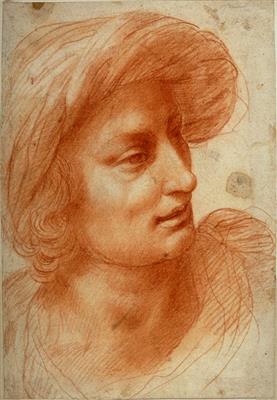
Biography
His career accelerated when he entered the orbit of Michelangelo, who became his patron, friend, and occasional artistic collaborator. Michelangelo used his influence with Pope Paul III to secure Daniele's Vatican commissions, and supplied preparatory sketches for several of his compositions. Their friendship was genuine: when Michelangelo died in February 1564[2], Daniele cast the bronze portrait bust that became the canonical likeness of the older master.
His finest independent achievement is the *Descent from the Cross* (c. 1545[2]) at the church of Trinità dei Monti in Rome, a large fresco of considerable emotional and compositional force that drew admiring commentary from Vasari. The *Massacre of the Innocents* (1557, Uffizi) and *David and Goliath* (Louvre) further demonstrate his command of complex figure groups and dramatic colour.
Two months after Michelangelo's death, Pope Pius IV commissioned Daniele to paint loincloths and vestments over the genitals in the *Last Judgment*, a Counter-Reformation imposition that earned him the enduring nickname *Il Braghettone* (the breeches-maker). The censoring task consumed the final two years of his life and has overshadowed his genuine accomplishments ever since. He died in Rome on 4 April 1566[2].
Timeline
- 1509Born in Volterra, Tuscany.
- 1538Worked with Perino del Vaga on the Palazzo Massimo frescoes in Rome; the work continued until 1541.
- 1545Completed "Descent from the Cross", a fresco at the church of Trinità dei Monti in Rome.
- 1557Painted "Massacre of the Innocents", now at the Uffizi.
- 1564Cast a bronze portrait bust of Michelangelo after his death in February.
- 1564Commissioned by Pope Pius IV to paint loincloths on figures in Michelangelo's "Last Judgment".
- 1566Died in Rome on 4 April.
Notable Works
Tap to view larger.
Next stop
Browse the movements →
Every movement in the collection, from the Renaissance to Pop art.
Related Artists


Frequently Asked Questions
What is Daniele da Volterra known for?
Daniele da Volterra is best remembered for being commissioned to paint loincloths and vestments over the genitals in Michelangelo's *Last Judgment*. This task, given to him by Pope Pius IV, earned him the nickname *Il Braghettone* (the breeches-maker).What is Daniele da Volterra's most famous work?
Daniele da Volterra is best known for his involvement in the decoration of the Cappella Orsini in the church of Trinità dei Monti, Rome. He was commissioned to paint the altarpiece, depicting the Descent from the Cross. Work on this project began around 1541[2] and occupied him for many years. The painting was finally installed in 1545 and is considered his most important work. It is a large-scale composition featuring numerous figures arranged in a complex, theatrical manner. The emotional intensity and dramatic lighting are typical of the Mannerist style. Da Volterra's "Descent from the Cross" became a touchstone for later artists. It influenced generations of painters and sculptors. The work has been praised for its technical skill, emotional depth, and innovative composition.What should I know about Daniele da Volterra's prints?
Daniele da Volterra (1509[2]-1566[2]) was an Italian Mannerist painter and sculptor. He is best known for his association with Michelangelo, and for his role in the post-mortem covering of nude figures in Michelangelo's *Last Judgement* in the Sistine Chapel. This earned him the nickname "Il Braghettone" (the breeches-maker). While Daniele da Volterra was primarily a painter, some prints relate to his work. These are not prints made by him; rather, they are reproductions of his paintings and drawings created by printmakers. Several engravings were made after his most famous painting, *Descent from the Cross* (1541[2]), located in the church of Trinità dei Monti in Rome. This painting was highly regarded, and multiple printmakers sought to reproduce it for wider distribution. Giorgio Ghisi, for example, produced an engraving of the painting. Other prints after Daniele's work include those based on his drawings and designs. These prints offer insight into his artistic process and the broader circulation of his ideas. They provide a means to study his compositions and style beyond his finished paintings.What style or movement did Daniele da Volterra belong to?
Daniele da Volterra (1509[2]-1566[2]) was an Italian painter and sculptor whose career unfolded during the High Renaissance and Mannerist periods. His early training occurred in Siena, but he soon relocated to Rome, where he absorbed the influence of artists like Michelangelo. His style is often considered Mannerist, characterised by elongated forms, stylised poses, and an emphasis on elegance and technical skill. However, his work also demonstrates a restraint and classicism that distinguishes him from some of the more extreme examples of Mannerism. His representations of female heads, for instance, recall Michelangelo, but also the contemporary art of Salviati and Bronzino, who developed their individual styles partially in response to Michelangelo.What techniques or materials did Daniele da Volterra use?
Daniele da Volterra's techniques included fresco, a method of mural painting on fresh plaster. The artist would draw with pen or brush on a wooden plank. A carver would cut away wood, leaving a ridge. The printer would apply ink to the raised image, and then place dampened paper on top, applying pressure. After drying, the print was sometimes hand-coloured. For panel preparation, a smooth white surface was created using gesso, a coating of plaster and animal glue. Gypsum was employed in preparing grounds for painting and gilding. Cennino Cennini distinguished between gesso grosso and gesso sottile; a coarse ground covered by a finer ground. Animal glue served as the medium in both. Metal scrapers were used to level the gesso. He may have used small clay models to work out the arrangement of figures in his compositions.When did Daniele da Volterra live and work?
Daniele da Volterra was born in Sant'Angelo in Vado, in the Marches, around 1509[2]. He died in 1566[2]. He went to Rome around 1543[2] or 1544. There, he copied antique monuments and works by Polidoro da Caravaggio, Raphael, and Michelangelo. Under his master, Danielle Porri da Parma, he painted in S. Maria di Alvito in the Abruzzi. In 1548, he painted facade decorations of Furius Camillus for Palazzo Jacopo Mattei, Rome. Around 1548 to 1551, he created four scenes from the life of St Ambrose for the Church of S. Ambrogio (since lost). He also painted facade scenes from the life of Alexander the Great (also lost) near S. Lucia della Tinta, stories of Mercury on the facade of the Mattiuolo house (lost), and other unidentified facades. In 1564, he went to Florence.Where can I see Daniele da Volterra's work?
It is difficult to provide a comprehensive list of where to view Daniele da Volterra's work, as locations of artworks change. However, some works can be found in public collections. For example, the National Gallery of Art in Washington, D.C. holds The Assumption of the Virgin, The Holy Family on the Steps, and The Seven Sacraments: Baptism. The Hermitage Museum in Leningrad possesses The Deposition, Esther Before Ahasuerus, Four Putti and Two Dogs, The Holy Family in Egypt, The Holy Family with St. John and St. Elizabeth, Moses Striking the Rock, Nymph Riding a Goat, Putti Playing, and Tancred and Erminia. In Madrid, the Prado has Apollo and the Muses on Parnassus, as well as St. Cecilia. The National Gallery in London holds The Adoration of the Golden Calf, The Adoration of the Shepherds, and The Annunciation. These are just a few examples; other works may be in private collections or temporarily on loan to various museums.Where was Daniele da Volterra from?
Daniele da Volterra was born in 1509[2] in S. Angelo in Vado, located in the Marches. He went to Rome around 1543[2] or 1544. While there, he studied antique monuments, as well as works by Polidoro da Caravaggio, Raphael, and Michelangelo. Around 1545, he painted in S. Maria di Alvito in the Abruzzi under his master, Danielle Porri da Parma. By 1548, he painted facade paintings of Furius Camillus for Palazzo Jacopo Mattei, Rome. From 1548 to about 1551, he completed four scenes from the life of St Ambrose for the Church of S. Ambrogio; these are now lost. He also executed facade paintings of the life of Alexander the Great (also lost) near S. Lucia della Tinta, and stories of Mercury on the facade of the Mattiuolo house (lost).Who did Daniele da Volterra influence?
Daniele da Volterra's artistic style was influenced by Michelangelo, as well as contemporary artists such as Salviati and Bronzino. His idealised representations, such as those in his fresco, reflect Michelangelo's style, but also evoke the art of Salviati and Bronzino. These artists developed their individual styles partially as a response to Michelangelo's work. Bronzino's 'Lamentation', circa 1545[2], demonstrates this influence, as it responds directly to Michelangelo's famous Pietà. Daniele da Volterra’s painting became one of the most admired religious works in Rome. It is worth noting that Daniele's pupils, Michele and Feliciano, did not erect an effigy upon his death, which some considered a 'damnatio memoriae'. Vasari unsuccessfully requested a portrait from them.Who influenced Daniele da Volterra?
Daniele da Volterra (1509[2]-1566[2]) was an Italian Mannerist painter and sculptor. His artistic development occurred in a milieu dominated by central Italian High Renaissance styles. Vasari's *Lives of the Artists* mentions that Daniele first apprenticed under Giovanni Antonio Razzi, called Sodoma, in Siena. He then went to Rome. Baldassare Peruzzi instructed him there. Daniele also learned from the painter and sculptor, Perino del Vaga. Michelangelo Buonarroti exerted a strong influence on Daniele's style. Michelangelo provided drawings for Daniele's painting *Deposition*, located in the Cappella Orsini of the church Trinità dei Monti, Rome. Daniele's nickname, "Il Braghettone" (the breeches-maker), came from his later addition of drapery to nude figures in Michelangelo's *Last Judgment* in the Sistine Chapel. This earned him both notoriety and papal commissions. His work displays the influence of the earlier generation of artists working in Florence and Rome.Who was Daniele da Volterra?
Daniele da Volterra (1509[2]-1566[2]) was an Italian painter and sculptor. He is best known for being commissioned to alter Michelangelo's fresco *The Last Judgement* (1541[2]) in the Sistine Chapel, to cover the nudity that was considered inappropriate. This earned him the nickname *Il Braghettone*, meaning 'the breeches-maker'. In 1559, Pope Paul IV commissioned Daniele to paint draperies over the nude figures. After Daniele's death, Pius V had more of the fresco altered in 1566. Clement VIII wanted the entire fresco destroyed, but the Academy of S. Luca submitted a petition that prevented it. Giorgio Vasari, in the second edition of his *Lives*, criticised the nudity in *The Last Judgement* because of the fresco's ecclesiastical setting. Daniele was a contemporary of Michelangelo; some sources claim that Michelangelo directly involved him in artwork.Why are Daniele da Volterra's works important today?
Daniele da Volterra (1509[2]-1566[2]) was a Mannerist painter and sculptor. He is significant for his association with Michelangelo, and for his role in the artistic life of mid-16th century Rome. Volterra's early training was in Siena. Later, he moved to Rome and became a follower of Michelangelo. He adapted Michelangelo's style, as seen in Volterra's altarpiece, *Deposition*, in the Cappella Orsini, Trinità dei Monti, Rome. This work is considered his masterpiece. Giorgio Vasari, in his *Lives of the Artists*, praised Volterra's skill in disegno (drawing and design) and his grace. After Michelangelo's death, Volterra was commissioned to cover the nude figures in Michelangelo's *Last Judgement* fresco in the Sistine Chapel. This earned him the nickname "Il Braghettone" (the breeches-maker). Although this act was controversial, it reflects the changing attitudes towards nudity in religious art during the Counter-Reformation. His additions remained until the chapel's restoration in the 1990s. Volterra's career demonstrates the artistic and religious tensions of his time.
Sources
Editorial draws on the following primary and tertiary references for Daniele da Volterra.
- [1] museum Teylers Museum Used for: museum holdings.
- [2] wikipedia Wikipedia: Daniele da Volterra Used for: biography, birth dates, death dates, identifiers, movement attribution, nationality.
- [3] book by Patricia A. Emison, Creating the _Divine_ Artist_ From Dante to Michelangelo (Cultures, Beliefs and Traditions Medieval and Early Modern Peoples) Used for: biography.
- [4] book by Patricia A. Emison, Creating the _Divine_ Artist_ From Dante to Michelangelo (Cultures, Beliefs and Traditions Medieval and Early Modern Peoples) Used for: biography.
- [5] book Wittkower, Rudolf, Gian Lorenzo Bernini: the sculptor of the Roman baroque Used for: biography.
- [6] book Hauser, Arnold, Social History of Art, Volume 2 Used for: biography.
- [7] book Tamara Smithers, The Cults of Raphael and Michelangelo _ Artistic Sainthood and Memorials As a Second Life Used for: stylistic analysis.
- [8] book Tamara Smithers, The Cults of Raphael and Michelangelo _ Artistic Sainthood and Memorials As a Second Life Used for: stylistic analysis.
- [9] book Tamara Smithers, The Cults of Raphael and Michelangelo _ Artistic Sainthood and Memorials As a Second Life Used for: stylistic analysis.
Editorial overseen by Solis Prints. Sources verified 2026-09-22. Click a source for details, or hover over [N] in the page above to preview.
Editorial standardsMethodologyCorrectionsAI disclosureAbout the editorial team