



Domenico Beccafumi
Domenico Beccafumi was born in the village of Valdibiena around 1486[1] and spent most of his career in Siena, becoming the last great painter produced by that city's long tradition. His style sits at the awkward, compelling junction of Sienese decorative colour and Florentine Mannerist distortion: figures loom toward the viewer at unsettling angles, light erupts from darkness with theatrical abruptness, and his palette runs to acidic yellows and cold greens that his contemporaries would not have recognised as beautiful in the conventional sense.
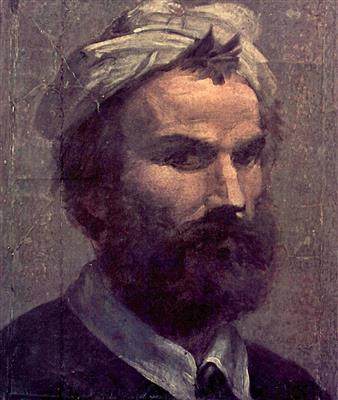
Biography
He is perhaps best known today for the marble pavement inside Siena Cathedral, an elaborate programme of inlaid scenes drawn from both Testaments that occupied him across several decades. The work required an entirely different discipline from panel painting, the design had to read at floor level, in a material that allowed no revision, and Beccafumi's willingness to take it on speaks to the breadth of his ambitions as a draughtsman. He was, by all accounts, exceptionally inventive with drawn line.
Among his panel paintings, "Tanaquil, Wife of Lucomo" (c.1520[1], National Gallery, London; 92 x 53 cm) shows the elongated forms and soft, unusual colour that became his signature. The subject, an ancient Roman noblewoman admired in the Renaissance for her fortitude, allowed him to dress history in contemporary clothes without apology. He died in Siena in 1551[1], a local figure in the best sense: formed by one city's tradition and genuinely irreplaceable within it.
Timeline
- 1486Born in Valdibiena.
- 1520Painted "Tanaquil, Wife of Lucomo". The painting features elongated forms and unusual colour.
- 1551Died in Siena. He was the last great painter from Siena's artistic tradition.
Notable Works
Tap to view larger.
Next stop
Mannerism →
Explore the artists and ideas of Mannerism.
Related Artists



Frequently Asked Questions
What is Domenico Beccafumi known for?
Domenico Beccafumi is perhaps best known for the marble pavement inside Siena Cathedral. This elaborate programme of inlaid scenes from both Testaments occupied him for decades.What should I know about Domenico Beccafumi's prints?
Domenico Beccafumi (circa 1486[1]-1551[1]) was a Sienese artist of the High Renaissance. He is known for paintings and frescoes in Siena churches, and for designing the marble pavement inside Siena Cathedral, which includes scenes from the Old and New Testaments. Beccafumi's style is not always straightforward. His paintings often feature abrupt shifts from dark to light, figures with unusual proportions, and slightly acidic colours. These qualities are sometimes linked to Florentine Mannerism[1]. One of Beccafumi's works, "Tanaquil, Wife of Lucomo", shows an ancient Roman figure in contemporary dress. Tanaquil was admired during the Renaissance for her strength and perseverance. The artwork's soft colours and elongated forms are considered hallmarks of Mannerism. In his paintings, Beccafumi sometimes altered details found in source texts to suit his artistic vision.What style or movement did Domenico Beccafumi belong to?
Domenico Beccafumi (1486[1]-1551[1]) is usually categorised as a member of the Mannerist movement. Mannerism[1], which emerged in Italy during the High Renaissance and lasted until the early Baroque period, is characterised by a departure from the naturalism and balanced compositions of earlier Renaissance art. Beccafumi's style is marked by elongated figures, distorted perspective, and an emphasis on elegance and grace. His work often features complex, crowded compositions and dramatic lighting effects. Unlike some of his contemporaries, Beccafumi’s Mannerism also includes elements of emotional intensity and a dreamlike atmosphere. His colour palette is distinctive, often employing unusual and clashing combinations to create a sense of unease or tension. Beccafumi's paintings and drawings display a high degree of technical skill, as seen in his mastery of anatomy and perspective, though he often intentionally subverted these conventions for expressive purposes. He worked primarily in Siena, and his art had a significant impact on the development of Sienese painting during the 16th century.What techniques or materials did Domenico Beccafumi use?
Domenico Beccafumi, active in Siena during the early 16th century, employed a range of techniques and materials in his artistic practice. Like many Renaissance artists, he would have prepared his wooden panels with layers of gesso, a smooth white ground made from plaster and animal glue, ideal for painting. Beccafumi is known to have worked with fresco, a mural-painting technique where pigment is applied to wet plaster. Fresco painting required the artist to work quickly, completing a section, or giornata, in a single day. For other paintings, he likely used egg tempera, where pigments were ground with water and then mixed with egg yolk. Tempera paint dries quickly, demanding a methodical approach with small, hatching brushstrokes to achieve blended tones. Beccafumi also experimented with printmaking techniques, including woodcut, engraving, and etching. Woodcut involves carving a design on a wooden block, inking the raised surface, and then pressing paper against it. Engraving uses a burin to cut a design into a metal plate, while etching involves using acid to bite into the metal.What was Domenico Beccafumi known for?
Domenico Beccafumi (circa 1486[1]-1551[1]) was a Sienese artist of the High Renaissance. He is known for decorating churches in Siena with paintings and frescos. His style is not always straightforward; he employed sudden shifts from dark to light, figures with unusual proportions, and somewhat acidic colours. Beccafumi's figures sometimes seem to loom, and his perspective, while sophisticated, can be unsettling. He is particularly famous for designing the marble pavement inside Siena Cathedral, which is decorated with scenes from the Old and New Testaments. One of Beccafumi's paintings, "Tanaquil, Wife of Lucomo", depicts an ancient Roman figure in contemporary dress. Tanaquil was admired during the Renaissance for her fortitude and perseverance. The painting's soft colours and elongated forms display an elegant style, elements that became characteristics of Mannerism[1]. Another work is "A Roman Tribune Cremates His Fellows".When did Domenico Beccafumi live and work?
Domenico Beccafumi (c. 1485-1551[1]) was a Sienese artist of the High Renaissance. His birth year is approximated to 1485 or 1486[1]. He died in Siena in 1551[1]. Beccafumi decorated many churches in Siena with paintings and frescos. He is particularly known for designing an elaborate marble pavement inside Siena Cathedral. The pavement depicts scenes from the Old and New Testaments. His paintings employ sudden transitions from dark to light. His figures can seem disconcerting, and his use of perspective, though sophisticated, can be unusual. One of his paintings, *Tanaquil, Wife of Lucomo*, shows an ancient Roman figure in contemporary dress. The sitter points to a tablet identifying her as Tanaquil, who persuaded her husband to move to Rome, where he reigned as King Tarquinius Priscius from 616 to 578 BC. The painting's soft colours and elongated forms are hallmarks of Mannerism[1].Where can I see Domenico Beccafumi's work?
Domenico Beccafumi (1486[1]-1551[1]) was active primarily in Siena, so many of his works remain there. The Pinacoteca Nazionale in Siena holds several of his paintings, including "The Trinity", "Christ in Limbo", and "The Fall of the Rebel Angels". His fresco cycles can still be seen in Sienese palazzi. These include the Palazzo Bindi Sergardi and the Palazzo Venturi. The Museo dell'Opera del Duomo in Siena possesses Beccafumi's models for angels, plus other sculptures originally intended for the cathedral. Outside of Siena, the Uffizi Gallery in Florence owns paintings such as "Annunciation". The National Gallery in London has his painting of the story of Marcia. Prints and drawings by Beccafumi are in the collections of the British Museum and the Ashmolean Museum at Oxford. Several works are also held in private collections. Viewing would require contacting the owners or waiting for special exhibitions.Where was Domenico Beccafumi from?
Domenico Beccafumi was from the Republic of Siena. He was born around 1485 in Valdibiena. Sources sometimes list his birth year as 1486[1]. He died in Siena in 1551[1]. Beccafumi was the last great Sienese artist of the High Renaissance. He decorated many churches of Siena with paintings and frescos. One of his most noted projects was the marble pavement inside Siena Cathedral, which he decorated with scenes from the Old and New Testaments. For a short period (1510[1]-1512[1]), Beccafumi was in Rome, during the time Michelangelo was painting the Sistine Chapel ceiling. His largest commission was to decorate the Palazzo Pubblico in Siena. Beccafumi is considered a leading non-Florentine Mannerist. His paintings often feature soft colours and elongated forms.Who did Domenico Beccafumi influence?
Domenico Beccafumi's work absorbed a number of influences, and his paintings, in turn, had an impact on other artists. Beccafumi's Pala della Sapienza Vecchia shows the influence of Perugino, but the fuller figures are based on Raphael's Mackintosh Madonna. The way the child's hand grasps Mary's gown is closer to Raphael's cartoon than to his painted version. Raphael's portrayal of Mary was imitated by Alfani, Sassoferrato (Giovanni Battista Salvi), and Jean Auguste Dominique Ingres. The monochromatic male figures in the throne niches of Domenico’s Pala della Sapienza Vecchia are derived from Raphael’s drawing in the Ashmolean depicting A Youthful Warrior and a Nude Study for a Saint Paul. They mimic the grisaille niche figures of Apollo and Pallas Athena in the School of Athens in the Stanza della Segnatura at the Vatican. Domenico’s Saint Nicholas of Bari is derived from Luca Signorelli’s Pala di Sant’Onofrio of 1484.Who was Domenico Beccafumi?
Domenico Beccafumi (circa 1485-1551[1]) was a Sienese artist of the High Renaissance. His birth place was near Siena. His paintings sometimes have disproportionate figures and unusual acidic colours, similar to the Florentine Mannerist Rosso Fiorentino. His figures can appear disconcerting, and his perspective is sophisticated. He is known for decorating churches in Siena with paintings and frescos. He also designed an elaborate marble pavement inside Siena Cathedral, with scenes from the Old and New Testaments. One of his paintings is Tanaquil, Wife of Lucomo, which depicts Tanaquil, wife of King Tarquinius Priscius (who reigned from 616 to 578 BC). The painting features soft colours and elongated forms. He painted Birth of the Virgin, and Venus Fountain (circa 1560s) in the Boboli Gardens, Florence.Why are Domenico Beccafumi's works important today?
Domenico Beccafumi (circa 1485-1551[1]) was a significant artist of the High Renaissance in Siena. His paintings are noted for unusual acidic colours and sudden shifts from light to dark. Figures may appear oddly proportioned; perspective, while sophisticated, can be disconcerting. His style is related to the Florentine Mannerist painter Rosso Fiorentino. Beccafumi decorated many churches in Siena with paintings and frescos. He is particularly known for the marble pavement in Siena Cathedral, which depicts scenes from the Old and New Testaments. His painting *Tanaquil, Wife of Lucomo*, now in London's National Gallery, shows an Ancient Roman figure in contemporary dress. The soft colours and elongated forms display an elegant style; these features became hallmarks of Mannerism[1]. Beccafumi combined the formal ideas of the period with bright, decorative colours typical of Sienese painting.What was Domenico Beccafumi's art style?
Domenico Beccafumi's art style combined Sienese decorative colour and Florentine Mannerist distortion. His paintings feature figures at unsettling angles, light erupting from darkness, and a palette of acidic yellows and cold greens.
Sources
Editorial draws on the following primary and tertiary references for Domenico Beccafumi.
- [1] wikipedia Wikipedia: Domenico Beccafumi Used for: biography, birth dates, death dates, identifiers, movement attribution, nationality.
- [2] book Beard, Lee, 1973- author, Butler, Adam, author; Van Cleave, Claire, author; Fortenberry, Diane, author; Stirling, Susan, author, Beard, Lee, 1973- author, Butler, Adam, author; Van Cleave, Claire, author; Fortenberry, Diane, author; Stirling, Susan, author - The Art Book_ New Edition, Mini Format Used for: biography, stylistic analysis.
- [3] book Beckett, Wendy, The story of painting Used for: biography, stylistic analysis.
Editorial overseen by Solis Prints. Sources verified 2026-09-16. Click a source for details, or hover over [N] in the page above to preview.
Editorial standardsMethodologyCorrectionsAI disclosureAbout the editorial team