



Dorothea Rockburne
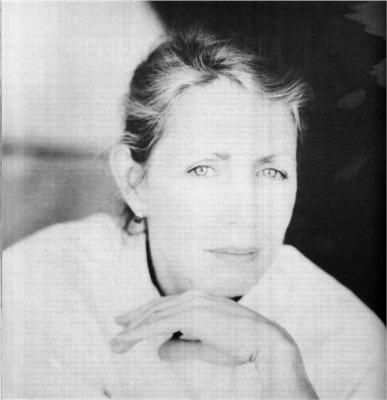
Born in Verdun, Quebec in 1932[2], Dorothea Rockburne attended Black Mountain College in North Carolina during its final years, studying alongside Franz Kline and absorbing the college's interdisciplinary atmosphere. The mathematical underpinning of her work was not incidental but programmatic: she had read extensively in set theory and used its logic as a compositional method, folding and creasing paper so that the geometric relationships between sections were determined by the paper's own structure rather than by outside instruction.
Biography
Her breakthrough came in the late 1960s and early 1970s with her "Drawing Which Makes Itself" series, works that used crude oil, chipboard, and paper in configurations where the material's behaviour was central to the result. These were conceptual in impulse but never cold: the surfaces had warmth, the folds had shadow, and the proportional relationships (often derived from the Golden Section) gave the work a quality that felt both rigorous and sensuous.
Later series explored Egyptian mathematics, ancient cosmological diagrams, and Luca Pacioli's "De divina proportione." Her "Pascal and Fibonacci Curves" drawings from the mid-1970s showed the influence of her reading directly: curves rendered in coloured pencil following mathematical sequences across large sheets of vellum. By the 1980s she had begun using colour in more sustained ways, producing linen works and, eventually, large-scale paintings that drew on Renaissance geometric principles.
Rockburne received a Guggenheim Fellowship in 1972 and a MacArthur Fellowship in 1994. Her work is held by MoMA, the Whitney, and the Metropolitan Museum of Art. A 2015 survey at the Parrish Art Museum brought her decades of work to renewed attention.
Timeline
- 1932Born in Verdun, Quebec.
- 1970Began her "Drawing Which Makes Itself" series, using crude oil, chipboard, and paper.
- 1972Received a Guggenheim Fellowship.
- 1975Created "Pascal and Fibonacci Curves" drawings, influenced by mathematical sequences.
- 1994Received a MacArthur Fellowship.
- 2015A survey of her work was held at the Parrish Art Museum.
Notable Works
Tap to view larger.
Next stop
Browse the movements →
Every movement in the collection, from the Renaissance to Pop art.
Related Artists
_%E2%80%93_LOC.jpg)



Frequently Asked Questions
What is Dorothea Rockburne known for?
Dorothea Rockburne is known for works that use crude oil, chipboard, and paper where the material's behaviour is central to the result. Her surfaces had warmth, the folds had shadow, and the proportional relationships gave the work a quality that felt both rigorous and sensuous.What is Dorothea Rockburne's most famous work?
It is difficult to identify one single "most famous work" by Dorothea Rockburne. Her practice, which began in the 1960s, includes a wide range of paintings, drawings, and constructions. Many of her pieces involve geometric forms and explore mathematical concepts, often using unconventional materials. Rockburne is known for her engagement with materials such as vellum, chipboard, and crude oil. She often creates works in series, exploring variations on a theme. Examples of her work include "Orange Panel" (1980), "Red Curve" (1986), and numerous untitled pieces from various periods. These works demonstrate her continued interest in colour, form, and the physical properties of her chosen media. She also produced works such as "White Angle" (1966) and "Yellow Piece" (1966), which show her interest in the interaction of colour and shape.What should I know about Dorothea Rockburne's prints?
Dorothea Rockburne is known for geometric abstraction, and this is reflected in her printmaking. Her prints often explore mathematical concepts and the properties of materials. While specific details regarding Rockburne's printmaking techniques are scarce in the provided references, several general texts on printmaking offer context. These include S. W. Hayter's *New Ways of Gravure* (1949) and *About Prints* (1962), plus William M. Ivins, Jr.'s *How Prints Look* (1958) and *Prints and Visual Communication* (1968). These books discuss various printmaking methods, such as etching, engraving, and woodcut. The Guggenheim Museum catalogues also list prints by other artists, using techniques such as lithography, screenprint (serigraphy), etching, aquatint, and cliché verre. These examples give an idea of the range of printmaking techniques used by Rockburne's contemporaries. The Professional Art Dealers Association of Canada (PADAC) has defined an original print as an image conceived by the artist as a print, executed solely as a print, usually in a numbered edition, and signed by the artist. Each print in the edition is an original, printed from a plate, stone, screen, block or other matrix created for that purpose. There is no one original print from which copies are made. Each print is inked and pulled individually; it is a multi-original medium. The number of prints in the edition is decided by the artist.What style or movement did Dorothea Rockburne belong to?
Dorothea Rockburne is associated with Minimalism, although her work also shows affinities with Conceptual Art. Minimalism emerged in the late 1950s and early 1960s. Artists working in this style sought to reduce art to its most essential form, often using simple geometric shapes and industrial materials. Frank Stella, for example, consciously eliminated colour, using black and then silver-coloured aluminium paint to reduce the idea of illusion. His painting process became systematic and Minimalist. Rockburne's art shares Minimalism's emphasis on geometric forms. She often takes inspiration from Old Masters, combining austerity with lyrical insight. Some of her work uses oil and gold leaf on linen prepared with gesso. She folds and creates geometric majesty from these simple means.What techniques or materials did Dorothea Rockburne use?
Dorothea Rockburne is known for her work with a range of materials, often combining the industrial with the more traditional. She frequently uses vellum, a parchment made from animal skin, for its translucent qualities and tactile surface. This provides a delicate counterpoint to other, more robust materials. Rockburne also incorporates geometric forms and mathematical concepts into her art. She manipulates paper, often folding, tearing, or layering it to create complex structures and explore spatial relationships. In addition to vellum and paper, Rockburne has worked with materials such as crude oil and translucent paper, further demonstrating her interest in exploring the properties of diverse substances. Her methods often involve a combination of careful planning and intuitive experimentation, resulting in works that are both intellectually stimulating and visually engaging.What was Dorothea Rockburne known for?
Dorothea Rockburne (born 1932[2]) is an American[2] artist known for her work in abstract painting and sculpture. Her early work involved the application of mathematical concepts, such as set theory, to the creation of geometric forms. Rockburne's pieces often incorporate unusual materials, including vellum, chipboard, and crude oil. She is associated with the Minimalist movement, though her interest in colour and surface texture sets her apart from some other artists working in that mode. Examples of Rockburne's works include *Red Curve IV* (1973), *Orange Panel* (1980), and *Purple Panel with Blue Curve* (1989). She has also produced series of works using colour, such as *Spectrum Colors Arranged by Chance* (1951-1953[2]). Many of her pieces are untitled, and some are labelled as studies for larger projects.When did Dorothea Rockburne live and work?
Dorothea Rockburne was born in 1932[2] in Verdun, Québec. She is a Canadian-American[2] artist, known for her work in abstract expressionism and minimalism. Rockburne studied at the École des Beaux-Arts de Montréal in 1950. She then moved to the United States, where she studied at Black Mountain College in North Carolina from 1953 to 1956. There, she was taught by, among others, abstract expressionist painters such as Franz Kline, and the mathematician Max Dehn. After graduating, Rockburne moved to New York City, where she began her career as an artist. She became associated with the minimalist movement in the 1960s. Her work often involves the use of geometric forms and industrial materials, such as vellum and chipboard. She continues to live and work in New York.Where can I see Dorothea Rockburne's work?
Dorothea Rockburne's works are held in many public collections. These include the Museum of Modern Art (MoMA) in New York, the Metropolitan Museum of Art (also in New York), and the National Gallery of Art in Washington, D.C. Other American[2] museums holding her pieces include the Brooklyn Museum, the Art Institute of Chicago, and the San Francisco Museum of Modern Art. University collections such as those at Princeton and Yale also own works by Rockburne. Outside the United States, Rockburne's art can be found in the Musée National d’Art Moderne, Centre Pompidou, in Paris. Her work has also been exhibited at institutions such as the Tate in Liverpool. Checking the collections databases of these museums will provide specific information on their holdings and current displays. Major retrospectives have also been mounted, such as the 2013 exhibition at the Parrish Art Museum in Water Mill, New York.Where was Dorothea Rockburne from?
Dorothea Rockburne was born in Verdun, Québec, Canada, in 1932[2]. She later moved to the United States, where she studied at the Montreal Museum School, before relocating to New York City in 1950. There, she attended the Art Students League, before enrolling at Black Mountain College in North Carolina in 1951. She studied alongside artists such as Robert Rauschenberg, Cy Twombly, and John Cage. Rockburne's early artistic explorations included abstract expressionism; however, she later developed a distinctive style centred around geometric abstraction and the use of unconventional materials. Her work often incorporates elements of mathematics and philosophy, reflecting her intellectual approach to art-making. Rockburne's practice has included drawing, painting, and sculpture, and she became known for her innovative use of media such as paper, vellum, and translucent materials.Who did Dorothea Rockburne influence?
Dorothea Rockburne's work, with its emphasis on process, contributed to a questioning of earlier aesthetics. The sculptors of the late 1960s and 1970s, including Richard Serra and Bruce Nauman, focused on process, which allowed them to deemphasise the finite quality of objects and to experiment with new ideas. Nauman painstakingly documented daily existence in the studio, to the point where the work itself appeared insignificant. His titles offer commentary; this is a central element of the sculpture. Robert Morris, spurred by an interest in Marcel Duchamp and an involvement with Simone Forti, quit painting to stake out areas in sculpture. This included a deaestheticised, antiexpressive visual mode, now classified as Minimalist, a mode that "takes relationships out of the work and makes them a function of space, light, and the viewer."Who influenced Dorothea Rockburne?
Dorothea Rockburne found inspiration in a number of artists and movements. In college, she exhaustively analysed Analytic Cubist works by Braque and Picasso; she also studied early Kandinsky and Miró. Along the edges were Matisse and Mondrian. She also looked hard at Matisse's 'Blue Window' (1913), Miró's 'Person Throwing a Stone at a Bird' (1926), Cézanne's 'Card Players' (1890-92), and Mondrian's grid paintings. She also studied works by Léger, Renaissance and Quattrocento artists, Old Masters, American[2] masters, and African art. By 1950-51, Pollock, de Kooning, and Rothko, and the entire New York School had become her mentors. She saw Arshile Gorky's exhibition at the Whitney in 1951, which impressed her enormously. She also saw many of the 1940s Pollocks during that period, as well as his later webbed enamel paintings. Rockburne was also extremely close to David Smith and Hans Hofmann. They nourished each other as colleagues. Hofmann felt a kind of friendly competition with her work for a while, when he made his turpentiney paintings.Who was Dorothea Rockburne?
Dorothea Rockburne (born 1932[2]) is an American[2] abstract artist. Much of the writing about her work appeared in the 1960s, including articles by Lucy R Lippard, Robert Morris, and Barbara Rose. Her artworks were included in many group exhibitions in the United States. These exhibitions took place at venues such as the Museum of Modern Art, the Whitney Museum of American Art, the Art Institute of Chicago, and the Los Angeles County Museum. Rockburne's artworks often incorporate geometric forms and explore mathematical concepts. Her practice engages with ideas related to space, perception, and the inherent properties of materials. She often employs media such as vellum, chipboard, and translucent paper, using these to create layered compositions. These constructions explore the interplay between surface and depth.
Sources
Editorial draws on the following primary and tertiary references for Dorothea Rockburne.
- [1] museum Harvard Art Museums Used for: museum holdings.
- [2] wikipedia Wikipedia: Dorothea Rockburne Used for: biography, birth dates, death dates, identifiers, movement attribution, nationality.
- [3] book guggenheim-tenyoungartistst00solo Used for: biography.
- [4] book Penelope J.E. Davies, Walter B. Denny, Frima Fox Hofrichter, Joseph Jacobs, Ann S. Roberts, David L. Simon, Janson's History of Art_ The Western Tradition (8th Edition) Used for: stylistic analysis.
- [5] book Beckett, Wendy, The story of painting Used for: biography, stylistic analysis.
Editorial overseen by Solis Prints. Sources verified 2026-10-07. Click a source for details, or hover over [N] in the page above to preview.
Editorial standardsMethodologyCorrectionsAI disclosureAbout the editorial team