



Emilio Pettoruti
When Emilio Pettoruti opened his first Buenos Aires exhibition in 1924[1], Argentine[1] conservatives were not ready for what they saw. Eighty-six works gathered from his decade in Europe went on show at the Galería Witcomb: paintings inflected by Cubism, Futurism, and the geometric precision of the Italian Renaissance. The reception was hostile. His friend Xul Solar, undeterred, predicted that "all will recognise his art as a great stimulating force" for local artistic development. Time proved him right.
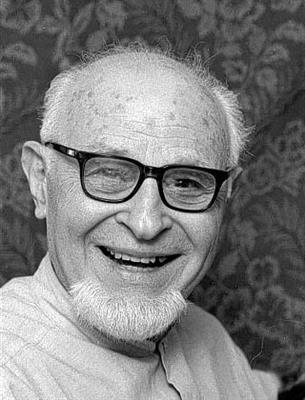
Biography
Pettoruti was born on 1 October 1892[1] in La Plata, Argentina. He left the local Academy of Fine Arts after enrolment, but a caricature commission won him a government travel scholarship to Italy in 1913[1]. In Florence he studied Fra Angelico, Masaccio, and Giotto; in Milan he encountered the Futurists; in Berlin he exhibited 35 works at Herwarth Walden's Der Sturm Gallery in 1923. By the time he returned home, he had absorbed virtually every major current of European modernism without simply imitating any of them.
Back in Argentina, Pettoruti built a parallel career as an institution builder. He served as director of the Museo Provincial de Bellas Artes in La Plata from 1930[1] to 1952, until political pressure under Perón forced his resignation. He then returned to Europe permanently, settling eventually in Paris, where he died on 16 October 1971[1].
His canvases returned repeatedly to musicians and harlequins, figures whose faces are hidden or whose eyes are closed. The anonymity was deliberate: Pettoruti was interested in form and colour relationships rather than portraiture, and the harlequin's geometric costume suited his interest in interlocking planes. Works such as Quinteto (1927[1]) and Arlequín (1928) demonstrate the hard-edged clarity that defined his output. He published an autobiography, Un Pintor Ante el Espejo, in 1968.
Timeline
- 1892Born in La Plata, Argentina on 1 October.
- 1913Won a government travel scholarship to Italy for art, after a caricature commission.
- 1913Studied Fra Angelico, Masaccio, and Giotto in Florence.
- 1923Exhibited 35 works at Herwarth Walden's Der Sturm Gallery in Berlin.
- 1924Opened his first Buenos Aires exhibition at the Galería Witcomb, displaying 86 works from his time in Europe.
- 1927Completed the artwork "Quinteto".
- 1928Completed the artwork "Arlequín".
- 1930Appointed director of the Museo Provincial de Bellas Artes in La Plata.
- 1952Resigned from his position as director of the Museo Provincial de Bellas Artes due to political pressure.
- 1968Published his autobiography, "Un Pintor Ante el Espejo".
- 1971Died in Paris on 16 October, aged 79.
Notable Works
Tap to view larger.
Next stop
Browse the movements →
Every movement in the collection, from the Renaissance to Pop art.
Related Artists


Frequently Asked Questions
What is Emilio Pettoruti known for?
Emilio Pettoruti is known for his paintings that incorporate elements of Cubism, Futurism, and the geometric precision of the Italian Renaissance. His canvases often featured musicians and harlequins with hidden faces, reflecting his interest in form and colour relationships rather than portraiture. He also published an autobiography, Un Pintor Ante el Espejo, in 1968[1].Who was Emilio Pettoruti?
Emilio Pettoruti was an Argentinian painter, born in La Plata in 1892[1]. After spending a decade in Europe, where he absorbed influences from Cubism, Futurism, and the Italian Renaissance, he returned to Buenos Aires and became an important figure in the Argentinian art world. He also served as director of the Museo Provincial de Bellas Artes in La Plata.What was Emilio Pettoruti's art style?
Emilio Pettoruti's art style incorporated elements of Cubism, Futurism, and the geometric precision of the Italian Renaissance. His paintings often featured hard-edged clarity and interlocking planes. He was more interested in form and colour relationships than portraiture.How did Emilio Pettoruti die?
Emilio Pettoruti died in 1971[1] at the age of 79.
Sources
Editorial draws on the following primary and tertiary references for Emilio Pettoruti.
- [1] wikipedia Wikipedia: Emilio Pettoruti Used for: biography, birth dates, death dates, identifiers, movement attribution, nationality.
- [2] book Gianlorenzo Bernini: new aspects of his art and thought : a commemorative volume Used for: biography, stylistic analysis.
- [3] book guggenheim-futurismmodernfo00solo Used for: biography.
- [4] book guggenheim-handboo00pegg Used for: biography.
- [5] book Braun, Emily, 1957-; Asor Rosa, Alberto; Royal Academy of Arts (Great Britain), Italian art in the 20th century : painting and sculpture, 1900-1988 Used for: biography.
Editorial overseen by Solis Prints. Sources verified 2026-09-22. Click a source for details, or hover over [N] in the page above to preview.
Editorial standardsMethodologyCorrectionsAI disclosureAbout the editorial team