



Ernesto Neto
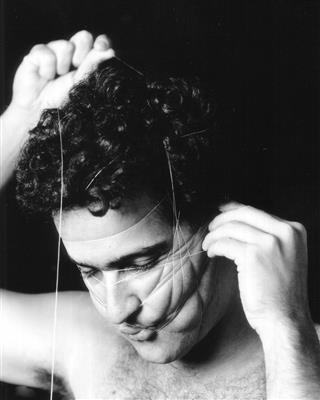
Rio de Janeiro has produced artists who treat sculpture as invitation rather than monument, and Ernesto Neto stands among the most ambitious. Born on 2 July 1964[1], he spent his formative years immersed in the city's sensory extravagance and began exhibiting internationally as early as 1988, when his work appeared in Scotland. What followed was a career built on bodies in space: his large-scale installations coax viewers to walk through, press against, and breathe in structures made from elastic lycra stuffed with Styrofoam pellets or aromatic spices.
Biography
His installations resist easy categorisation. They sit somewhere between architecture, textile art, and performance, creating what critics have called an art beyond abstract minimalism. The biomorphic forms are unmistakably bodily, bulging, drooping, stretching, yet their pale surfaces and floating suspension give them an otherworldly calm. Works like Navedenga (1998) and the enormous Anthropodino (2009), installed at the Park Avenue Armory, made tangible the ambition that would define his career.
Neto represented Brazil at the 2001 Venice Biennale alongside Vik Muniz, cementing his international standing. The following years brought commissions at Tate Modern, MoMA, and Zurich's Central Station, where GaiaMotherTree (2018) drew an estimated half a million visitors. France honoured him with the Chevalier des Arts et des Lettres in 2006.
His more recent work continues to fold cosmological and indigenous Brazilian themes into participatory sculpture: the body, the planet, and the viewer are all implicated. Where much contemporary installation art keeps its audience at arm's length, Neto insists on contact.
Timeline
- 1964Born in Rio de Janeiro, Brazil, on 2 July.
- 1988Began exhibiting internationally, with his work appearing in Scotland.
- 1998Created "Navedenga", a large-scale installation.
- 2001Represented Brazil at the Venice Biennale, alongside Vik Muniz.
- 2006Honoured with the Chevalier des Arts et des Lettres in France.
- 2009Installed "Anthropodino" at the Park Avenue Armory.
- 2018Commissioned to create "GaiaMotherTree" at Zurich's Central Station.
Notable Works
Tap to view larger.
Next stop
Browse the movements →
Every movement in the collection, from the Renaissance to Pop art.
Related Artists


Frequently Asked Questions
What is Ernesto Neto known for?
Ernesto Neto is known for his large-scale, participatory installations that blur the lines between architecture, textile art, and performance. His biomorphic forms, often made from materials like lycra and Styrofoam, encourage viewers to walk through, touch, and even breathe in the structures.Who was Ernesto Neto?
Ernesto Neto is an artist from Rio de Janeiro known for his large-scale installations. Born in 1964[1], he creates sculptures that invite viewers to interact with them physically, using materials like elastic lycra and aromatic spices.What was Ernesto Neto's art style?
Neto's installations resist easy categorisation, sitting somewhere between architecture, textile art, and performance. Critics have described his style as an art beyond abstract minimalism, characterised by biomorphic forms with pale surfaces and floating suspension.When was Ernesto Neto born?
Ernesto Neto was born in 1964[1].
Sources
Editorial draws on the following primary and tertiary references for Ernesto Neto.
- [1] wikipedia Wikipedia: Ernesto Neto Used for: biography, birth dates, death dates, identifiers, movement attribution, nationality.
- [2] book Gardner, Helen, 1878-1946, Gardner's art through the ages Used for: stylistic analysis.
- [3] book Fred S. Kleiner, Gardner's Art through the Ages: A Concise History of Western Art, 2nd ed. Used for: biography.
- [4] book guggenheim-hugobo00acco Used for: biography.
- [5] book guggenheim-refigur00kren Used for: biography.
- [6] book Braun, Emily, 1957-; Asor Rosa, Alberto; Royal Academy of Arts (Great Britain), Italian art in the 20th century : painting and sculpture, 1900-1988 Used for: biography.
Editorial overseen by Solis Prints. Sources verified 2026-10-07. Click a source for details, or hover over [N] in the page above to preview.
Editorial standardsMethodologyCorrectionsAI disclosureAbout the editorial team