



Federico Faruffini
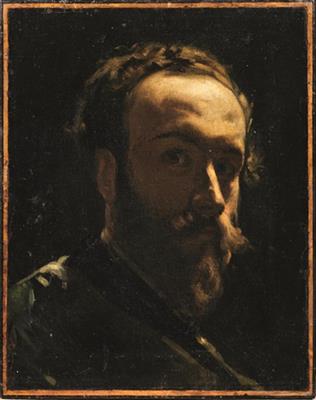
Federico Faruffini died in Perugia in 1869[2], aged thirty-five, by his own hand. The brevity and darkness of his biography fit the movement with which he is associated: the Scapigliatura, a loose group of Milanese artists, writers, and musicians who called themselves the "dishevelled ones" and set themselves against both academic convention and the patriotic sentimentality of Risorgimento culture.
Biography
Born in Sesto San Giovanni, near Milan, in 1833[2], Faruffini trained at the Brera Academy under Giuseppe Bertini alongside Tranquillo Cremona, the painter who would become the central figure of Milanese Scapigliatura. Where Cremona moved towards the movement's characteristic blurred, sfumato surfaces, Faruffini remained more anchored in historical subject matter, producing history paintings with psychological directness rather than theatrical grandeur.
His most celebrated work, "Maria Stuarda al supplizio" (Mary Queen of Scots at the Scaffold, 1865[2], Galleria d'Arte Moderna, Milan), made his reputation at the Brera exhibition that year. The composition shows the queen at the moment before her execution with a restraint unusual in Italian academic history painting of the period; the emotional weight comes from stillness rather than gesture. He also produced portraits and intimate figure studies, including "La lettrice," which reveal the realist undercurrent running through his practice.
The arc of his career was cut short before the Scapigliatura's methods had fully crystallised. Scholars of nineteenth-century Italian art have increasingly placed him alongside Cremona as a figure of genuine significance, rather than a minor satellite of the movement.
Timeline
- 1833Born in Sesto San Giovanni, near Milan.
- 1865His painting "Maria Stuarda al supplizio" (Mary Queen of Scots at the Scaffold) was exhibited at the Brera exhibition, gaining him recognition.
- 1869Died in Perugia at 35 by suicide.
Notable Works
Tap to view larger.
Where to See Federico Faruffini
1 museum worldwide.
-
1 works
Galleria d'arte moderna di Milano
Milan, Italy
Tue–Sun 10:00–17:30, closed Mondays · €8 adults

Next stop
Browse the movements →
Every movement in the collection, from the Renaissance to Pop art.
Frequently Asked Questions
How did Federico Faruffini die?
Federico Faruffini died by suicide in Perugia in 1869[2]. He was thirty-five years old.What is Federico Faruffini known for?
Faruffini is known for his history paintings, portraits, and intimate figure studies. His 1865[2] painting, "Maria Stuarda al supplizio" (Mary Queen of Scots at the Scaffold), gained him recognition at the Brera exhibition. He is also known for his association with the Scapigliatura movement.What was Federico Faruffini's art style?
While associated with the Scapigliatura movement, Federico Faruffini's style remained more rooted in historical subject matter compared to other members. Unlike Tranquillo Cremona's blurred surfaces, his history paintings displayed psychological directness rather than theatrical grandeur. His work also contained a realist undercurrent, as seen in pieces such as "La lettrice."When did Federico Faruffini die?
Federico Faruffini died in 1869[2] at the age of 36.Who was Federico Faruffini?
Federico Faruffini was an Italian painter associated with the Scapigliatura, a group of Milanese artists, writers, and musicians who rejected academic convention and Risorgimento sentimentality. He trained at the Brera Academy and is now considered a significant figure in nineteenth-century Italian art. His career was brief, as he died at the age of thirty-five.
Sources
Editorial draws on the following primary and tertiary references for Federico Faruffini.
- [1] museum Galleria d'arte moderna di Milano Used for: museum holdings.
- [2] wikipedia Wikipedia: Federico Faruffini Used for: biography, birth dates, death dates, identifiers, movement attribution, nationality.
- [3] book Masterpieces of western art : a history of art in 900 individual studies from the Gothic to the present day Used for: biography.
- [4] book Post-impressionism : cross-currents in European painting Used for: biography.
- [5] book Post-impressionism : cross-currents in European painting Used for: biography.
Editorial overseen by Solis Prints. Sources verified 2026-09-22. Click a source for details, or hover over [N] in the page above to preview.
Editorial standardsMethodologyCorrectionsAI disclosureAbout the editorial team