



Felix Philipp Kanitz
Felix Philipp Kanitz arrived in the Balkans as a painter and left as one of the nineteenth century's most consequential ethnographers of the region. Born in Pest in 1829[1] into a prosperous Jewish family, he studied art in Vienna before spending the 1850s travelling through Western Europe. Then, from 1858[1] onwards, he turned south — to Dalmatia, Herzegovina, Bosnia, Montenegro, Serbia, and Bulgaria — making a series of research expeditions that continued for three decades and transformed European understanding of South Slavic peoples and their material culture.
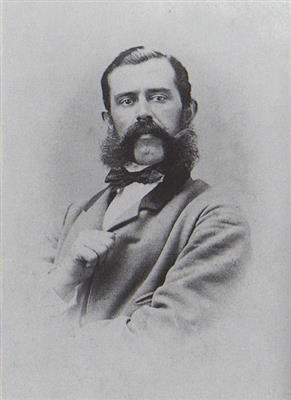
Biography
Kanitz worked in every medium available to him: painting landscapes and architectural fragments, sketching archaeological sites, and writing detailed ethnographic and geographical accounts. His methodology combined visual documentation with rigorous fieldwork in a manner unusual for the period. Between 1870[1] and 1874 he served as the first custodian of Vienna's Anthropologisch-Urgeschichtliches Museum, bringing the same systematic instinct to museum practice that he applied in the field.
His most substantial published work, the three-volume study of Danubian Bulgaria issued between 1875[1] and 1882, drew on first-hand observation of Roman remains, Byzantine monuments, and living communities across Bulgaria. He is regarded as one of the earliest serious ethnographers of the South Slavs, and the Serbian Academy of Sciences and Arts elected him a member in recognition of his contributions. The Bulgarian village of Kanitz, streets in Sofia and Varna, and Kanitz Nunatak in Antarctica all carry his name.
Kanitz died in Vienna in January 1904[1], aged seventy-four. His paintings, though secondary to his scholarly reputation, document landscapes and vernacular architecture that have since been transformed beyond recognition.
Timeline
- 1829Born in Pest to a prosperous Jewish family.
- 1850Studied art in Vienna before travelling through Western Europe.
- 1858Began research expeditions to Dalmatia, Herzegovina, Bosnia, Montenegro, Serbia, and Bulgaria.
- 1870Became the first custodian of Vienna's Anthropologisch-Urgeschichtliches Museum.
- 1875Published the first volume of his three-volume study of Danubian Bulgaria.
- 1882Published the final volume of his three-volume study of Danubian Bulgaria.
- 1904Died in Vienna in January, aged 74.
Notable Works
Tap to view larger.
Next stop
Browse the movements →
Every movement in the collection, from the Renaissance to Pop art.
Frequently Asked Questions
What is Felix Philipp Kanitz's most famous work?
Felix Philipp Kanitz is best known for his extensive documentation of the Balkan region in the 19th century. He was particularly interested in Serbia, Bulgaria, and Bosnia. His most significant contribution is generally considered to be his multi-volume work, *Serbien: Historisch-ethnographische Reisestudien aus den Jahren 1859[1]-1868[1]* (Serbia: Historical-Ethnographic Travel Studies from the Years 1859-1868). Published between 1868 and 1869, this book detailed the geography, history, and culture of Serbia. It included his observations on the population, customs, and archaeological sites. Kanitz's detailed illustrations and maps were also important. Kanitz produced other books and articles based on his travels. These include *Donau-Bulgarien und der Balkan: Historisch-geographisch-ethnographische Reisestudien aus den Jahren 1860-1875* (Danubian Bulgaria and the Balkans: Historical-Geographical-Ethnographic Travel Studies from the Years 1860-1875). This further cemented his reputation as a leading expert on the area. His meticulous research and artistic skills provided valuable insights into a region that was then little known in Western Europe.What should I know about Felix Philipp Kanitz's prints?
Felix Philipp Kanitz (1829[1]-1904[1]) was an Austro-Hungarian artist, geographer and ethnographer. He is best known for his detailed documentation of the Balkan region, particularly Serbia, Bulgaria, and Bosnia. Kanitz produced numerous prints based on his travels and observations. These prints often depict architectural monuments, cityscapes, rural scenes, and portraits of local people. His work is valued for its documentary precision and historical importance. He aimed to capture the cultural and geographical characteristics of the areas he studied. Many of Kanitz's prints were originally published in his books and travelogues. These publications made his work accessible to a wide audience and contributed to European understanding of the Balkans. His images provide valuable insights into the region's history, customs, and material culture during the 19th century. Collectors and institutions prize his prints as historical records and artistic representations of a fascinating area.What style or movement did Felix Philipp Kanitz belong to?
Felix Philipp Kanitz (1829[1]-1904[1]) was an Austro-Hungarian artist, archaeologist, and ethnographer. He is best known for his extensive studies of the Balkan region, particularly Serbia and Bulgaria. Kanitz's artistic output is best described as academic realism, with elements of Romanticism in his approach to representing Balkan subjects. Kanitz's work was documentary in nature. He aimed to accurately record the appearance of places, people, and cultural artefacts he encountered during his travels. His drawings, watercolours, and prints often served as illustrations for his publications. These images provided Europeans with visual information about the then-little-known Balkan region. Although Kanitz was not formally associated with any specific artistic movement, his dedication to detailed observation and realistic depiction aligns him with the broader European Realist tradition. His interest in folklore and local customs also connects him to the Romantic movement's fascination with the exotic and the past. His work is valued today both for its artistic qualities and for its historical and ethnographic significance.What techniques or materials did Felix Philipp Kanitz use?
Felix Philipp Kanitz was a versatile artist and used a range of techniques to document the Austro-Hungarian Empire and the Balkans. He is best known for his detailed drawings and watercolour paintings. These works often captured architectural details, landscapes, and scenes of daily life. Kanitz's artistic process typically began with careful on-site sketches. He would then develop these sketches into more finished works, either as drawings or watercolours. His drawings are characterised by precise linework and a strong attention to detail. In his watercolours, he employed a delicate touch, using transparent washes to create subtle effects of light and atmosphere. In addition to drawing and watercolour, Kanitz also produced prints based on his original artwork. These prints, often wood engravings or lithographs, made his images more widely accessible to the public. He also wrote extensively, publishing books and articles that were supplemented with his own illustrations. Kanitz combined artistic skill with scientific observation, creating a valuable record of a region undergoing significant change.What was Felix Philipp Kanitz known for?
Felix Philipp Kanitz (1829[1]-1904[1]) was an Austrian metallurgist, satirist, and artist, known for his studies of the Balkans. He trained as an artist in Vienna and Munich. He travelled extensively in the Balkans from the 1850s onward. He became an authority on the region, publishing books and articles on its geography, history, and culture. His work was significant for promoting understanding of the Balkans in Western Europe. Kanitz's artwork included drawings, watercolours, and prints. They often depicted Balkan people, customs, and buildings. His images aimed to capture the area's character. His publications included *Serbien. Historisch-ethnographische Reisestudien aus den Jahren 1859[1]-1868[1]* (1868) and *Das Konigreich Serbien und das Serbenvolk seit der Romerzeit* (1904). Kanitz received several awards for his work, including the Serbian Order of Takovo.When did Felix Philipp Kanitz live and work?
Felix Philipp Kanitz (1829[1]-1904[1]) was an Austrian artist and geographer. He is best known for his detailed documentation of the Balkan region, particularly Serbia, Bulgaria, and Bosnia. Born in Budapest, he studied art in Vienna and travelled extensively throughout his life. His journeys through the Balkans began in the 1850s, and he meticulously recorded his observations in sketches, watercolours, and writings. These works offer valuable insights into the region's geography, culture, and history during the mid- to late 19th century. Kanitz's artwork includes depictions of Balkan landscapes, architecture, and people. He also produced ethnographic studies and maps. His publications, such as "Serbien: Historisch-ethnographische Reisestudien aus den Jahren 1859[1]-1868[1]" (1868), were widely read and contributed to European understanding of the area. Kanitz's work had a considerable influence on Balkan studies and the development of national identities in the region. He died in Vienna.Where can I see Felix Philipp Kanitz's work?
Works by Felix Philipp Kanitz can be viewed in several museum collections. These include the Brücke Museum and the Nationalgalerie, both in Berlin. Other German museums that hold his work are the Kunsthalle and Sammlung Bottcherstrasse in Bremen; the Ludwig Museum and Wallraf-Richartz Museum in Cologne; the Folkwang Museum and Gesellschaft Kruppsche Gemaldesammlung in Essen; the Kunsthalle in Hamburg; the Niedersächsisches Landesmuseum in Hanover; the Städtische Kunsthalle in Mannheim; the Bayerische Staatsgemäldesammlungen in Munich; the Stiftung Ada und Emil Nolde in Seebüll; and the Von der Heydt Museum in Wuppertal. Additionally, some works are held in private collections, such as those of Dr Lili Goetz in Munich, Dr Oswald Goetz in Nueva York, and the Colección von der Goltz in Dusseldorf.Where was Felix Philipp Kanitz from?
Felix Philipp Kanitz was born in Budapest in 1829[1]. His family was Jewish. He spent much of his life travelling in the Balkans, particularly Serbia, Bulgaria, and Macedonia. Kanitz trained as a painter, initially in Vienna. He studied with the history painter Carl Rahl. He also studied architecture, and became interested in archaeology and ethnography. His travels in the Balkans began in the 1850s. He produced drawings and watercolours of the people, buildings, and scenery he encountered. These images were reproduced as prints in his publications. He wrote extensively about the region, producing books such as "Serbien: Historisch-ethnographische Reisestudien aus den Jahren 1859[1]-1868[1]" (Leipzig, 1868). This book helped to shape European perceptions of the Balkans. He became a member of several learned societies, and received awards for his work. Kanitz lived in Vienna for many years. He died there in 1904[1]. His work is now held in museums and galleries in Serbia, Austria, and elsewhere.Who did Felix Philipp Kanitz influence?
Felix Philipp Kanitz was an Austro-Hungarian artist and ethnographer. He is best known for his detailed documentation of the Balkan region in the 19th century. His work had an impact on various fields including art, history, and Balkan studies. Kanitz's meticulous drawings and writings provided valuable visual and textual information about the culture, geography, and history of the areas he studied. Scholars of the Balkans have used his publications as primary sources for understanding the region's past. His illustrations of archaeological sites, traditional costumes, and daily life offered insights that were not available elsewhere. While it is difficult to trace direct artistic influence, his detailed approach to depicting cultural subjects may have inspired later artists and illustrators who sought to document similar themes. His work also contributed to the development of Balkan nationalism by providing visual representations of a shared cultural heritage. Kanitz's publications helped shape European perceptions of the Balkans and its people.Who influenced Felix Philipp Kanitz?
Felix Philipp Kanitz, an Austro-Hungarian artist and geographer, was influenced by several figures and movements during his career. As a young man studying in Vienna during the 1840s, he was exposed to the Biedermeier style, which emphasised realism and detailed observation. This is evident in his early topographical drawings and studies of local customs. Later, his travels throughout the Balkans exposed him to different artistic traditions. He was particularly interested in the region's medieval art and architecture. This interest informed his later work. While it is difficult to point to one specific individual as a direct influence, the writings of Johann Gottfried Herder, who promoted the value of national cultures and folklore, likely resonated with Kanitz's own interest in documenting the diverse cultures of the Balkan Peninsula. His detailed documentation of Balkan monuments and customs owes a debt to the broader 19th-century interest in nationalism and folklore.Who was Felix Philipp Kanitz?
Felix Philipp Kanitz (1829[1]-1904[1]) was an Austrian-Hungarian geographer, archaeologist, ethnographer, author, and artist. Born in Budapest, he is best known for his extensive studies of the Balkan Peninsula, particularly Serbia, Bulgaria, and Bosnia. Kanitz travelled extensively throughout the region from the 1850s onwards. He meticulously documented the geography, history, and cultural heritage of the areas he visited. His detailed observations and sketches provide valuable insights into the region during the mid-19th century. Kanitz's work contributed significantly to European understanding of the Balkans, which, at the time, was still little known. He produced numerous books and articles, including *Serbien. Historisch-ethnographische Reisestudien aus den Jahren 1859[1]-1868[1]* (1868), which became a standard reference work on the region. Kanitz was also a skilled draughtsman; his illustrations and maps enhanced his publications.Why are Felix Philipp Kanitz's works important today?
Felix Philipp Kanitz (1829[1]-1904[1]) was an Austro-Hungarian artist and geographer. He is remembered for his detailed documentation of the Balkan region, particularly Serbia, Bulgaria, and Bosnia, during the 19th century. Kanitz's importance stems from his meticulous approach to recording the cultural, geographical, and ethnographic aspects of a region then little known to Western Europe. His artwork, consisting of drawings and watercolours, provides visual records of Balkan landscapes, architecture, and local customs. These works are valuable historical resources. His extensive travels throughout the Balkans resulted in numerous publications, including "Serbien: Historisch-ethnographische Reisestudien aus den Jahren 1859[1]-1868[1]" (1868). This book, along with his other writings and illustrations, helped shape European perceptions of the Balkans. He presented a region with a rich history and culture, countering prevailing stereotypes. Today, Kanitz's work is important for its contribution to Balkan studies. His images and writings offer insights into the region's past, aiding researchers in understanding its complex history and cultural heritage. His detailed depictions of places and people provide a unique window into a world that has undergone significant change.
Sources
Editorial draws on the following primary and tertiary references for Felix Philipp Kanitz.
- [1] wikipedia Wikipedia: Felix Philipp Kanitz Used for: biography, birth dates, death dates, identifiers, movement attribution, nationality.
- [2] book Husslein-Arco, Agnes, editor; Koja, Stephan, editor; Law, Rebecca (Translator), translator; McInnes, Robert (Translator), translator; Somers, Nick, translator; Monet, Claude, 1840-1926. Paintings. Selections; Österreichische Galerie Belvedere, h Used for: biography.
- [3] book Masterpieces of western art : a history of art in 900 individual studies from the Gothic to the present day Used for: biography.
- [4] book Post-impressionism : cross-currents in European painting Used for: biography.
Editorial overseen by Solis Prints. Sources verified 2026-10-07. Click a source for details, or hover over [N] in the page above to preview.
Editorial standardsMethodologyCorrectionsAI disclosureAbout the editorial team