



Fernando Amorsolo
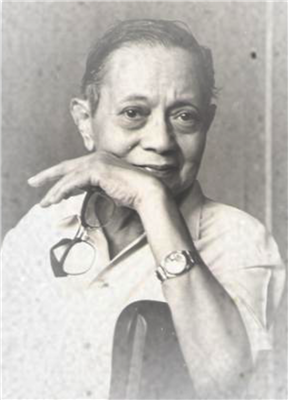
Four days after Fernando Amorsolo died on 24 April 1972[1], the Philippines named him its first National Artist — an honour that confirmed what the country's art world had known for half a century. Born in Manila on 30 May 1892[1], he studied under his cousin and mentor Fabián de la Rosa at the University of the Philippines School of Fine Arts, graduating with medals in 1914[1], before travelling to the Academia de San Fernando in Madrid in 1917 and later to New York, where he encountered Impressionism and Cubism at close range.
Biography
What he brought back from those encounters was not Cubist fragmentation but a deeper attention to light: specifically, to the quality of Philippine sunlight falling across rural life. Amorsolo developed a signature backlighting technique in which figures are illuminated from behind, their outlines haloed in warm gold. The results — rice paddies at harvest, women weaving, market scenes, rivers in afternoon light — describe a Philippines of idealized beauty, and that idealization was partly the point. His paintings, produced under American colonial rule, articulated a vision of indigenous Filipino identity and nationhood that had nothing to do with empire.
Rice Planting (1922[1]) became the defining image of the Commonwealth era. Making of the Philippine Flag (1955) entered the national visual memory. During the Japanese occupation, Amorsolo continued working; Defence of a Filipina Woman's Honour (1945) documents wartime suffering without sentimentality.
He taught at the University of the Philippines for thirty-eight years, directing the Art Department for fourteen of them, and shaped generations of Filipino painters. By the end of his life he had made an estimated 10,000 works. The auction market caught up with that legacy: Under the Mango Tree (1929[1]) sold at Philippine auction in 2024 for PHP 57.676 million, a world record for the artist.
Timeline
- 1892Born in Manila on 30 May. He later became the first National Artist of the Philippines.
- 1914Graduated with medals from the University of the Philippines School of Fine Arts.
- 1917Travelled to the Academia de San Fernando in Madrid to study art.
- 1922Painted "Rice Planting", which became a defining image of the Commonwealth era.
- 1945Painted "Defence of a Filipina Woman's Honour", documenting wartime suffering.
- 1955Painted "Making of the Philippine Flag", which entered the national visual memory.
- 1972Died on 24 April. Four days later, he was named the first National Artist of the Philippines.
Notable Works
Tap to view larger.
Next stop
Browse the movements →
Every movement in the collection, from the Renaissance to Pop art.
Frequently Asked Questions
What is Fernando Amorsolo's most famous work?
It is difficult to name one single painting as Fernando Amorsolo's 'most famous work' due to his extensive and varied output. He is well known for his luminous genre scenes of Philippine daily life, often depicting rural settings and the beauty of the local people. Amorsolo was a prolific artist, creating a large body of work throughout his career. His paintings often feature scenes of Filipino culture, such as rice planting, harvesting, and traditional celebrations. He had a talent for capturing the warmth and sunlight of the Philippine environment, which became a trademark of his style. Although no specific work is cited as his singular most famous piece, his body of work has secured his place as an important figure in Philippine art history.What should I know about Fernando Amorsolo's prints?
Fernando Amorsolo (1892[1]-1972[1]) was a Filipino artist known for his paintings of Philippine subjects. When considering Amorsolo's prints, it is helpful to understand some basic print terminology. A "vintage print" is made around the same time as the original negative, while a "period print" is made within approximately 10 to 15 years. Anything printed later is considered an "old print" or a "modern print". An "original print" is one made by the artist or under their direct supervision. A "facsimile" is a print made by rephotographing a print or by using the original negative, with the print base and processing as close as possible to the reference print. Prints are often produced in limited editions, where a set number of prints are made. These prints are usually numbered (for example, 35/100, meaning it is the 35th print out of 100). Artists sometimes hold back a small percentage as artist's proofs, marked "AP". The Professional Art Dealers Association of Canada defines an original print as an image conceived by the artist as a print and executed solely as a print, usually in a numbered edition, and signed by the artist. Each print in the edition is an original, printed individually.What style or movement did Fernando Amorsolo belong to?
Fernando Amorsolo's artistic style is best described as genre painting, with some influence from Impressionism. He is known for his paintings of everyday Philippine life, especially rural scenes. Amorsolo's works often feature farmers, vendors, and families in their daily activities, set against sun-drenched fields and skies. These paintings frequently idealise rural existence, presenting a positive view of Philippine culture. His skill in capturing the local light earned him the nickname "Master of Philippine Light". While not strictly an Impressionist, Amorsolo did incorporate some Impressionistic techniques, such as the use of natural light and loose brushstrokes, into his art. However, his focus on narrative and his detailed depictions of people and settings distinguish him from pure Impressionism. Instead, he used some elements of the style to add atmosphere and visual interest to his genre scenes.What techniques or materials did Fernando Amorsolo use?
Fernando Amorsolo is known for his skill in portraying the radiant Philippine sunlight. He achieved this effect through a technique he developed and called "luminism". This involved observing the subject's natural colours, then manipulating the intensity of light that falls upon it. Amorsolo's favoured medium was oil on canvas. He prepared his canvases with meticulous care, often applying several layers of primer to create a smooth surface. This allowed for greater control over the blending and layering of colours. He employed a glazing technique, applying thin, transparent layers of paint to build up colour and luminosity gradually. His brushwork varied depending on the subject matter. He used broad, sweeping strokes for backgrounds and more delicate, precise strokes for details such as faces and clothing. Amorsolo also used impasto, applying thick layers of paint to create texture and dimension in certain areas. His palette consisted primarily of earth tones, such as ochre, sienna, and umber, along with brighter colours like yellow, red, and blue.When did Fernando Amorsolo live and work?
Fernando Amorsolo was born in the Philippines in 1892[1]. He died in 1972[1]. Amorsolo attended the Academy of Fine Arts in Mexico City. Phoebe A. Hearst discovered his paintings while visiting Mexico and sponsored his studies in Europe. He remained in Europe for fourteen years, returning to Mexico City in 1910[1]. In 1912, he served as director of the Academy of Fine Arts, Mexico City. He was also the founder of the Outdoor School of Painting in Mexico. Amorsolo moved to the United States in 1928, settling in Los Angeles in 1929. He painted many murals in Southern California and completed two murals in Mexico in 1942. He is known for his indigenous, native pastoral murals and still lifes.Where can I see Fernando Amorsolo's work?
While a comprehensive list of locations is unavailable, several museums exhibit works by Fernando Amorsolo. Some museums that exhibit paintings by artists of a similar period include the Metropolitan Museum of Art (New York), the Museum of Modern Art (New York), the Royal Ontario Museum (Toronto), and the National Museum of Scotland (Edinburgh). Other museums that sometimes exhibit similar works are the Los Angeles County Museum of Art (LACMA), the Minneapolis Institute of Arts, the Virginia Museum of Fine Arts (Richmond), the Brighton Museum & Art Gallery, the Manchester Art Gallery, and the Victoria & Albert Museum (London). Some paintings by Nicolas Poussin, a French artist from an earlier period, are held at the National Gallery of Art (Washington, D.C.) and the Art Gallery of Toronto.Who did Fernando Amorsolo influence?
It is difficult to identify specific artists who were directly influenced by Fernando Amorsolo. However, one can discuss the general influence of painters such as Caravaggio, who, despite attempts to discredit him, had a significant effect on Western art. His dramatic compositions, stark use of light and dark, and raw emotionality resonated with many artists. During the years immediately following Caravaggio's death, many important painters echoed his compositions or copied his techniques. Rubens, Velazquez, and Pietro da Cortona are among those who reflected his influence. Within a generation, entire schools of so-called Caravaggisti established themselves in both Italy and the Netherlands. French art was also particularly affected, with painters such as Valentin de Boulogne and Georges de La Tour showing his impact. Even during the Neoclassical and Romantic periods, there was a resurgence of interest in his art. Jacques-Louis David, for example, painted the dead Marat in a style reminiscent of Caravaggio's spotlit martyrs.Who influenced Fernando Amorsolo?
Fernando Amorsolo's artistic development involved several influences. Cubism, despite Amorsolo's limited exposure to original Cubist works, liberated his spirit of experiment. He was grateful to Cubist artists, who stimulated his artistic explorations, rather than imposing a style. Amorsolo also studied under teachers such as Robert Henri, who encouraged his students to study past artists, including Manet, Hals, Rembrandt, Goya, Degas, and Daumier. Henri also encouraged students to read and attend the theatre. Henri's teaching went beyond style, imparting a philosophy that "art is life, an expression of life, an expression of the artist and an interpretation of life." Kenneth Hayes Miller, another teacher at the New York School of Art, also had an influence. Miller encouraged a consideration of the picture plane, spatial organisation, recession, and the modelling of forms.Why are Fernando Amorsolo's works important today?
Fernando Amorsolo (1872-1972[1]) was a painter, mainly of genre scenes and portraits, and he was the first National Artist of the Philippines. He is known for his skill in depicting light and shadow, a technique he used to great effect in his depictions of rural Philippine life. Amorsolo's paintings offer a view into the past. His works show the customs and traditions of the Philippines before the Second World War. Many of his paintings show agricultural scenes, such as rice planting and harvesting, and these images provide a record of a way of life that has largely disappeared due to urbanisation. His portraits of prominent figures, including politicians and socialites, provide insights into the country's elite during the American colonial period and the early years of independence. Amorsolo's art continues to be appreciated for its aesthetic qualities, as well as its cultural and historical value. His images are often reproduced on calendars, postcards, and other commercial items, which demonstrates his continuing popularity.How did Fernando Amorsolo die?
Fernando Amorsolo died on 24 April 1972[1].What is Fernando Amorsolo known for?
Amorsolo is known for his paintings that depict an idealised vision of rural Philippine life, often using a signature backlighting technique. His painting Rice Planting (1922[1]) became a defining image of the Commonwealth era, and Making of the Philippine Flag (1955) is also a well-known work.What was Fernando Amorsolo's art style?
Amorsolo developed a signature backlighting technique, illuminating figures from behind to create a warm, golden halo effect, which is a key feature of his style. While he encountered Impressionism and Cubism, he adapted a deeper attention to light, particularly Philippine sunlight, rather than adopting Cubist fragmentation.
Sources
Editorial draws on the following primary and tertiary references for Fernando Amorsolo.
- [1] wikipedia Wikipedia: Fernando Amorsolo Used for: biography, birth dates, death dates, identifiers, movement attribution, nationality.
- [2] book guggenheim-handboo00pegg Used for: biography.
- [3] book guggenheim-latinamericanpai00catl Used for: biography.
- [4] book Landauer, Susan, The not-so-still life : a century of California painting and sculpture Used for: biography.
Editorial overseen by Solis Prints. Sources verified 2026-10-07. Click a source for details, or hover over [N] in the page above to preview.
Editorial standardsMethodologyCorrectionsAI disclosureAbout the editorial team