



Feyhaman Duran
Turkey's most respected portrait painter of the twentieth century spent his most formative years at the intersection of two worlds: the dying Ottoman Empire that sent him to Paris, and the nascent Republic that would employ him for the rest of his career.
Biography
Feyhaman Duran was born in Istanbul in 1886[1]. His journey to Paris came through the patronage of Said Halim Pasha, the Ottoman Grand Vizier, who funded his studies abroad. At the Académie Julian he worked under Jean-Paul Laurens and Paul Albert Laurens, then moved on to Fernand Cormon's studio at the Académie des Beaux-Arts, acquiring a thorough grounding in academic portrait technique. He returned to Istanbul in 1914[1], just as the old empire began its final collapse.
His portrait of Dr. Akil Muhtar earned a silver medal at the 1916[1] Galatasaray Exhibition, and by 1919 he had been appointed drawing instructor at the School of Fine Arts. He was a founding member of the Union of Fine Arts and joined the painting department faculty in 1933, remaining on the staff until his retirement in 1951. For much of the Republican period his teaching and portraiture shaped the direction of Turkish fine art education.
Duran died in Istanbul in 1970[1], aged 83, having watched his country transform entirely from the one that had sent a young man to Paris to learn how to paint.
Timeline
- 1886Born in Istanbul.
- 1914Returned to Istanbul after studying art in Paris, as the Ottoman Empire began to collapse.
- 1916His portrait of Dr Akil Muhtar won a silver medal at the Galatasaray Exhibition.
- 1919Appointed drawing instructor at the School of Fine Arts.
- 1933Joined the painting department faculty.
- 1951Retired from the painting department faculty.
- 1970Duran died in Istanbul, aged 83.
Notable Works
Tap to view larger.
Next stop
Browse the movements →
Every movement in the collection, from the Renaissance to Pop art.
Frequently Asked Questions
What is Feyhaman Duran's most famous work?
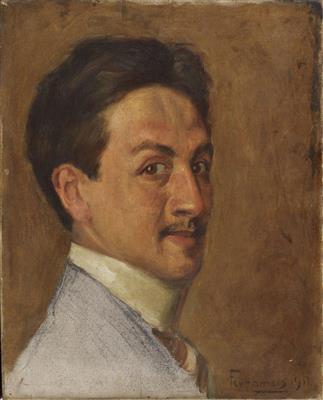
Feyhaman Duran (1886[1]-1970[1]) was a Turkish artist known for his contributions to impressionism in Turkish painting. Although he produced a varied body of work, no single piece can be definitively called his "most famous". Duran's output included portraits, still lifes, and figurative compositions. He gained recognition for his skill in capturing light and atmosphere, evident in his oil paintings and watercolours. He studied at the Academy of Fine Arts in Istanbul and later in Paris, where he absorbed influences from European modernism. His portraits often depicted prominent figures of Turkish society, while his still lifes displayed an interest in colour and form. "Self Portrait" (1910[1]) is one of his well-known paintings. Duran's works are held in the collections of major Turkish museums, including the Istanbul State Art and Sculpture Museum. His art continues to be appreciated for its aesthetic qualities and its place within the development of Turkish modern art.What should I know about Feyhaman Duran's prints?
Feyhaman Duran (1886[1]-1970[1]) was a Turkish artist known for his contributions to painting and printmaking. He is considered among the first Turkish artists to study in Europe. Duran's prints often feature portraits, figure studies, and still life compositions. His style blends academic training with elements of impressionism. He was influenced by European movements, which he synthesised with Turkish artistic traditions. After studying at the School of Fine Arts in Istanbul, Duran furthered his education in Paris at the Académie Julian. There, he received instruction from Jean-Paul Laurens. This period was formative in shaping his artistic approach. He later taught at the Academy of Fine Arts in Istanbul, passing on his knowledge to generations of Turkish artists. His work can be found in major collections, including the Istanbul State Art and Sculpture Museum. Duran's prints offer insight into the artistic exchanges between Turkey and Europe during the early to mid-20th century. They demonstrate his skill in capturing light, form, and the essence of his subjects.What techniques or materials did Feyhaman Duran use?
Feyhaman Duran (1886[1]-1970[1]) was a Turkish artist known for his paintings in oil and watercolour. He also worked in other media, including charcoal and pastels. Duran's early training at the School of Fine Arts in Istanbul provided him with a foundation in traditional techniques. He then expanded his knowledge in Paris, where he studied at the Académie Julian. There, he was exposed to impressionistic and post-impressionistic styles, which influenced his approach to colour and light. His oil paintings often feature a layered application of paint, creating depth and texture. Duran was skilled in capturing the effects of light, particularly in his outdoor scenes. His watercolours display a lighter touch, with fluid washes of colour that convey atmosphere. In his portrait work, he paid close attention to detail, capturing the likeness and character of his subjects. He also created drawings, using charcoal and pastels to explore form and composition.What was Feyhaman Duran known for?
Feyhaman Duran, a Turkish artist, is best known for his contributions to painting. He combined elements of Turkish and European styles in his art. Duran created both portraits and large abstract paintings; some of these paintings span entire walls in well-known art galleries. Duran's father held an important job in the Turkish government. He encouraged his children to engage with the arts and literature. Duran eagerly followed this advice. As a child, he was often found painting, and he attended art school when he was old enough. He married at nineteen, and the couple honeymooned in Venice. While there, he visited galleries and developed an appreciation for Baroque and other European art styles. Later, he returned to Europe in 1928[1] to study painting in Paris, France.Where can I see Feyhaman Duran's work?
Feyhaman Duran's works can be viewed in several museums. These include institutions in Europe and North America. In the United States, you can find his art at the Metropolitan Museum of Art (New York), the Los Angeles County Museum of Art, the Minneapolis Institute of Arts, the Charles Hosmer Morse Museum of American Art (Winter Park, Florida), the Wolfsonian at Florida International University (Miami Beach), and the Virginia Museum of Fine Arts (Richmond). In Canada, Duran's pieces are held at the Royal Ontario Museum (Toronto). European locations include the Victoria and Albert Museum (London), the National Museums of Scotland (Edinburgh), the Manchester Art Gallery, the Brighton Museum & Art Gallery, the Museu Calouste Gulbenkian (Lisbon), the Musée des Arts Décoratifs (Paris), and the Museu d’Art Modern (Barcelona).Who did Feyhaman Duran influence?
Feyhaman Duran (1886[1]-1970[1]) was a Turkish artist known for his contributions to impressionism and his role as an educator. While it is difficult to pinpoint specific individuals who directly emulated his style, Duran's influence is more broadly seen in the development of Turkish painting during the early to mid-20th century. As a professor at the Academy of Fine Arts in Istanbul, Duran taught many students who went on to become significant figures in Turkish art. His emphasis on colour, light, and the importance of painting from life helped shape the artistic sensibilities of a generation. Although these students developed their own individual styles, Duran's instruction provided a foundation in impressionistic techniques and a dedication to capturing the visual world. His impact is perhaps best understood as a catalyst for the modernisation of Turkish painting, encouraging artists to explore new approaches to representation and to engage with international artistic trends. The effects of his teaching can be seen in the works of numerous Turkish artists who embraced impressionism and post-impressionism, contributing to a more diverse and dynamic artistic environment in Turkey.Who influenced Feyhaman Duran?
Feyhaman Duran, a Turkish artist, was born in Istanbul in 1886[1] and died there in 1970[1]. He is known for his contributions to Turkish painting, particularly his portraits and figurative work. Duran's artistic development was shaped by several influences, both local and international. He studied at the School of Fine Arts in Istanbul, where he was exposed to traditional Ottoman artistic styles. This training instilled in him a strong foundation in draughtsmanship and composition. His time in Paris during the early 20th century exposed him to European movements. The academic style of painting, with its emphasis on realism and classical themes, had an impact. He would have seen impressionist and post-impressionist works during his time in France. Duran's art reflects a synthesis of these different elements. He combined the techniques and aesthetic principles of Western painting with subject matter drawn from Turkish culture and society. This synthesis defines his individual artistic identity.Who was Feyhaman Duran?
Feyhaman Duran (1886[1]-1970[1]) was a Turkish painter. He is known for his contributions to Turkish art, particularly during a period of significant cultural and artistic change in Turkey. Duran studied at the School of Fine Arts in Istanbul. He then continued his art education in Paris, a popular destination for artists at the time. There, he encountered new artistic movements and trends. His exposure to European art is thought to have influenced his style, blending Western techniques with Turkish themes. Duran's work includes portraits, still lifes, and scenes of daily life. He aimed to capture the essence of Turkish identity and culture. He held various exhibitions during his career and received recognition for his artistic contributions. He also worked as an instructor, passing on his knowledge to future generations of Turkish artists.Why are Feyhaman Duran's works important today?
Feyhaman Duran (1886[1]-1970[1]) was a Turkish artist who worked in a variety of media, including oil paint and watercolour. He is remembered for his contributions to Turkish art during a period of modernisation and change. Duran's artistic education began at the School of Fine Arts in Istanbul. Later, he continued his studies in Paris. This exposure to European artistic movements influenced his style, which blended Western techniques with Turkish subject matter. He is known for his portraits, still lifes, and depictions of Istanbul. His role as an instructor at the Academy of Fine Arts in Istanbul had an impact on subsequent generations of artists. Through his teaching, Duran helped to shape the direction of Turkish art. He promoted academic painting styles, influencing many students. Duran's art provides insights into the cultural and social atmosphere of Turkey in the early to mid-20th century. His works offer a view into the past, recording the people and places of his time. They remain valuable for understanding the development of Turkish modern art.How did Feyhaman Duran die?
Feyhaman Duran died in Istanbul in 1970[1]. He was 83 years old at the time of his death.What is Feyhaman Duran known for?
Feyhaman Duran is known for his portraiture, which shaped the direction of Turkish fine art education for much of the Republican period. His portrait of Dr. Akil Muhtar earned a silver medal at the 1916[1] Galatasaray Exhibition. He also taught at the School of Fine Arts.What was Feyhaman Duran's art style?
Duran trained in academic portrait technique at the Académie Julian and Académie des Beaux-Arts in Paris. He studied under Jean-Paul Laurens, Paul Albert Laurens, and Fernand Cormon. This training gave him a thorough grounding in the academic style.
Sources
Editorial draws on the following primary and tertiary references for Feyhaman Duran.
- [1] wikipedia Wikipedia: Feyhaman Duran Used for: biography, birth dates, death dates, identifiers, movement attribution, nationality.
- [2] book guggenheim-artoftomorrowfif1939gugg Used for: biography.
- [3] book guggenheim-latinamericanpai00catl Used for: biography.
- [4] book guggenheim-twopri00weis Used for: biography.
Editorial overseen by Solis Prints. Sources verified 2026-09-30. Click a source for details, or hover over [N] in the page above to preview.
Editorial standardsMethodologyCorrectionsAI disclosureAbout the editorial team