

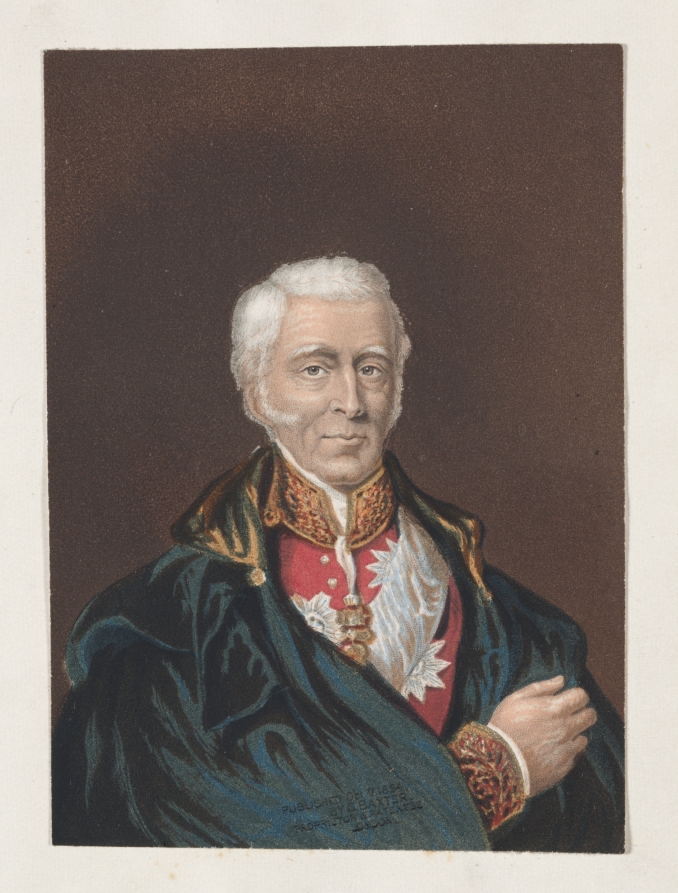


George Baxter
George Baxter was a printer who patented a method to produce colour images for a mass audience. Before his process, most colour prints were tinted by hand. Baxter used a combination of a metal foundation plate and up to twenty separate woodblocks to apply oil-based inks. This technique was precise enough to reproduce the appearance of oil paintings on a small scale. His work appeared on needle boxes and sheet music, such as The Holy Family, making art available to Victorian households.

Biography
The Baxter process relied on exact registration to ensure each colour layer aligned. His series on the ascent of Mont Blanc, including The Summit, No. 4 and The Glacier of Tacconnay, No. 1, shows his ability to capture light and texture. These prints were based on the sketches of John MacGregor and are early visual records of Alpine climbing. Baxter used oil inks instead of water-based ones. This gave his prints a specific depth and a glossy finish that differed from contemporary lithographs.
Collectors today value Baxter prints for their historical documentation and technical accuracy. Works like Gems of the Crystal Palace provide a view of Victorian architecture and social life. His animal studies, such as Horses and Sheep, show a level of detail that remains sharp. Because these prints were designed for domestic display, they fit in modern interiors that favour history and small-scale compositions.
Notable Works
Tap to view larger.
Next stop
Browse the movements →
Every movement in the collection, from the Renaissance to Pop art.
George Baxter prints
Hand-finished archival prints from George Baxter's body of work.
 The Ascent of Mont Blanc: The Mur de la Côte - George Baxter
From £37.00
The Ascent of Mont Blanc: The Mur de la Côte - George Baxter
From £37.00
 The Bride - George Baxter
From £28.00
The Bride - George Baxter
From £28.00
 Summer Fly - George Baxter
From £28.00
Summer Fly - George Baxter
From £28.00
 Autumnal Artist - George Baxter
From £28.00
Autumnal Artist - George Baxter
From £28.00
 Napoleon III - George Baxter
From £28.00
Napoleon III - George Baxter
From £28.00
 The Soldier's Farewell, the Parent's Gift - George Baxter
From £28.00
The Soldier's Farewell, the Parent's Gift - George Baxter
From £28.00
Related Artists


Take George Baxter home.
See all George Baxter prints →Frequently Asked Questions
When was George Baxter born?
George Baxter was born in 1804 and died in 1867.What is George Baxter known for?
George Baxter is known for george Baxter was a Victorian printer who invented a method for mass-producing colour images using oil inks and multiple woodblocks.