



Notable Works
Tap a work to read about it, or to view it larger.
Next stop
Baroque →
Explore the artists and ideas of Baroque.
Gian Lorenzo Bernini prints
Hand-finished archival prints from Gian Lorenzo Bernini's body of work.
 David with the Head of Goliath - Gian Lorenzo Bernini
From £37.00
David with the Head of Goliath - Gian Lorenzo Bernini
From £37.00
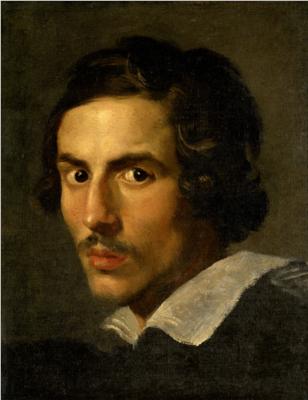
 Self-Portrait as a Young Man - Gian Lorenzo Bernini
From £28.00
Self-Portrait as a Young Man - Gian Lorenzo Bernini
From £28.00
 Tomb of Urban VIII - Gian Lorenzo Bernini
From £28.00
Tomb of Urban VIII - Gian Lorenzo Bernini
From £28.00
 Portrait of a Man with a Moustache (Supposed Self Portrait) - Gian Lorenzo Bernini
From £28.00
Portrait of a Man with a Moustache (Supposed Self Portrait) - Gian Lorenzo Bernini
From £28.00
 Portrait of a Boy - Gian Lorenzo Bernini
From £28.00
Portrait of a Boy - Gian Lorenzo Bernini
From £28.00
 Self-Portrait as a Mature Man - Gian Lorenzo Bernini
From £28.00
Self-Portrait as a Mature Man - Gian Lorenzo Bernini
From £28.00
Related Artists


Take Gian Lorenzo Bernini home.
See all Gian Lorenzo Bernini prints →Frequently Asked Questions
What is Gian Lorenzo Bernini's most famous work?
Gian Lorenzo Bernini (1598[3]-1680[3]) was an Italian[3] artist who worked principally in Rome. He was a sculptor and architect; he also painted, wrote plays, and designed theatre sets. Bernini left his mark on the city of Rome with public fountains, religious art, and his architectural designs for St Peter's Basilica. He is considered the greatest sculptor of the Baroque[3] period. Bernini's sculptures are known for their drama, emotion, and movement. Among Bernini's most celebrated creations is "The Ecstasy of Saint Theresa" (1645[3]-52). The marble sculpture depicts a vision of Saint Theresa of Avila, in which an angel pierces her heart with a golden spear. Bernini captures the saint's swooning, symbolic of her love for God. The sculpture is an example of the Baroque spirit, designed to overwhelm the emotions. Another well-known work is his marble "David", created when he was 25. Unlike earlier depictions of David, Bernini captures the moment of maximum torque, as he winds up to hurl the stone.What should I know about Gian Lorenzo Bernini's prints?
Gian Lorenzo Bernini was principally a sculptor and architect working in Rome. He is not particularly known for printmaking. However, prints related to Bernini do exist, and fall into a few categories. First, there are prints that reproduce or document his sculptures and buildings. These are useful for studying his work outside of Rome, where most of it remains in situ. Roger de Piles's treatise of 1699 mentions the "utilité des estampes" (usefulness of prints) for studying artists' work. Second, preparatory drawings by Bernini do survive, and some have been reproduced as prints for study. For example, a 1981-82 exhibition catalogue documents drawings by Bernini from the Museum der Bildenden Künste, Leipzig. Finally, prints of Bernini himself were made during his lifetime and after his death. These include portraits and allegorical representations.What techniques or materials did Gian Lorenzo Bernini use?
Gian Lorenzo Bernini was a master of marble and bronze. His methods involved both additive and subtractive techniques. For marble sculpture, Bernini used tools such as mallets, chisels, rasps, and files to shape the stone. Chisels of different weights and shapes were used to remove varying amounts of marble. A flat pitching tool could split off large pieces, while claw chisels added texture. Flat chisels provided a smooth finish. He used rasps or files to eliminate chisel marks, and sandpaper to polish the surface. The rough stone beneath figures such as Apollo and Daphne shows tool marks, while the bodies are highly polished, likely with sandpaper and marble dust. Bernini also worked with bronze, an alloy of tin and copper. Bronze sculptures were typically created using an additive process. A form was built up using a soft material such as clay, plaster, or wax. This model was then cast in bronze at a foundry, a process overseen by the artist. Bernini also created small clay models, called bozzetti, as preparatory studies. These were typically modelled by hand, sometimes using tools for cutting and shaping.What was Gian Lorenzo Bernini known for?
Gian Lorenzo Bernini (1598[3]-1680[3]) was a leading sculptor of the Baroque[3] period. He also worked as an architect, painter, playwright, composer, and theatre designer. He was known for his wit and skill as a caricaturist. Bernini left his mark on Rome with public fountains, religious art, and designs for St Peter's. The son of a sculptor, Bernini carved his marble "David" at the age of 25. Unlike Michelangelo's "David", Bernini's captured a moment of explosive energy. The figure is shown in maximum torque, about to hurl a stone. Bernini's "Ecstasy of St Theresa" (1645[3]-52) fuses sculpture, painting, and architecture. It is designed to overwhelm the emotions. The virtuosity of his statues is reminiscent of Michelangelo and antique statuary. Bernini virtually monopolised papal commissions during Rome’s golden age. St Peter’s Square is one of his grandest architectural achievements. Bernini’s new conception of the saint, the portrait bust, the equestrian statue, tombs, and fountains determined the development of Italian[3] and European sculpture for over a hundred years.When did Gian Lorenzo Bernini live and work?
Gian Lorenzo Bernini was born on 7 December 1598[3], in Naples. His father, Pietro Bernini, was also a sculptor. By 1606[3], the family had moved to Rome, where Pietro worked on commissions for Pope Paul V's burial chapel in Santa Maria Maggiore. Gian Lorenzo assisted his father at a young age. Bernini received his first independent commission in 1612: a portrait bust for Bishop Giovanni Battista Santori's tomb. Around 1616-1617[3], he sculpted statues of St Lawrence and St Sebastian. His 1618 sculpture group, Aeneas and Anchises, gained notice in Roman art circles. Bernini designed the catafalque for Paul V in 1621. He worked on The Rape of Proserpina in 1622 for Scipione Borghese. Bernini was appointed Architect of St Peter’s in 1629. He planned the Square of St Peter's in 1656. Bernini also served as an architect for multiple churches, including S. Andrea al Quirinale (1659) and the church at Ariccia (1662). He died on 28 November 1680[3], in Rome.Where can I see Gian Lorenzo Bernini's work?
Gian Lorenzo Bernini (1598[3]-1680[3]) was an Italian[3] sculptor and architect. Many of his works remain in the locations for which he made them. In Rome, visit Saint Peter's Basilica to see Bernini's early work on the tomb of Countess Matilda of Tuscany (1633[3]-1636[3]). Inside, he also designed the Baldachin (1623-1634), the bronze Cathedra Petri (1656-1666), and the tomb of Pope Alexander VII (1671-1678). The Vatican Museums hold his early sculptures *Saint Lawrence* (1614-1615) and *Bust of Monsignor Pedro de Foix Montoya* (1621). The Galleria Borghese contains many early Bernini sculptures. These include *Aeneas, Anchises, and Ascanius* (1618-1619), *The Rape of Proserpina* (1621-1622), *Apollo and Daphne* (1622-1625), and his *David* (1623-1624). Other Roman churches with Bernini sculptures include Santa Maria sopra Minerva, which holds his *Monument to Maria Raggi* (1647-1653), and Santa Maria della Vittoria, which contains his *Ecstasy of Saint Teresa* (1647-1652). Bernini also produced several Roman fountains, such as the Fontana del Tritone (1642-1643) in the Piazza Barberini and the Fontana dei Quattro Fiumi (1648-1651) in the Piazza Navona. The Victoria and Albert Museum, London, holds his marble bust of Monsignor Francesco Barberini (1623).Where was Gian Lorenzo Bernini from?
Gian Lorenzo Bernini was born in Naples on 7 December 1598[3]. His father, Pietro Bernini, was Florentine; his mother was Neapolitan. Although born in Naples, Bernini throughout his life emphasised his Florentine heritage, which he considered more artistically prestigious. This association with Florence proved advantageous under the rule of the Borghese, who originated from Siena, then part of the Grand Duchy of Tuscany. In 1605[3], the Bernini family relocated to Rome, where Gian Lorenzo resided until his death in 1680[3]. Despite his deep ties to Rome, Bernini made one significant journey to Paris in 1665. He was invited by Louis XIV to redesign the Louvre. Bernini was considered a prodigy, displaying remarkable artistic skill from a young age. His earliest known work, a sculpture of the infant Zeus with a Satyr, dates to around 1615, when Bernini was approximately sixteen years old.Who did Gian Lorenzo Bernini influence?
Gian Lorenzo Bernini's artistic influence shaped the course of European sculpture. His early work, such as his sculpture of David, shows the influence of Annibale Carracci's paintings and ancient sculptures like the Borghese gladiator and Menelaus holding the body of Patroclus. Bernini's admiration for antiquity played a significant role in his artistic development, leading to a classical revival within Baroque[3] sculpture. His Apollo and Daphne group demonstrates a direct reference to the Apollo Belvedere, although altered. Bernini returned to a dominant viewpoint, focusing on presenting a dramatic, momentary situation to the spectator. He ensured the sculpture was viewed from only one side. Bernini's impact extended beyond sculpture, influencing other art forms in seventeenth-century Rome, including theatre, drama, music, and opera. His work links artists such as Poussin and Borromini.Who influenced Gian Lorenzo Bernini?
Gian Lorenzo Bernini's artistic development was shaped by several influences, both practical and theoretical. His father, Pietro Bernini, a Florentine sculptor, instilled in him the value of hard work and practice. Pietro also seems to have recognised his son's capacity for self-instruction. One sculptor who may have had an impact on the young Bernini was Stefano Maderno. Only a few terracotta works can be confidently ascribed to sculptors working in Rome at the same time as Bernini, and all are by Maderno. Pietro worked alongside Maderno in Santa Maria Maggiore between 1606[3] and 1614; the two families were known to each other. Bernini later employed Maderno on projects such as the Baldacchino (1624) and a memorial for Saint Elizabeth of Portugal. Bernini may have admired Maderno's skill with terracotta, and similarities can be observed between their modelling styles. Cardinal Maffeo Barberini, later Pope Urban VIII, acted as a patron and intellectual mentor during Bernini's early years. Barberini was knowledgeable about art, and interested in the comparison of painting and sculpture. Galileo Galilei, a friend of Barberini, also expressed his opinion on this topic. These theoretical debates, common in Italian[3] art theory, likely influenced Bernini's approach to sculpture.Who was Gian Lorenzo Bernini?
Gian Lorenzo Bernini (1598[3]-1680[3]) was a prolific Italian[3] artist and architect of the Baroque[3] period. Beyond sculpture, he also worked as a painter, playwright, composer, and theatre designer. His artistic talent and wit were widely recognised; he wrote comedies and operas, and sculpted marble with apparent ease. Bernini left his mark on Rome through his public fountains, religious art, and designs for St Peter's. At the age of 25, Bernini created his marble sculpture "David". Unlike Michelangelo's earlier sculpture, Bernini's "David" captures a moment of dynamic energy, poised to hurl a stone. Bernini's sculpture conveyed power about to be unleashed. His work, such as "The Ecstasy of St Theresa" (1645[3]-52), fused sculpture, painting, and architecture into unified environments. Although his designs for the Louvre in Paris were rejected, his style still influenced the development of the Rococo.Why are Gian Lorenzo Bernini's works important today?
Gian Lorenzo Bernini was a major figure in the Roman Baroque[3]. He was born in Naples in 1598[3] and died in Rome in 1680[3]. His impact can be seen in his novel conceptions of portrait busts, fountains, equestrian statues and tombs. Bernini's workshop output defined what we now call Baroque art. He had command of Rome's artistic patronage; this brought all the city's artists under his control. Bernini's designs reconfigured everything from altar decorations to banquets, processional arts and ritual displays. He was an artist of all-round performance, in the line of succession to the great Renaissance artists. Bernini was given unparalleled opportunities via the lavish patronage of the seventeenth-century popes and their families. He gave Rome its Baroque character. Bernini's vision of space, and his attempts to draw the viewer emotionally into his figures, correspond to modern conceptions.
Sources
Editorial draws on the following primary and tertiary references for Gian Lorenzo Bernini.
- [1] museum Teylers Museum Used for: museum holdings.
- [2] wikidata Wikidata: Q160538 Used for: identifiers.
- [3] wikipedia Wikipedia: Gian Lorenzo Bernini Used for: biography, birth dates, death dates, identifiers, movement attribution, nationality.
Editorial overseen by Solis Prints. Sources verified 2026-09-18. Click a source for details, or hover over [N] in the page above to preview.
Editorial standardsMethodologyCorrectionsAI disclosureAbout the editorial team