



Giovanni Battista Moroni
Moroni painted a tailor. The portrait, known simply as The Tailor (c. 1570), shows a working man holding scissors and cloth, looking directly at the viewer with quiet dignity. It was unusual in Renaissance Italy, where portraiture was largely reserved for aristocrats and clergy. Bernard Berenson dismissed Moroni in 1907 as giving "sitters no doubt as they looked". The art historian Roberto Longhi, in 1953, called the same quality a naturalism that anticipated Caravaggio.

Biography
He was born around 1525 in Albino, near Bergamo, the son of an architect. He trained under Moretto da Brescia, whose influence is visible in Moroni's religious paintings but less so in the portraits that made his reputation. He was briefly in Trent during the first two sessions of the Council of Trent (1546 to 1548 and 1551 to 1553), then returned to Bergamo, where he became the fashionable portraitist of the petty aristocracy and bourgeoisie.
His period at the top lasted barely five years, roughly 1557 to 1562, after which political turmoil in Bergamo forced his permanent retirement to Albino, where Vasari overlooked him entirely. His Pace Rivola Spini is arguably the first full-length portrait of a standing woman painted alone during the Italian Renaissance. He died in 1578, at about fifty-three.
Timeline
- 1553Painted "Portrait of the Sculptor Alessandro Vittoria".
- 1556Painted "Portrait of a Gentleman".
- 1559Painted "A Soldier".
- 1560Painted "Portrait of a Lady, Perhaps Contessa Lucia Albani Avogadro ('La Dama in Rosso')".
- 1570Painted "The Tailor ('Il Tagliapanni')".
- 1570Painted "Portrait of a Man".
Notable Works
Tap to view larger.
Where to See Giovanni Battista Moroni
1 museum worldwide.
-
1 works
Calderdale Metropolitan Borough Council
Halifax, United Kingdom
Next stop
Renaissance →
Explore the artists and ideas of Renaissance.
Giovanni Battista Moroni prints
Hand-finished archival prints from Giovanni Battista Moroni's body of work.
 Lucrezia Agliardi Vertova - Giovanni Battista Moroni
From £28.00
Lucrezia Agliardi Vertova - Giovanni Battista Moroni
From £28.00
 Lucrezia Agliardi Vertova - Giovanni Battista Moroni
From £28.00
Lucrezia Agliardi Vertova - Giovanni Battista Moroni
From £28.00
 Portrait of Lucrezia Agliardi Vertova - Giovanni Battista Moroni
From £28.00
Portrait of Lucrezia Agliardi Vertova - Giovanni Battista Moroni
From £28.00
 Portrait of a Man - Giovanni Battista Moroni
From £28.00
Portrait of a Man - Giovanni Battista Moroni
From £28.00
 Portrait of Prospero Alessandri - Giovanni Battista Moroni
From £28.00
Portrait of Prospero Alessandri - Giovanni Battista Moroni
From £28.00
 Portrait of Bartolomeo Bonghi - Giovanni Battista Moroni
From £28.00
Portrait of Bartolomeo Bonghi - Giovanni Battista Moroni
From £28.00
Related Artists


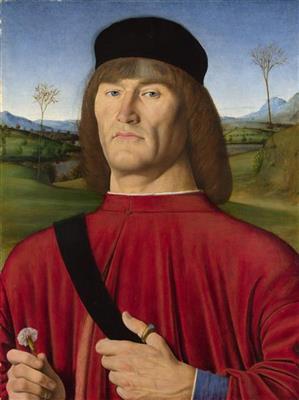

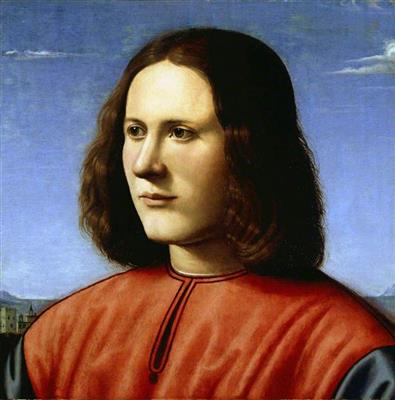

Take Giovanni Battista Moroni home.
See all Giovanni Battista Moroni prints →Frequently Asked Questions
What is Giovanni Battista Moroni known for?
Giovanni Battista Moroni is known for his portraits, which made his reputation, and his painting The Tailor (c. 1570). The Tailor depicts a working man with scissors and cloth, looking at the viewer, which was unusual in Renaissance Italy where portraiture was mainly for aristocrats and clergy.Who was Giovanni Battista Moroni?
Giovanni Battista Moroni was born around 1525 in Albino, near Bergamo, and was the son of an architect. He trained under Moretto da Brescia, whose influence is visible in his religious paintings.What was Giovanni Battista Moroni's art style?
Moretto da Brescia's influence is visible in Giovanni Battista Moroni's religious paintings, but less so in his portraits. Roberto Longhi called Moroni's naturalism an anticipation of Caravaggio.
Sources
Editorial draws on the following primary and tertiary references for Giovanni Battista Moroni.
- [1] museum Calderdale Metropolitan Borough Council Used for: museum holdings.
- [2] book Beard, Lee, 1973- author, Butler, Adam, author; Van Cleave, Claire, author; Fortenberry, Diane, author; Stirling, Susan, author, Beard, Lee, 1973- author, Butler, Adam, author; Van Cleave, Claire, author; Fortenberry, Diane, author; Stirling, Susan, author - The Art Book_ New Edition, Mini Format Used for: biography.
- [3] book Metropolitan Museum of Art (New York, N.Y.), The Age of Caravaggio Used for: biography.
Editorial overseen by Solis Prints. Sources verified 2026-08-29. Click a source for details, or hover over [N] in the page above to preview.
Editorial standardsMethodologyCorrectionsAI disclosureAbout the editorial team