


Giovanni Francesco Venturini
Giovanni Francesco Venturini spent much of his career documenting the hydraulic projects of Baroque Rome. While many artists of the period focused on religious commissions, Venturini specialised in the technical recording of water. He was tasked with completing the fourth volume of the series Le fontane di Roma, originally started by Giovanni Battista Falda. He worked closely with the Rossi publishing house, the most influential print sellers in Rome at the time. This work required a clear understanding of how water interacts with stone and light.
Biography
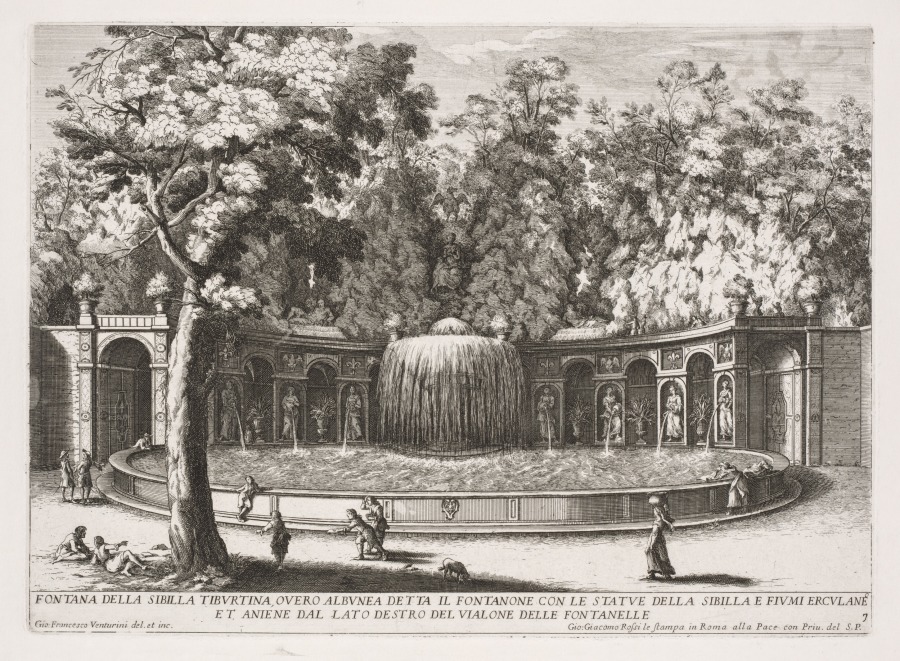
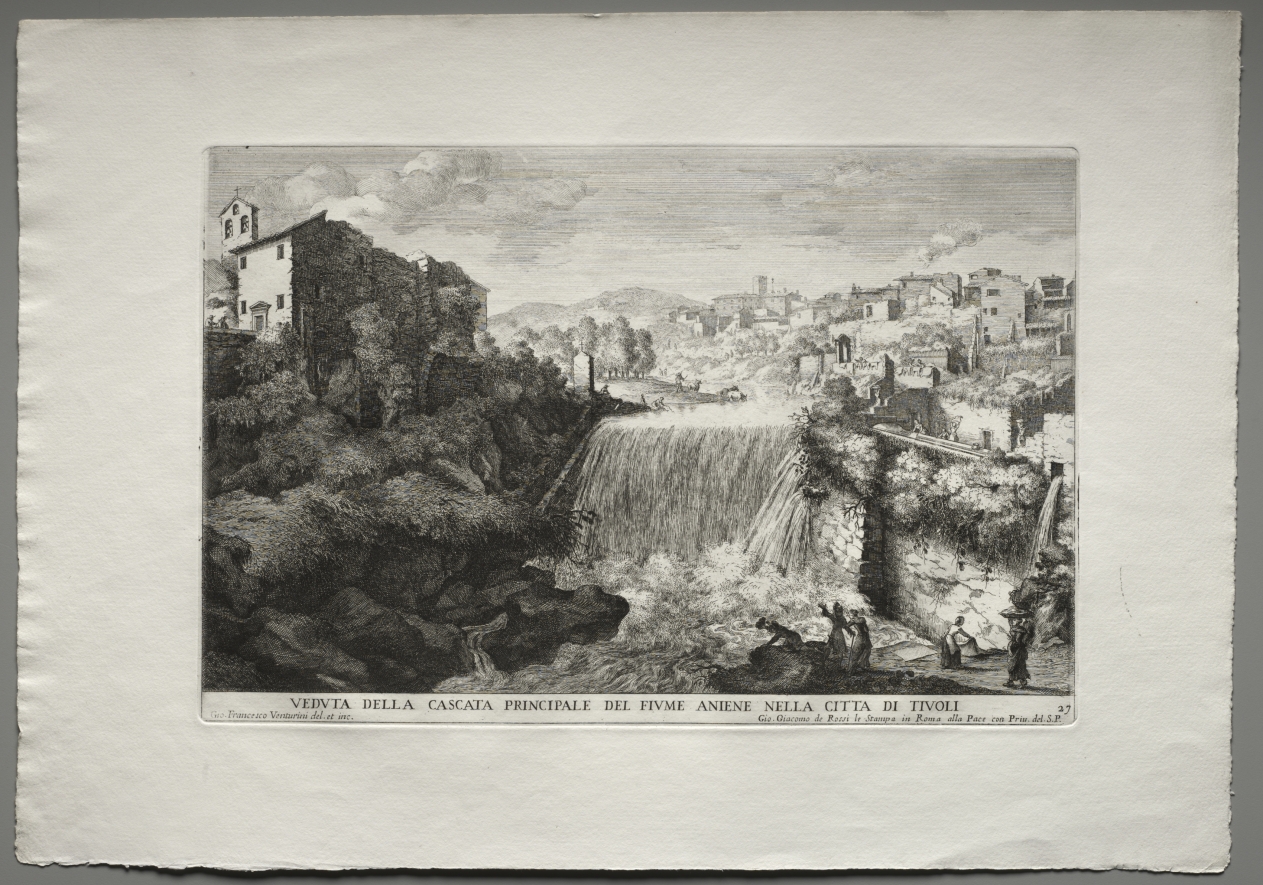
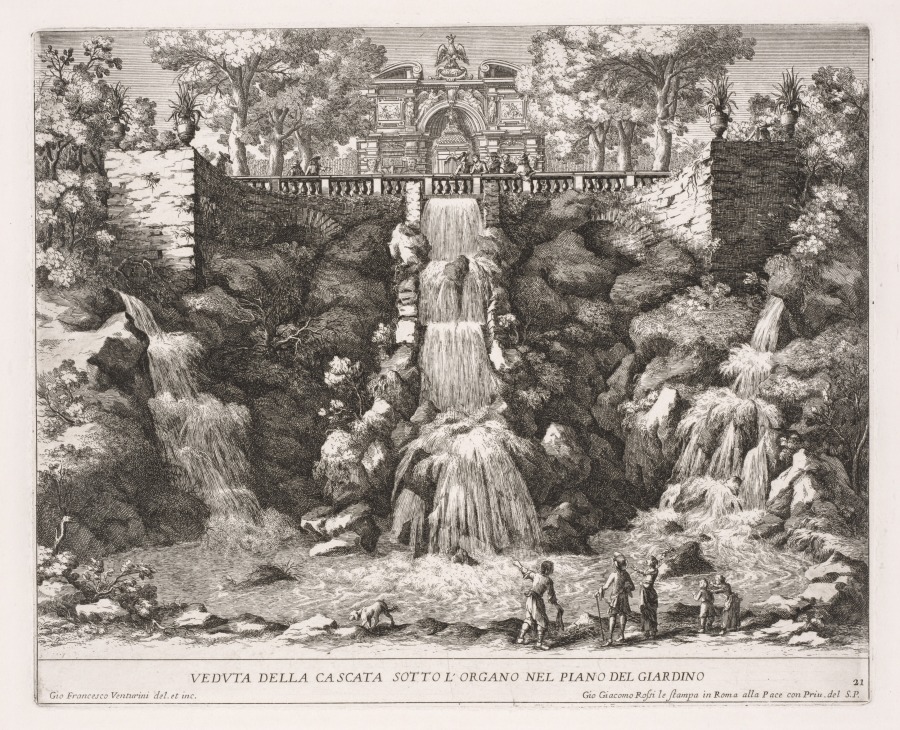
His artistic approach favoured clarity and architectural accuracy. In works like The Fountains of Rome, he used precise etching techniques to define the spray of cascades and the solid forms of masonry. His plates of the Tiburtine Sibyl and the cascades at Tivoli demonstrate accurate perspective. In other works, such as Figuren rondom een altaar, he captured sculptural details with the same care a silversmith applies to a religious vessel.
Modern collectors value these prints for their clean lines and historical precision. Venturini captures a specific moment in Roman urban planning where water became a primary tool for public display. These etchings provide a sense of order and classical proportions to a room. The monochrome palette of his engravings makes them easy to integrate into contemporary interior design.
Notable Works
Tap to view larger.
Next stop
Browse the movements →
Every movement in the collection, from the Renaissance to Pop art.
Giovanni Francesco Venturini prints
Hand-finished archival prints from Giovanni Francesco Venturini's body of work.


Take Giovanni Francesco Venturini home.
See all Giovanni Francesco Venturini prints →Frequently Asked Questions
When was Giovanni Francesco Venturini born?
Giovanni Francesco Venturini was born in 1650 and died in 1710.What is Giovanni Francesco Venturini known for?
Giovanni Francesco Venturini is known for giovanni Francesco Venturini was a 17th-century Roman etcher known for his architectural studies of the city's grand fountains and the dramatic cascades at Tivoli.