


Giuseppe Scolari
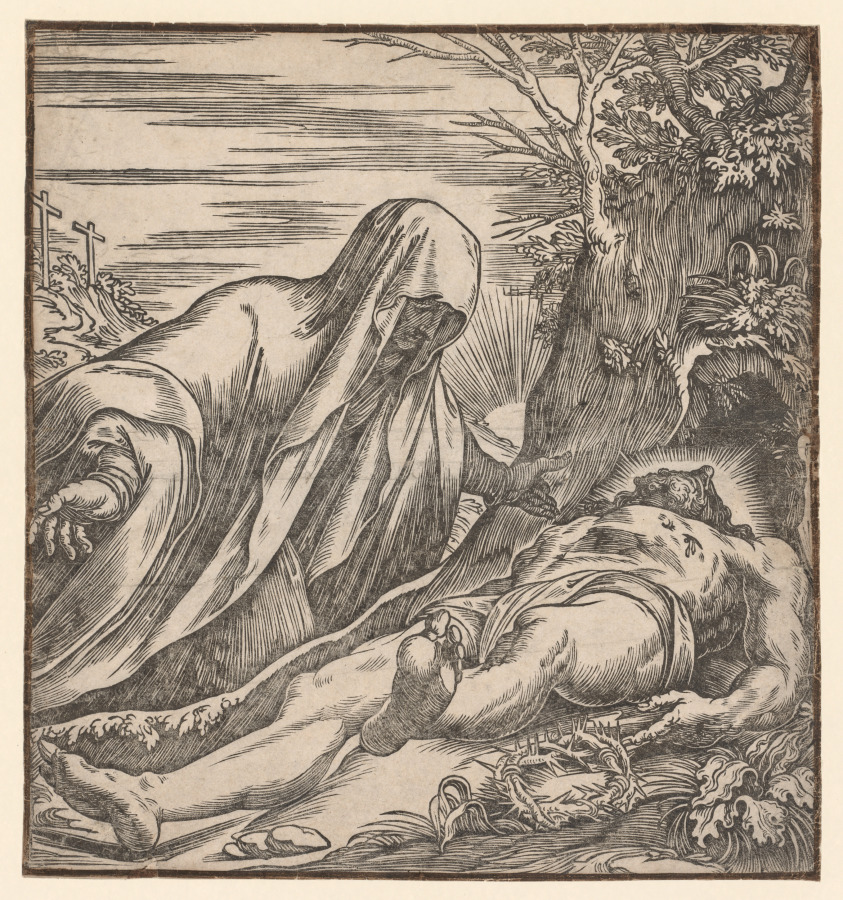
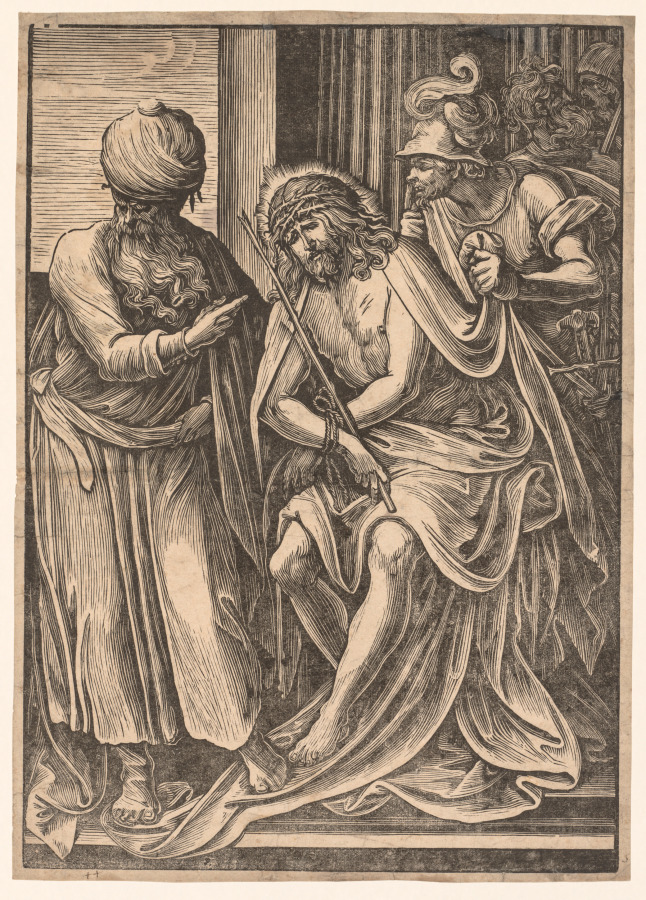
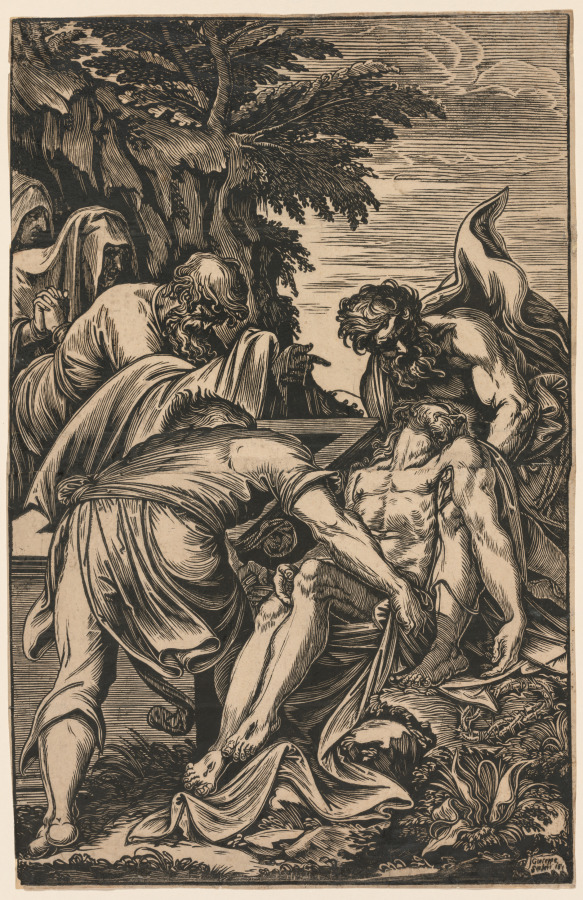
Giuseppe Scolari was a Venetian artist who defied the standard division of labour in printmaking. While most Renaissance painters provided drawings for professional woodcutters to execute, Scolari likely carved his own blocks. This direct involvement allowed him to experiment with the wood in ways that others could not. He used the white-line technique, where the image is defined by the light carved out of a dark background. This method resulted in prints that possessed the precision of metal engraving while retaining the physical texture of wood.
Biography
His artistic style aligns with late Mannerism, defined by elongated figures and dramatic compositions. In works such as Saint Jerome in the Wilderness and The Rape of Proserpine, Scolari used thick, undulating lines to suggest volume and movement. He avoided the delicate cross-hatching common in traditional prints. Instead, he relied on broad strokes that followed the contours of the human form. This approach gave his figures a sculptural quality, making them appear to emerge from the darkness of the ink.
Modern collectors appreciate Scolari for the bold graphic quality of his woodcuts. His monochromatic palette allows these pieces to integrate easily into various interior design schemes. The absence of colour focuses the eye on the rhythmic patterns and the physical energy of the carving. These prints provide a sophisticated alternative to traditional painting, offering a sense of history through a medium that feels surprisingly modern in its starkness.
Notable Works
Tap to view larger.
Next stop
Browse the movements →
Every movement in the collection, from the Renaissance to Pop art.
Giuseppe Scolari prints
Hand-finished archival prints from Giuseppe Scolari's body of work.
 The Rape of Proserpina - Giuseppe Scolari
From £28.00
The Rape of Proserpina - Giuseppe Scolari
From £28.00
 Angel Supporting the Body of Christ - Giuseppe Scolari
From £28.00
Angel Supporting the Body of Christ - Giuseppe Scolari
From £28.00
 Saint George and the Dragon - Giuseppe Scolari
From £28.00
Saint George and the Dragon - Giuseppe Scolari
From £28.00
 Saint Jerome in the Wilderness - Giuseppe Scolari
From £28.00
Saint Jerome in the Wilderness - Giuseppe Scolari
From £28.00
 Christ Presented to the People (Ecce Homo) - Giuseppe Scolari
From £28.00
Christ Presented to the People (Ecce Homo) - Giuseppe Scolari
From £28.00
Take Giuseppe Scolari home.
See all Giuseppe Scolari prints →Frequently Asked Questions
What is Giuseppe Scolari known for?
Giuseppe Scolari is known for giuseppe Scolari was a Venetian artist known for his bold woodcuts that used the white-line technique to create dramatic, sculptural figures during the late Mannerist period.