



Hanabusa Itchō
Hanabusa Itchō spent twelve years in exile on the island of Miyake-jima. The Tokugawa shogunate banished him in 1698, possibly for a satirical painting that offended the authorities. During this period, he continued to paint using whatever materials he could find. He returned to Edo in 1709 and changed his name from Taga Shinkū to Hanabusa Itchō.
Biography
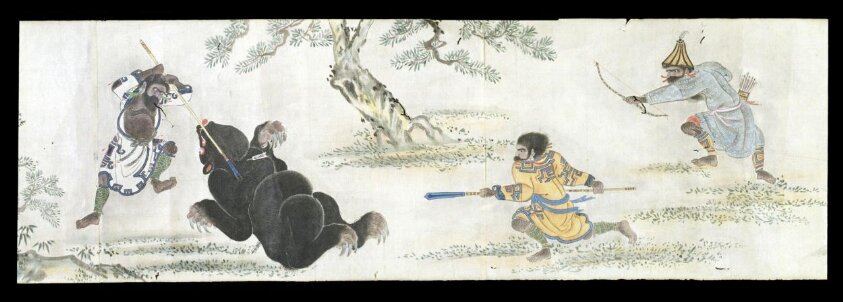
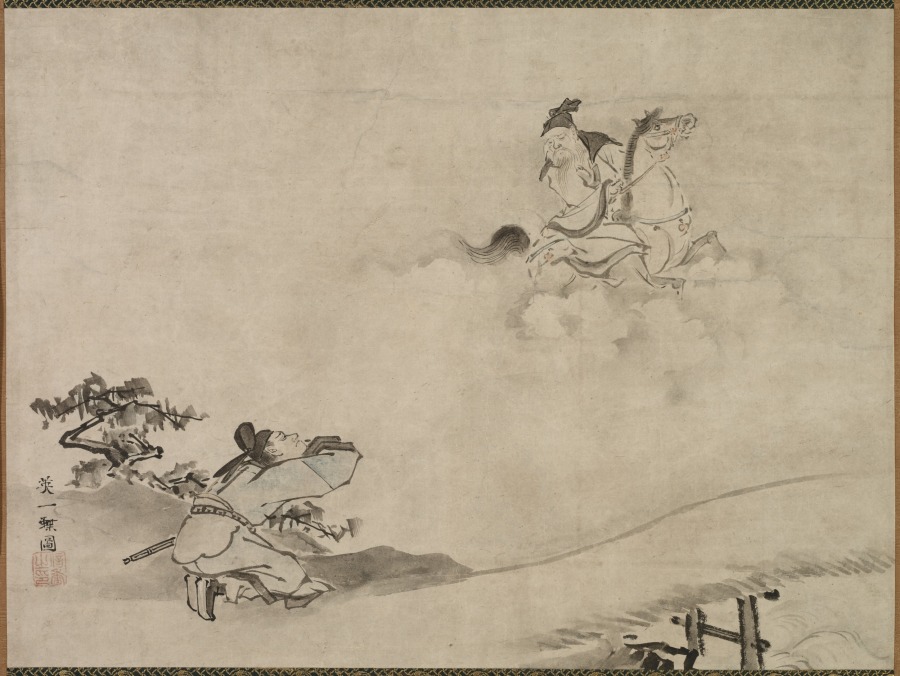
Itchō began his career training in the formal Kanō school style. He soon rejected its rigid conventions to focus on the daily lives of common people in Edo. His work combines classical ink techniques with the observational wit of ukiyo-e. Paintings like Taking Shelter from the Rain and Bugaku Dances show his interest in human movement. He used humour and irony to depict street scenes and religious figures like Jizō Bosatsu.
Modern collectors value Itchō for his ability to capture character through minimal brushwork. His work often leaves space for the viewer to breathe, making it suitable for contemporary interiors. He applied his style to both large screens and small, functional items like inrō cases. This range makes his work accessible for different types of display.
Notable Works
Tap to view larger.
Next stop
Browse the movements →
Every movement in the collection, from the Renaissance to Pop art.
Frequently Asked Questions
When was Hanabusa Itchō born?
Hanabusa Itchō was born in 1652 and died in 1724.What is Hanabusa Itchō known for?
Hanabusa Itchō is known for hanabusa Itchō was an Edo-period painter who combined formal Kanō school training with witty observations of daily life and urban street scenes.


