

Skip to content Loading
The Court, Bourrow by Herman Armour Webster
Feast of the Golden Tree by Herman Armour Webster
Alhambra, Miradas de las Reinas by Herman Armour Webster
From Studio Window, Paris by Herman Armour Webster
Bridge by Herman Armour Webster
Old Bridges (?) by Herman Armour Webster
La Ronte de Louviers by Herman Armour Webster
Quay Montebello by Herman Armour Webster
1878–1970

Herman Armour Webster

Before becoming a fixture of the Paris art scene, Webster was an American who abandoned a career in coal and iron to pursue the technical precision of etching. He arrived in Europe at a time when the 1913 Armory Show was causing a scandal with modernism. While contemporaries like Picabia experimented with what critics called "nonsense in three dimensions," Webster focused on the structural reality of the physical world. He dedicated himself to documenting the narrow alleys and timbered houses of cities like Strasbourg and Paris before urban modernisation could erase them.

Biography

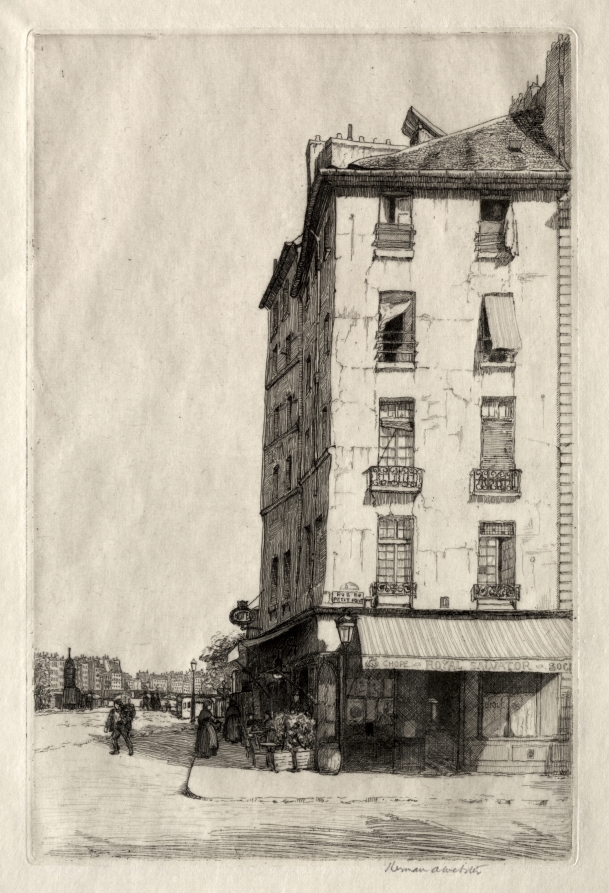
His work is defined by a rigorous attention to architectural detail and the play of light on stone. In pieces like The Clockmaker's, Frankfort and Spitalplatz, Strassburg, he uses fine lines to suggest the weight of history without relying on sentimentality. Unlike the "diabobs" or "whims" of the avant-garde that critics like Kenyon Cox attacked, Webster’s etchings are grounded in observation. He often sought out the specific character of a place in its shopfronts and market corners, recording the geometry of the built environment.

Modern collectors value Webster for his ability to capture the quiet atmosphere of a bygone era. His prints, such as The Commissionaire or La rue San Jacques, Paris, offer a window into a world of manual trades and horse-drawn transport. The monochromatic nature of his etchings makes them versatile for contemporary interiors. They provide a sense of stability and historical continuity. These works appeal to those who appreciate the craftsmanship of the Etching Revival and the preservation of architectural heritage.

Next stop

Browse the movements →

Every movement in the collection, from the Renaissance to Pop art.

Frequently Asked Questions

  • When was Herman Armour Webster born?
    Herman Armour Webster was born in 1878 and died in 1970.
  • What is Herman Armour Webster known for?
    Herman Armour Webster is known for herman Armour Webster was a master of the Etching Revival who documented the architectural character of European cities through precise line work and atmospheric light.

Keep exploring

Your cart
Your cart is empty
Have an account? Log in to check out faster.
Continue shopping Continue shopping
Cart total $0.00 USD
Product image Product information Quantity Product total