



Hippolyte Lecomte
Hippolyte Lecomte began his career as a student of the painter Jean-Baptiste Regnault, yet he soon turned his attention toward the precise documentation of military life. While many of his contemporaries focused on grand, mythological themes, Lecomte maintained a preoccupation with the mechanics of the Napoleonic era. He possessed a technical eye for the equipment and uniforms that defined the period, often recording the exact placement of artillery and the specific stitching of military attire.
Biography
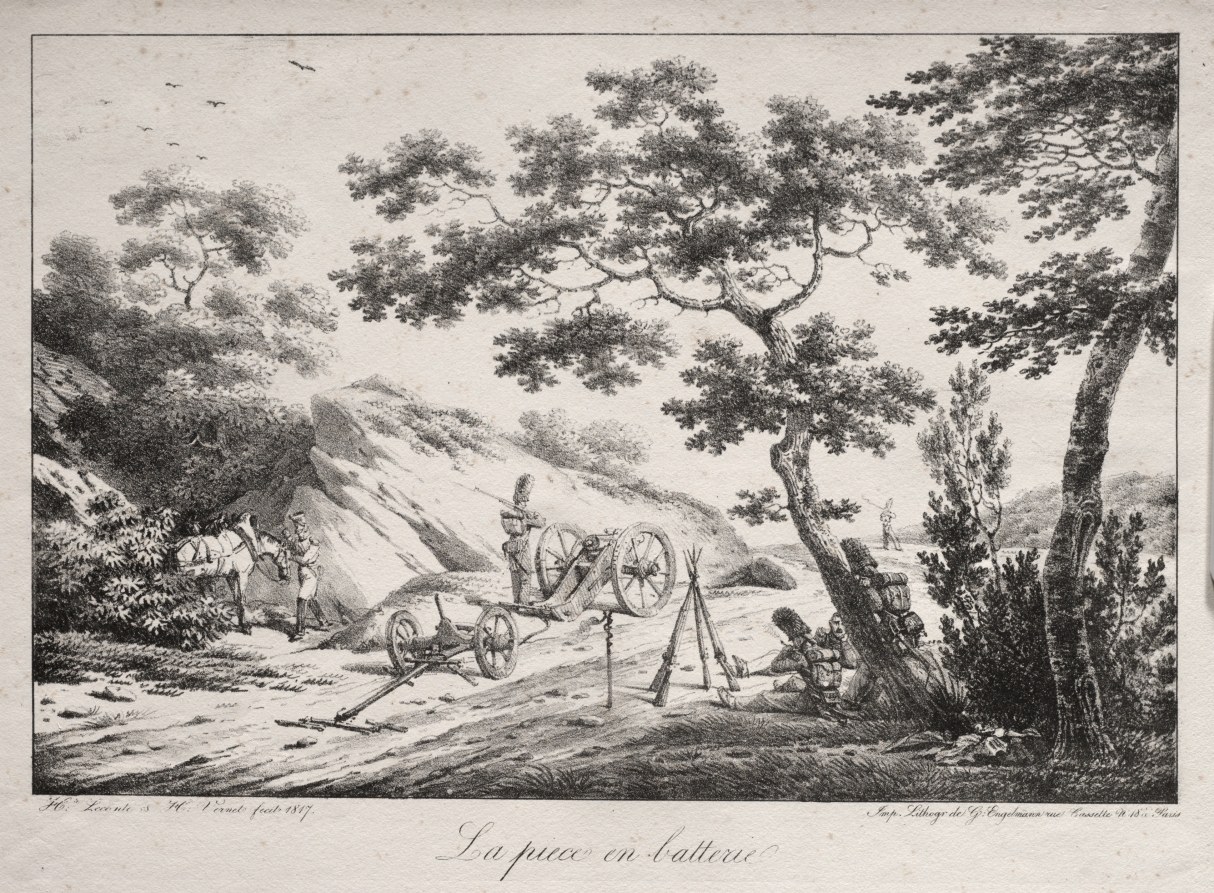
His artistic method relied upon a rigorous study of physical reality. In works such as La pièce en batterie, Lecomte constructs a scene through a focus on the logistical operations of the army. He avoids unnecessary ornamentation, preferring to show the heavy, functional nature of cannons and the disciplined posture of the soldiers who operated them. His compositions remain grounded in the observation of equipment, ensuring that the viewer understands the weight and scale of the machinery presented.
Modern collectors appreciate Lecomte for his commitment to historical accuracy. His prints offer a clear view into the material culture of nineteenth-century France. By focusing on the tangible aspects of military history, he provides a record that feels objective and direct. These prints possess a clarity that fits well in contemporary spaces, providing a precise look at the past without the need for dramatic embellishment.
Notable Works
Tap to view larger.
Next stop
Browse the movements →
Every movement in the collection, from the Renaissance to Pop art.
Related Artists


Frequently Asked Questions
When was Hippolyte Lecomte born?
Hippolyte Lecomte was born in 1781 and died in 1857.What is Hippolyte Lecomte known for?
Hippolyte Lecomte is known for hippolyte Lecomte was a nineteenth-century French artist known for his precise, technical depictions of military life and Napoleonic-era artillery operations.