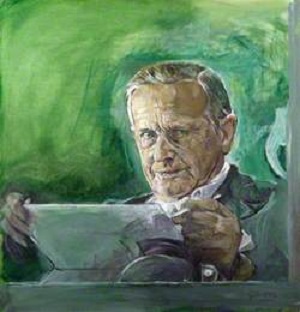
James Charles Armytage
James Charles Armytage was a British line engraver who remained active well into his nineties. While many of his contemporaries retired or struggled with failing eyesight, Armytage continued to produce plates for major publications until his death in 1897. He was particularly favoured by the critic John Ruskin. Ruskin often chose Armytage to translate his own drawings into print, trusting him to maintain the accuracy of his geological and architectural observations.
Biography
His technique focused on the clarity of the line. In works like Archivolt in the Duomo of Murano or Aiguille du Dru, Armytage demonstrated a mastery of architectural detail and natural forms. He did not rely on heavy shading to create drama. Instead, he used fine, disciplined strokes to define texture and light. This approach was suited to the Victorian demand for topographical accuracy and historical subjects, including his interpretations of Turner’s watercolours.
Modern collectors value Armytage for the technical precision of his engravings. His prints offer a window into nineteenth-century tastes, ranging from romanticised historical scenes to strict architectural studies. Because he worked closely with figures like Ruskin and Turner, his prints possess a scholarly quality. They suit contemporary interiors that favour clean lines and historical documentation over abstract expression.
Notable Works
Tap to view larger.
Next stop
Browse the movements →
Every movement in the collection, from the Renaissance to Pop art.
Frequently Asked Questions
When was James Charles Armytage born?
James Charles Armytage was born in 1802 and died in 1897.What is James Charles Armytage known for?
James Charles Armytage is known for james Charles Armytage was a nineteenth-century British engraver known for his precise architectural plates and collaborations with the critic John Ruskin.