

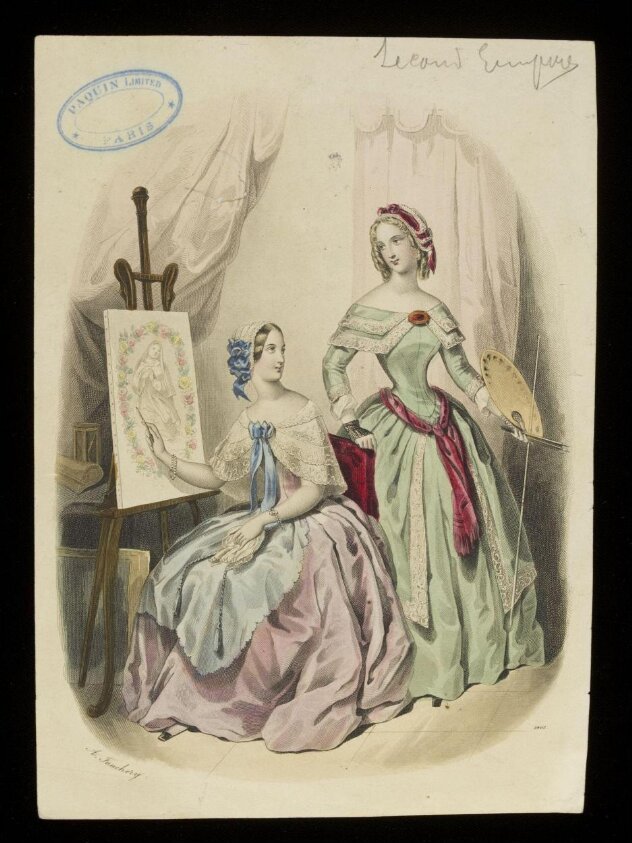
Jean-Claude Auguste Fauchery
Jean-Claude Auguste Fauchery worked as a specialist engraver during the nineteenth century, a period when the demand for encyclopaedic art records was at its peak. He contributed to major publications like L'Art pour tous, which documented the finest examples of European craftsmanship. His task involved translating the detailed three-dimensional forms of goldsmiths like Robert-Joseph Auguste into clear two-dimensional images. These engravings were so accurate that contemporary craftsmen often used them as direct patterns for their own workshops.
Biography
The artistic approach of Fauchery relies on the disciplined use of the burin to create sharp, definitive lines. He avoided the soft textures of lithography in favour of the clarity provided by copperplate engraving. By using varied line weights and precise cross-hatching, he suggested the reflective surfaces of silver wine coolers and the weight of bronze girandoles. His compositions usually present objects in isolation. This focus on the individual item removes any sense of domestic clutter and emphasises the formal properties of Neoclassical design.
Modern collectors find that these prints offer a sophisticated, structured look for the home. The monochrome palette and technical accuracy allow the work to sit comfortably alongside modern furniture. Because the images are based on historical objects, they provide a sense of continuity with the past without feeling dated. The prints are valued for their ability to bring the atmosphere of a museum gallery into a private living space.
Notable Works
Tap to view larger.
Next stop
Browse the movements →
Every movement in the collection, from the Renaissance to Pop art.
Frequently Asked Questions
What is Jean-Claude Auguste Fauchery known for?
Jean-Claude Auguste Fauchery is known for jean-Claude Auguste Fauchery was a nineteenth-century French engraver who produced precise technical illustrations of historical metalwork and decorative arts for encyclopaedic publications.