



Johann Theodor de Bry
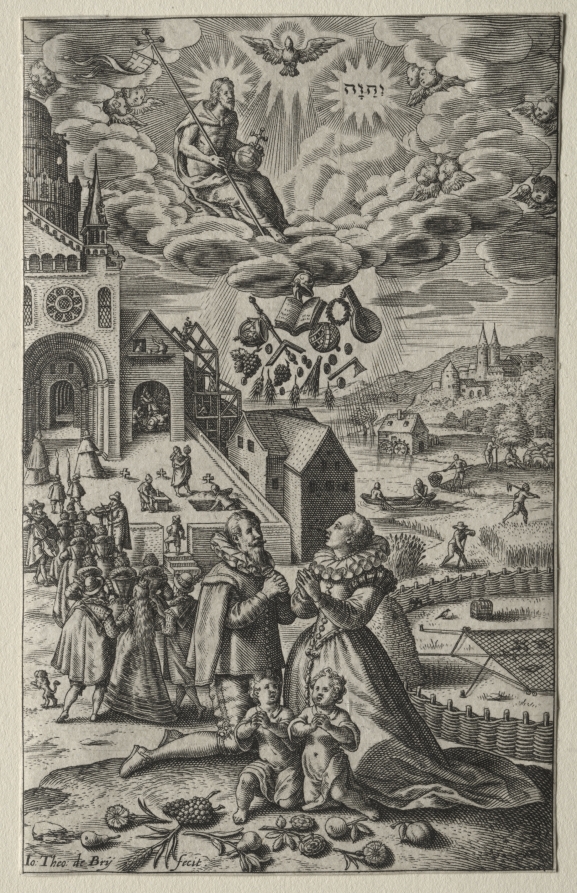
Johann Theodor de Bry operated a successful publishing house in Frankfurt where his engravings provided a specific function. Beyond their life as paper prints, these designs provided templates for European goldsmiths and silversmiths to follow. This link to the decorative arts meant his work required high precision and clarity of line. He belonged to a family of skilled engravers who documented the natural world and human artifice.

Biography
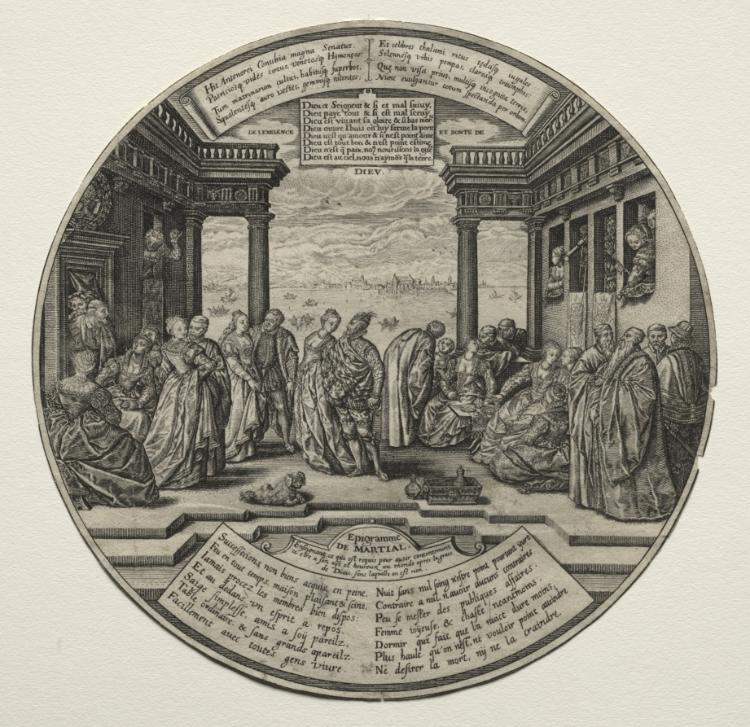
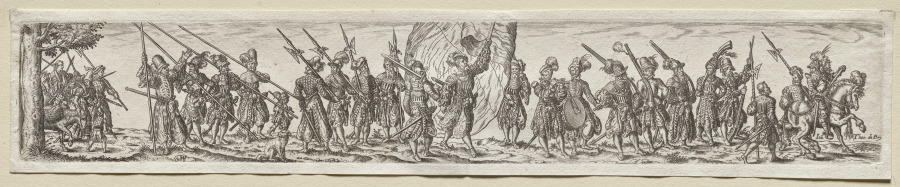
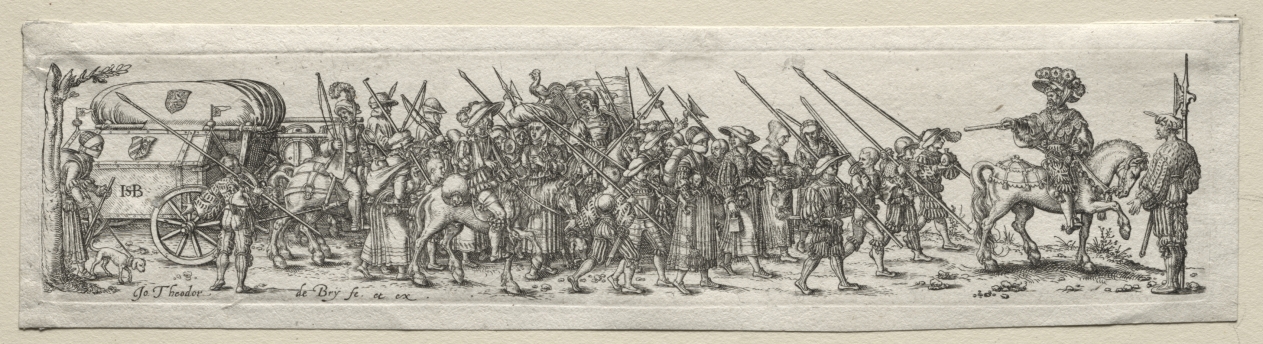
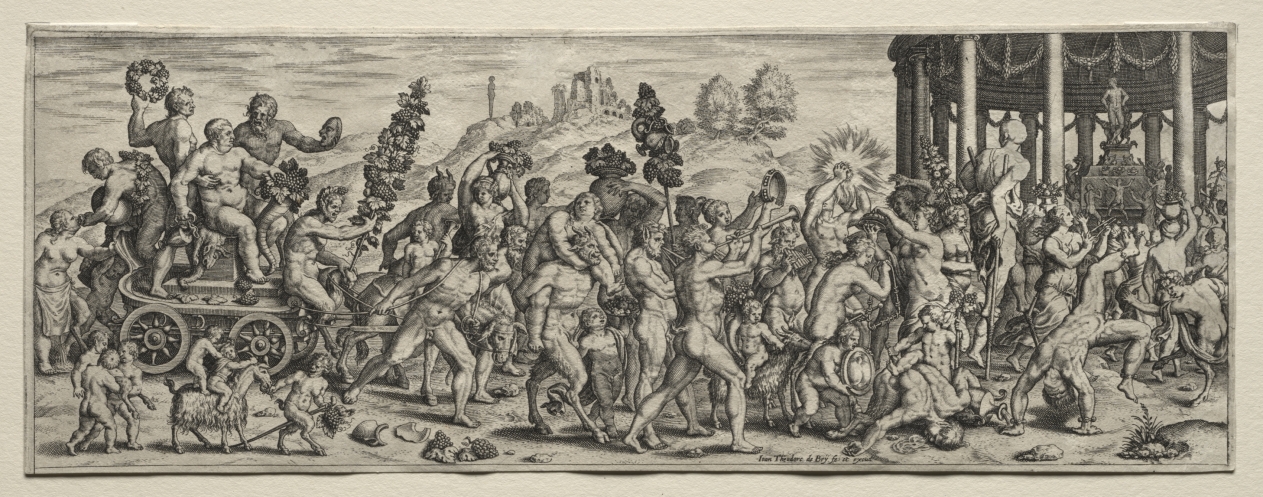
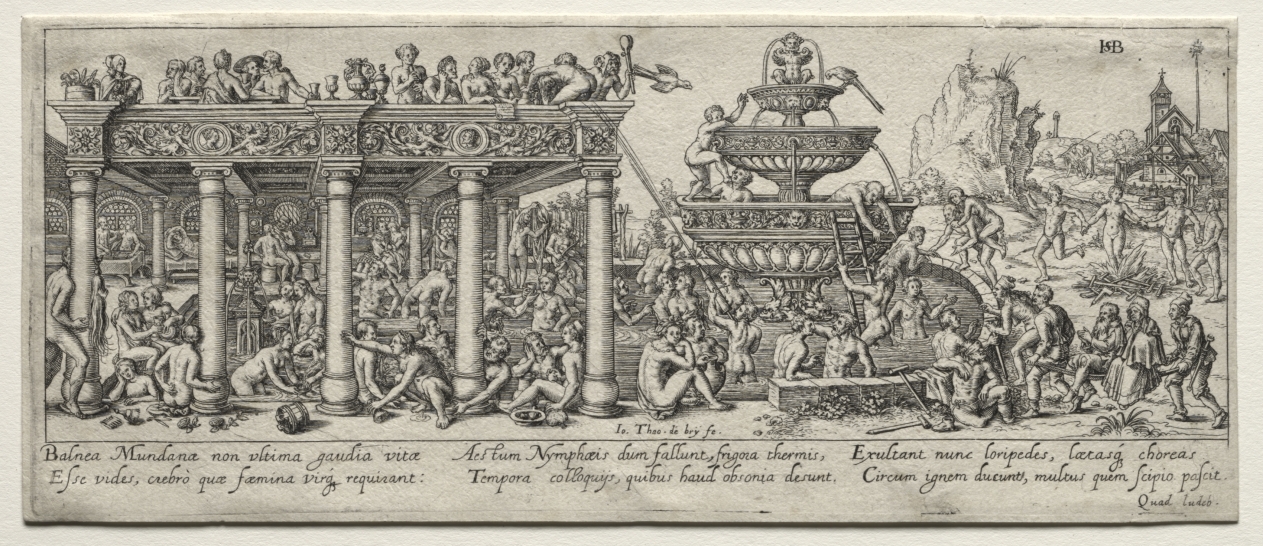
His artistic approach favoured the study of social movement and group dynamics. In works like The Venetian Ball or Dancing Peasants, he recorded the specific gestures of different social classes. He avoided heavy shadows, preferring to use fine hatching to define form and space. This technique allowed him to include numerous figures and architectural details within a single composition. His scenes of marching soldiers show a similar interest in the rhythmic patterns of human activity.
Modern collectors value these prints for their historical detail and clear execution. Each work acts as a visual archive of seventeenth-century costume and weaponry. The compositions are orderly and balanced, making them suitable for structured gallery walls or individual display. They offer a direct connection to the Renaissance tradition of printmaking without the visual clutter found in later Baroque styles.
Notable Works
Tap to view larger.
Next stop
Browse the movements →
Every movement in the collection, from the Renaissance to Pop art.
Johann Theodor de Bry prints
Hand-finished archival prints from Johann Theodor de Bry's body of work.
 Justitia Falling from a Rearing Horse - Johann Theodor de Bry
From £28.00
Justitia Falling from a Rearing Horse - Johann Theodor de Bry
From £28.00
 De Liefde overwint alles - Johann Theodor de Bry
From £37.00
De Liefde overwint alles - Johann Theodor de Bry
From £37.00
 Allegorie op de luiheid van de mens - Johann Theodor de Bry
From £37.00
Allegorie op de luiheid van de mens - Johann Theodor de Bry
From £37.00
 Omnia Vincit Amor (Cupid Taming a Lion) - Johann Theodor de Bry
From £37.00
Omnia Vincit Amor (Cupid Taming a Lion) - Johann Theodor de Bry
From £37.00
 Portret van Nikolaus Selnecker - Johann Theodor de Bry
From £37.00
Portret van Nikolaus Selnecker - Johann Theodor de Bry
From £37.00
 Diana and Actaeon - Johann Theodor de Bry
From £37.00
Diana and Actaeon - Johann Theodor de Bry
From £37.00
Related Artists


Take Johann Theodor de Bry home.
See all Johann Theodor de Bry prints →Frequently Asked Questions
When was Johann Theodor de Bry born?
Johann Theodor de Bry was born in 1561 and died in 1623.What is Johann Theodor de Bry known for?
Johann Theodor de Bry is known for johann Theodor de Bry was a seventeenth-century engraver known for his precise depictions of military processions and social festivities used by European craftsmen.