


Nakajima Raishō
Nakajima Raishō began his career in Kyoto during the late Edo period. He studied under Maruyama Ōzui and eventually led his own studio where he trained the artist Kōno Bairei. While many of his contemporaries focused on mythological themes, Raishō remained dedicated to the study of the physical world. He spent years documenting the flora and fauna of the Kansai region with precision.
Biography
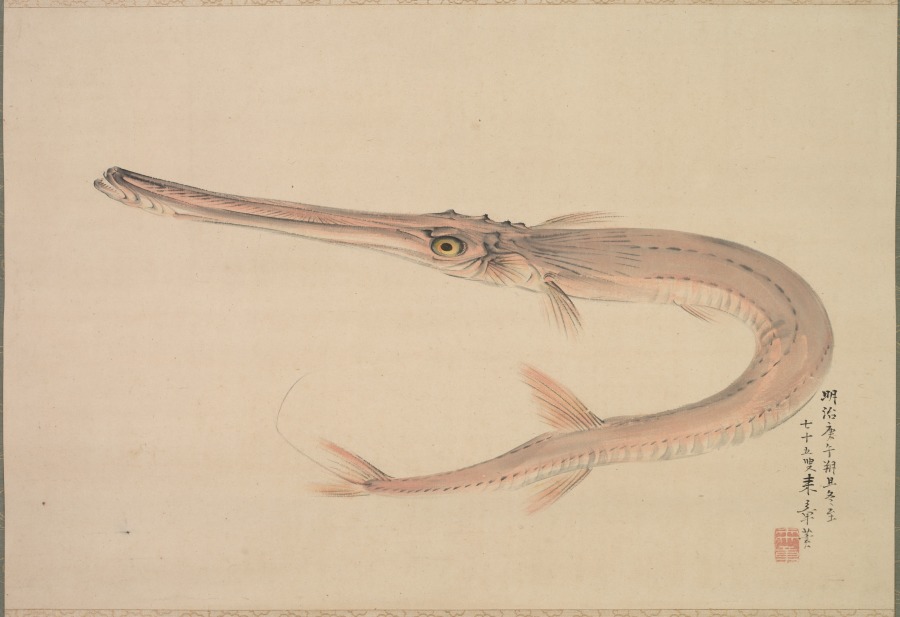
His artistic method followed the Maruyama school principle of shasei, or sketching from life. This approach required the artist to observe subjects in their natural state before applying ink to paper. In works like Needlefish (Yagara), Raishō uses thin lines and subtle washes of colour to define form. He avoids unnecessary ornamentation. His compositions often feature a single subject against a neutral background to focus on its physical structure.
These prints appeal to modern collectors because of their minimalist quality. The balance between detailed observation and open space creates a sense of calm. His depictions of Japanese locations, including the View of Uji, provide a quiet window into the past. These works suit a variety of interior styles because they do not rely on bold colours or busy patterns.
Notable Works
Tap to view larger.
Next stop
Browse the movements →
Every movement in the collection, from the Renaissance to Pop art.
Frequently Asked Questions
When was Nakajima Raishō born?
Nakajima Raishō was born in 1796 and died in 1871.What is Nakajima Raishō known for?
Nakajima Raishō is known for nakajima Raishō was a Kyoto artist of the Maruyama school who focused on direct observation and minimalist compositions of the natural world.


