



Nakamura Hōchū
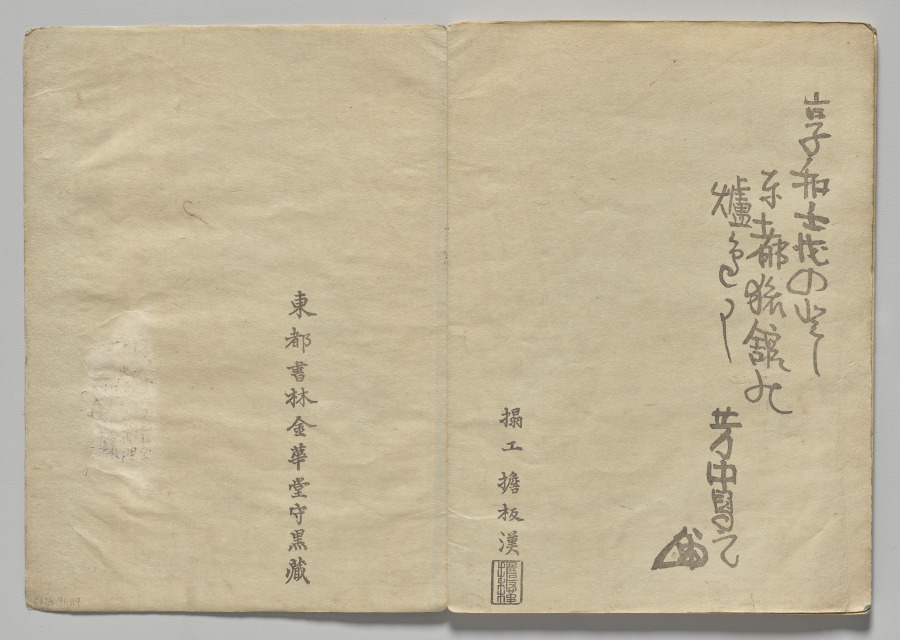
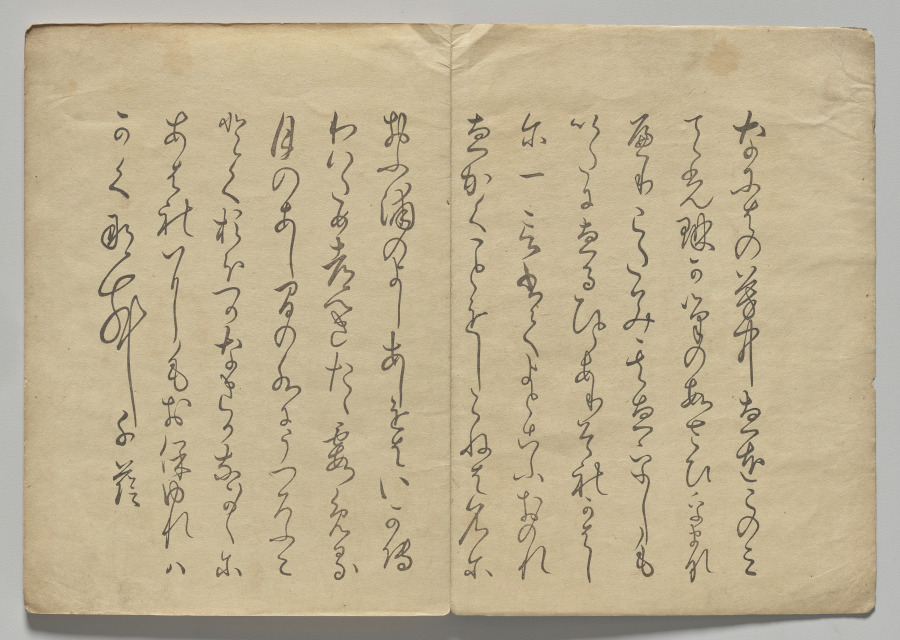
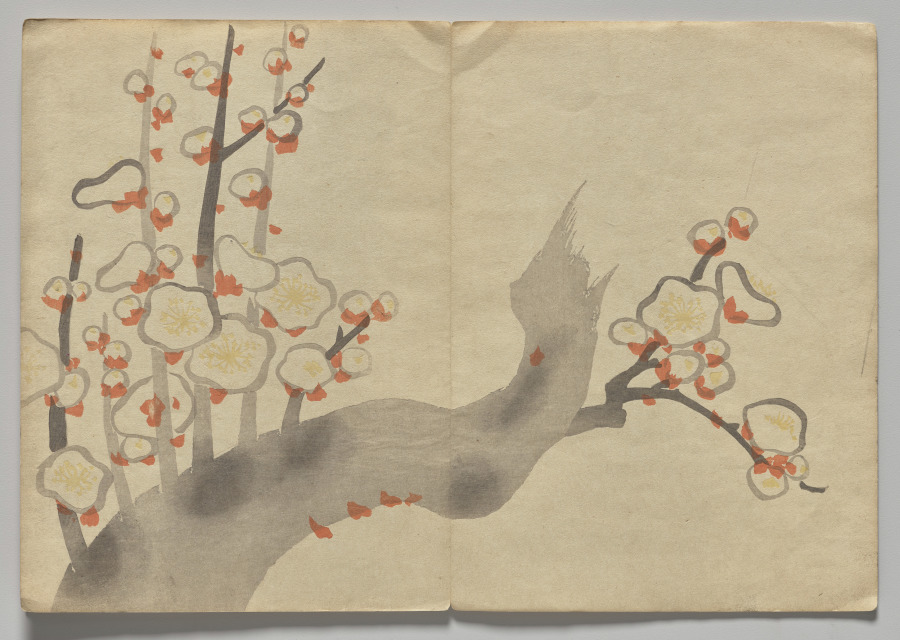
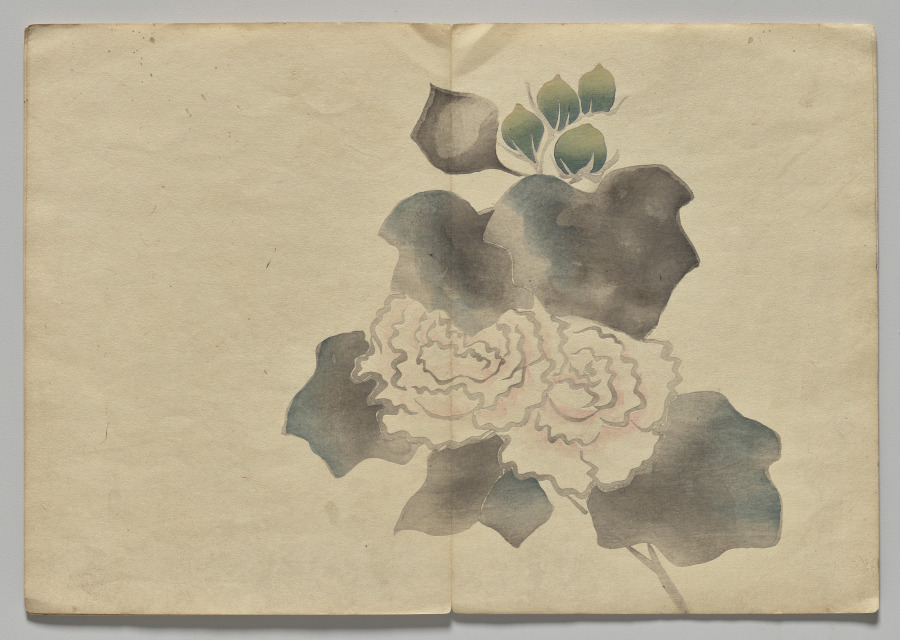
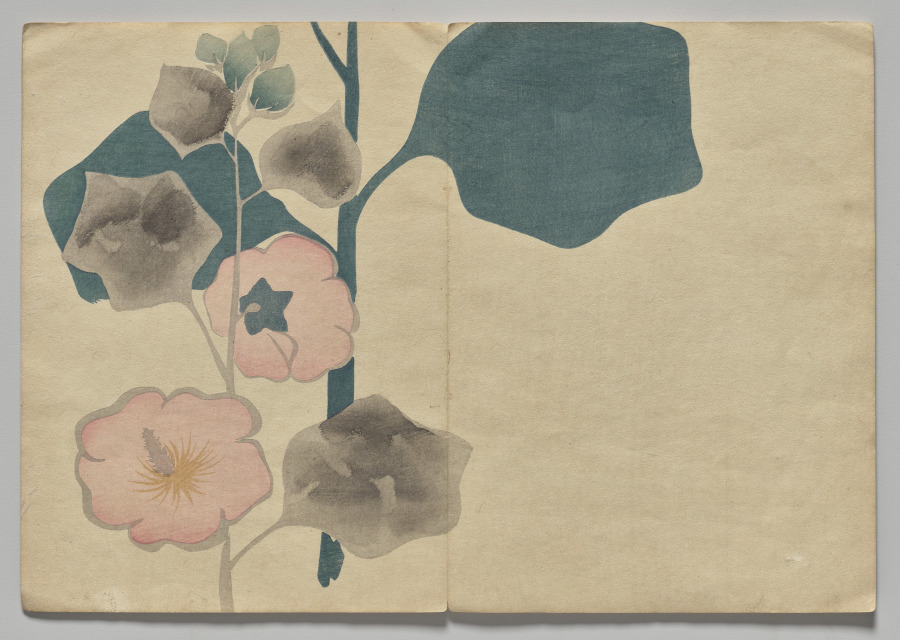
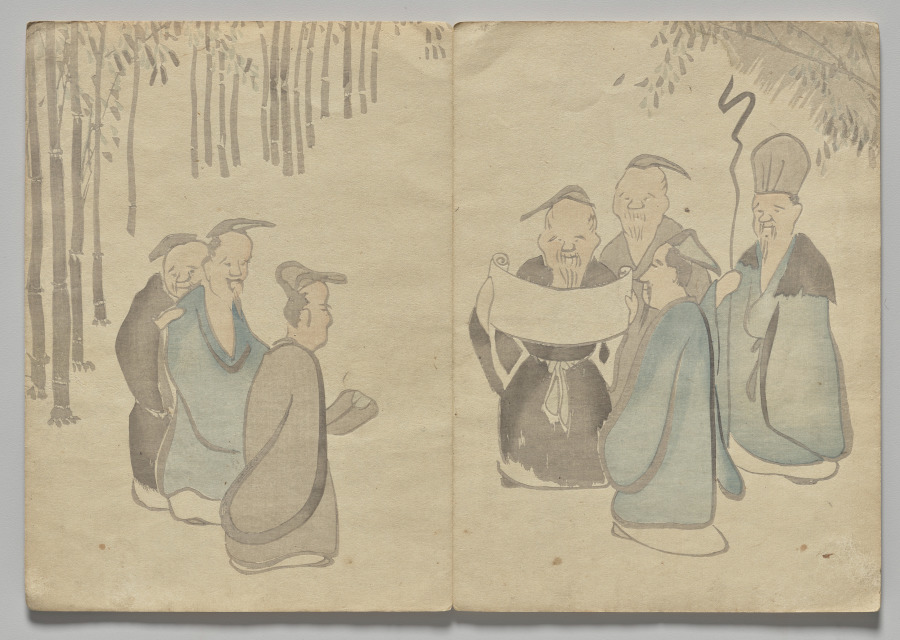
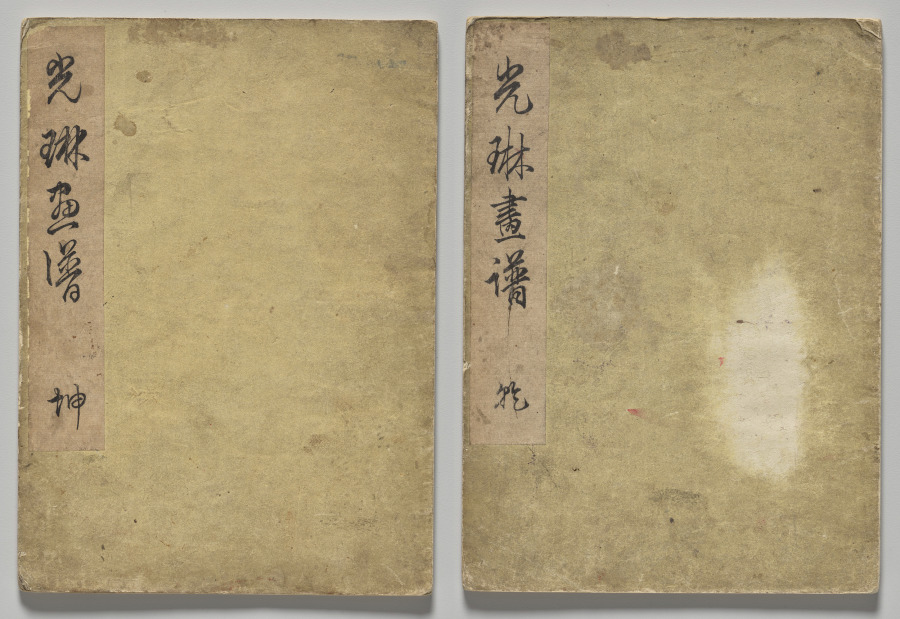
Nakamura Hōchū did not live in the traditional artistic hubs of Kyoto or Edo. He worked in Osaka, a commercial city that favoured a more playful style. While he is associated with the Rimpa school, Hōchū was largely self-taught in this tradition. He spent years studying the woodblock prints of Ogata Kōrin, eventually publishing the Kōrin Gafu in 1802. This book was not a literal copy of Kōrin's work but a bold reimagining that helped popularise the Rimpa aesthetic.

Biography
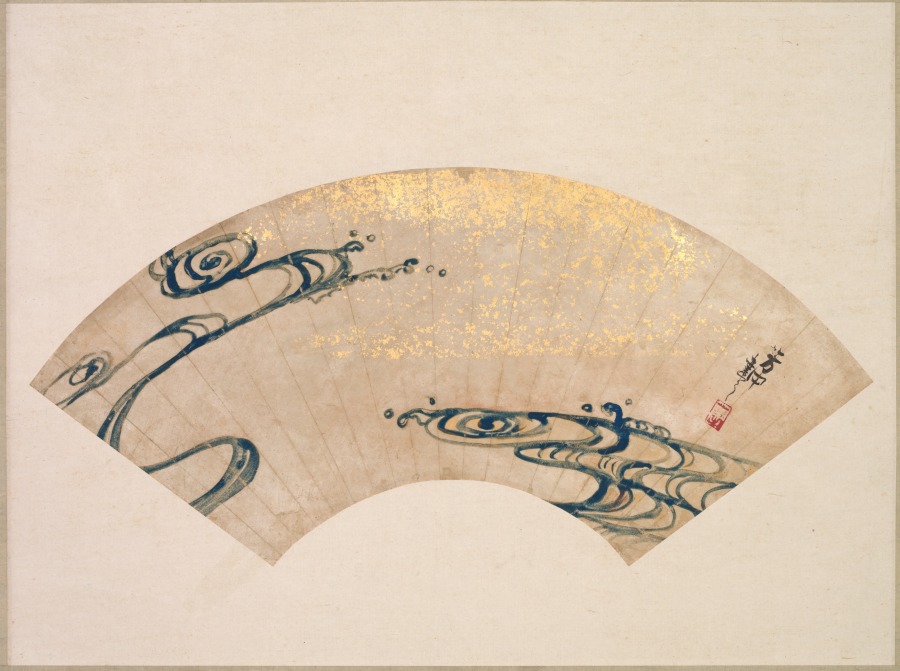
His technique relies on the tarashikomi method, where wet ink or paint is dropped into a still-wet layer to create soft, bleeding edges. Hōchū pushed this further than his predecessors. He simplified forms into rounded, almost abstract shapes. His depictions of waves and flowers often look modern because they lack hard outlines. This softness gives his prints a gentle, organic quality. He often added humour to his subjects, giving animals and plants a friendly character.
Modern collectors value Hōchū for his minimalist sensibility. His compositions use negative space effectively, making them suitable for contemporary interiors. The Kōrin Gafu series offers a balance of traditional Japanese motifs and a graphic style that feels surprisingly current. Because his work avoids heavy detail in favour of broad colour washes and simple lines, these prints provide a calm atmosphere. They suit spaces where a sense of quiet and balance is desired.
Notable Works
Tap to view larger.
Next stop
Browse the movements →
Every movement in the collection, from the Renaissance to Pop art.
Frequently Asked Questions
When was Nakamura Hōchū born?
Nakamura Hōchū was born in 1790 and died in 1818.What is Nakamura Hōchū known for?
Nakamura Hōchū is known for nakamura Hōchū was an Osaka-based artist who transformed the Rimpa school style into a soft, minimalist aesthetic through his famous woodblock book, the Kōrin Gafu.


