

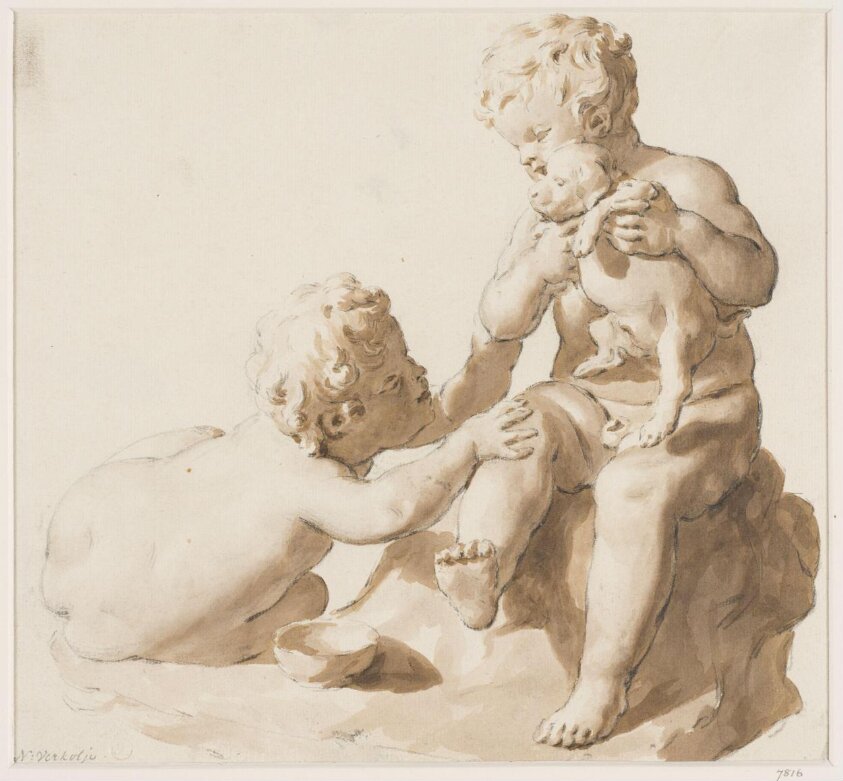
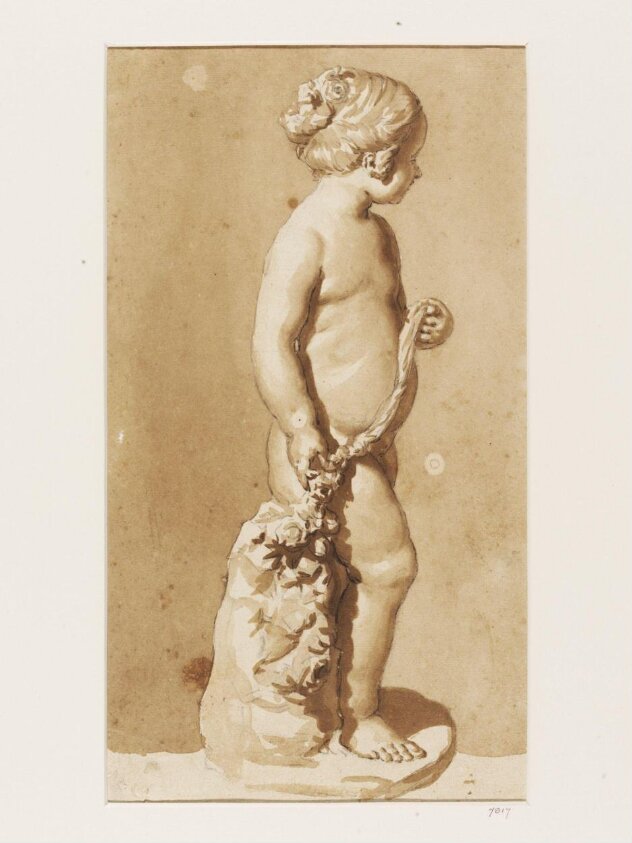


Nicolaas Verkolje
Nicolaas Verkolje was a master of the mezzotint technique, a printmaking process that allowed for soft tonal transitions. He learned his craft from his father, Jan Verkolje, in Delft before moving to Amsterdam. While many Dutch artists of his time focused on gritty realism, Verkolje preferred a polished aesthetic. He often painted small, domestic subjects with a level of finish that mimicked the texture of porcelain. His ability to render surfaces made him a sought-after portraitist for the Dutch elite.

Biography
His work belongs to the fijnschilder tradition, characterised by invisible brushwork and careful attention to light. In The Judgment of Paris, he applied classical themes to a refined Dutch sensibility. Verkolje frequently depicted quiet interior moments, such as a dog resting on a chair or a woman at her evening toilet. These scenes avoid the heavy moralising tone common in earlier Dutch genre painting. Instead, they offer a calm observation of private life. Verkolje was also skilled in creating vignettes for historical portraits.
Modern collectors value Verkolje for his technical precision and his ability to capture stillness. His portraits, such as those of Isaac de Moucheron or Carel Borchaert Voet, show a balanced composition that fits well in contemporary spaces. The clarity of his prints makes them suitable for display in rooms with natural light. His art provides a window into the sophisticated domesticity of the 18th-century Dutch Republic. The prints offer a sense of order and quietude for the home.
Notable Works
Tap to view larger.
Frequently Asked Questions
When was Nicolaas Verkolje born?
Nicolaas Verkolje was born in 1673 and died in 1746.What is Nicolaas Verkolje known for?
Nicolaas Verkolje is known for nicolaas Verkolje was an 18th-century Dutch painter and engraver known for his polished domestic scenes and mastery of the mezzotint technique.


